Get Full Government Meeting Transcripts, Videos, & Alerts Forever!
Get email alerts on the Community Corrections Revocation topic
No spam. Unsubscribe anytime.
Appellate lawyers say trial court violated due process in Daniel Otten community‑corrections revocation
Summary
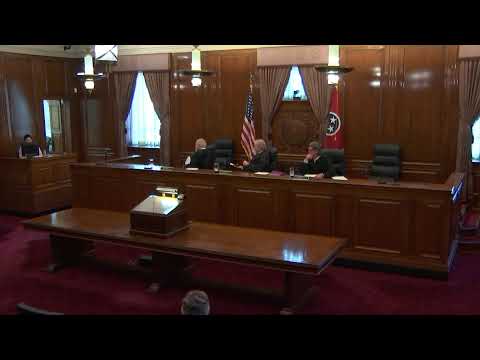
At a Tennessee appellate hearing, defense counsel argued that the trial court failed to make required findings before relying on hearsay in a community‑corrections revocation and that the state did not prove Mr. Otten absconded or failed to report.
William Gilligan, appellate counsel for defendant Daniel Otten, told a panel of Tennessee appellate judges that the trial court violated Otten’s due‑process rights by allowing hearsay to support revocation without making required findings of good cause and reliability.
Gilligan said the only explanation in the trial record for the absence of the case officer was the three‑word phrase “ongoing medical concerns,” and that the court made no specific finding that would justify denying Otten the opportunity to confront the witness. “Because of these issues, we ask that the court reverse the judgment of the trial court and remand with an appropriate instruction to reinstate Mister Otten’s alternative sentence,” Gilligan said.
In the nut graf, Gilligan told the panel that the state relied on out‑of‑court statements rather than admitting documentary records and that the officer who testified relied on notes prepared for the hearing rather than records kept in the ordinary course of business. He argued the business‑records exception was not raised at trial and therefore was waived on appeal. He also urged the court to find the hearsay unreliable and to reverse without reaching other issues.
Lacey Wilbur, arguing for the state, said the supervisor, Mr. Driscoll, identified himself at the hearing as “a keeper of records” and that the charging documents — the community‑corrections violation warrant and affidavit of complaint — appear in the technical record. Wilbur acknowledged it would have been better practice to formally admit the documents but said they were available to the court in the record. “He was live. He was subject to cross‑examination,” Wilbur said of Driscoll, arguing that the defendant received due process at the hearing.
Counsel and the panel also disputed whether the record established that Otten had failed to report. Gilligan said Otten’s reporting condition required him to “report as required by your case officer” and that the state produced no evidence the case officer had ever required him to report. Gilligan argued the trial court’s statement that Otten’s whereabouts were “unknown” conflicted with undisputed proof that he was at his last reported address and that the state had not attempted to contact or locate him.
The parties debated legal authorities during argument. Gilligan cited due‑process precedents arguing that when a state seeks to rely on hearsay at a revocation hearing the court must (1) make a specific finding of good cause for a witness’s absence and (2) find that the hearsay evidence is reliable. He urged the panel not to allow a late, appellate invocation of the business‑records exception to supplant those constitutional requirements. The state relied on testimony that documents appeared in the record and that Driscoll testified as keeper of records.
No decision was announced during the argument. Gilligan asked the court to reverse the trial court’s revocation and remand for proceedings to reinstate the alternative sentence. The state asked the court to affirm the trial court’s judgment.