Get Full Government Meeting Transcripts, Videos, & Alerts Forever!
Get email alerts on the Industrial Commission Budget topic
No spam. Unsubscribe anytime.
Industrial Commission seeks staffing, IRIS maintenance and vehicle replacements in 2026 budget request
Summary
At a Jan. 23 Joint Finance-Appropriations Committee hearing, the Industrial Commission presented a 2026 budget that leans on vacant FTP, a continuing IRIS technology maintenance need and several personnel requests meant to reduce backlogs and speed payments to crime victims; the agency also asked to replace high‑mileage field vehicles.
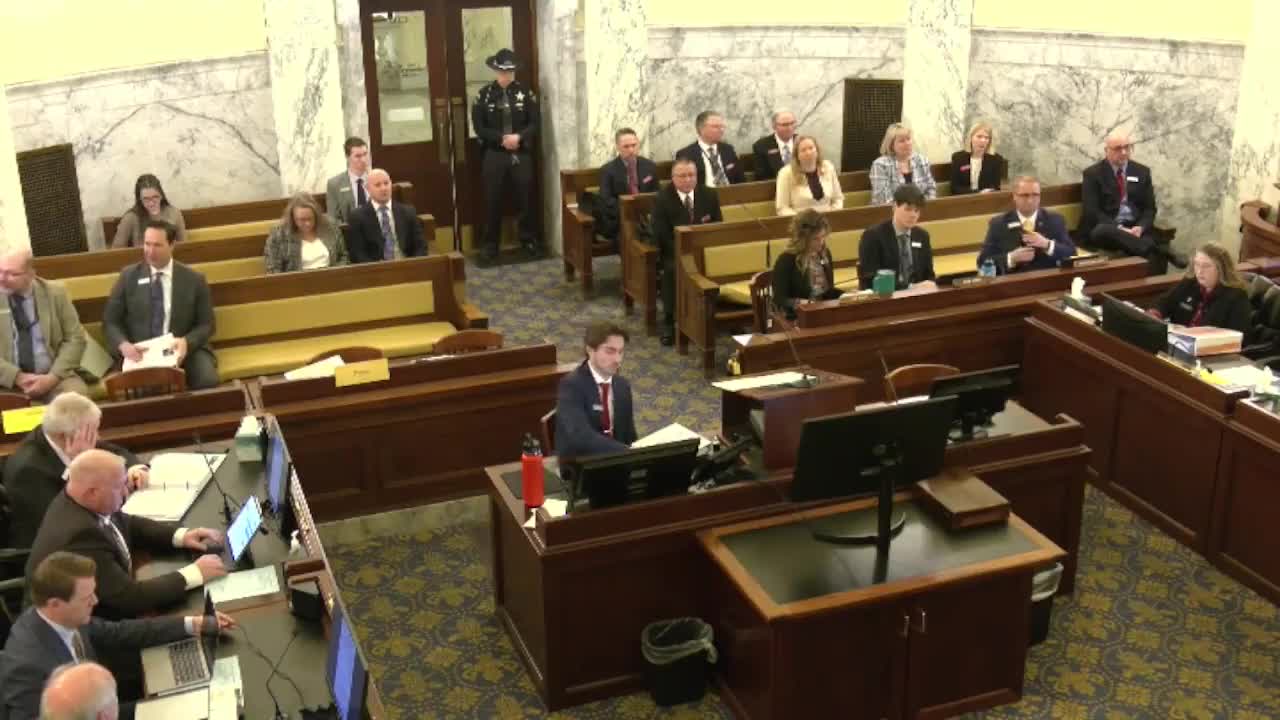
The Industrial Commission told the Joint Finance‑Appropriations Committee on Jan. 23 that it is seeking a mix of ongoing and one‑time funding in fiscal 2026 to staff vacancies, maintain its IRIS case management system and replace aging field vehicles.
“Noah Peterson, budget and policy analyst for the Legislative Services Office, opened the presentation, saying, “this is the budget review for the Industrial Commission.” He noted the agency has 130.25 total FTPs, and 12 vacant positions as of August, and that the commission is a dedicated‑fund agency rather than a general‑fund agency.
The request includes personnel and operating enhancements billed to the Industrial Administration Fund and a continuing need to fund maintenance for the IRIS modernization project. Committee members repeatedly pressed the agency on why IRIS — which Peterson and others described as largely complete as a development project — still requires recurring contracted support instead of being absorbed by the Office of Information Technology Services (OITS). Peterson said the request for $288,000 is “contracted support” because OITS has not been able to provide the long‑term technical support the commission expected.
Director George Gutierrez told the committee the IRIS project automated many paper processes and increased the volume and sources of data the commission manages, which in turn raised workloads in several program areas. “The difference here is some of those responsibilities that they were doing before in terms of gathering documentation and just passing it on fell to our referees to work on. So now we're shifting some of that responsibility back to our legal associates,” Gutierrez said, describing how electronic records produced more material that must be validated before hearings.
The commission outlined 10 enhancement requests for fiscal 2026. Key items described in the hearing record included: - A $288,000 one‑time request for IRIS long‑term technical support because OITS cannot provide the service at this time. - A $66,500 ongoing request to fund a senior financial technician in the fiscal department; the unit had a backlog in the Crime Victims Compensation program and seeks faster payment turnaround. Peterson said the target turnaround for those payments is 30 days; at the time of the budget submission the estimated turnaround was about 12 weeks and the backlog exceeded 800 payments. - A $32,300 ongoing request for a rehabilitation field consultant for Twin Falls/Burley to address an area that handles “about 35% more cases” than the statewide five‑year average. - A $111,600 ongoing request for an additional referee to reduce hearing and decision delays; Gutierrez said the commission’s case processing target had slipped from 90 days to about 110 days. - A $62,300 request for a technical records specialist to support employer compliance work that expanded after IRIS implementation. - One‑time contingency and replacement items tied to IRIS, including a $30,000 contingency recommended originally by OITS, and $104,200 for laptops, monitors and docking stations. - A request to replace four high‑mileage small SUVs used by field staff; mileage cited ranged from roughly 82,000 to 98,000 miles and model years from about 2006–2011.
Peterson and Gutierrez described the IRIS project as a multiyear modernization effort. Peterson said the commission was appropriated about $12,874,000 in one‑time monies between fiscal 2021 and 2025 for IRIS development, and that the commission expects ongoing maintenance and occasional one‑time enhancements related to the system. Gutierrez added the commission has used one‑time appropriations to develop IRIS and is now requesting one‑time amounts for technical support until OITS can take over maintenance tasks such as code changes, permission updates and platform patches.
The presentation also summarized recent reversion and expenditure history. Peterson said the commission reverted about $4,555,000 in the prior year; the largest single driver was $3,000,000 in trustee and benefit payments, of which roughly $2,400,000 came from the Crime Victims Compensation Fund. Other reversion categories cited included about $644,000 in personnel costs, $835,000 in operating expenditures and $55,000 in capital outlay.
Committee members asked several operational questions the director agreed to answer with follow‑up information: Representative Petzke asked whether consistently reverted funds could be repurposed to staff vacancies; Gutierrez said most reversions were trustee and benefit payments and reallocating them would require approval beyond the commission. Senator Cook asked for details about the IRIS maintenance contract and whether the work represented new functionality; both Peterson and Gutierrez said they would provide more specifics. Representative Mitchell asked for a fleet inventory; Peterson said he would supply the current fleet list and mileage data.
The governor’s recommendation, as presented, included a 5% commissioner cost‑of‑living/compensation placeholder ($22,400 shown) and did not recommend the contingency fund for IRIS. Peterson closed by offering to stand for questions and the committee directed staff and agency to provide requested detail on IRIS costs, the commission’s vacancy plan and the vehicle inventory.
The hearing record shows the committee did not take any formal votes on the Industrial Commission budget at the Jan. 23 meeting; the presentation was informational and the committee requested follow‑up materials from the agency.
Looking ahead, the commission is asking the legislature to approve a mix of ongoing personnel funding and one‑time allocations to maintain IRIS and address staffing and fleet shortfalls. The agency emphasized the enhancements are intended to reduce payment backlogs for victims, clear cases more quickly for injured workers and ensure field staff have safe, reliable vehicles for remote work.