Get Full Government Meeting Transcripts, Videos, & Alerts Forever!
Get email alerts on the Charter Amendments topic
No spam. Unsubscribe anytime.
High Springs commissioners approve putting selected charter amendments on 2025 ballot after debate over forfeiture and residency language
Summary
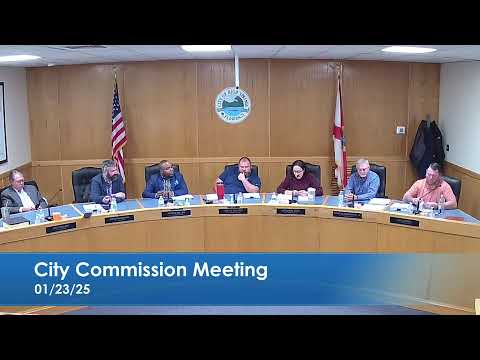
After a multi-hour discussion and public comment, the High Springs City Commission voted to place select Charter Review Board recommendations on the 2025 municipal ballot and to postpone others for revision and consideration in 2026.
The High Springs City Commission voted Jan. 23 to place five recommended charter changes on the 2025 municipal ballot and to send five others back for revision and possible placement on the 2026 ballot.
The motion, introduced by Vice Mayor Miller, asked that “1, 3, 4, 6 and 8” be placed on the 2025 ballot while items 2, 5, 7, 9 and 10 would be revised and discussed for 2026. The motion passed on a voice vote with all commissioners present voting in favor.
The items approved for 2025 include housekeeping and procedural changes the Charter Review Board proposed last year. During a staff presentation, Charter Review Board representative Miss Weller summarized the board’s work, telling the commission the board had “proposed 15 different changes to the charter” and that five had already been put to voters last year.
Why it matters: The charter sets the rules for how the city governs itself — from how commissioners are selected and paid to limits on individual commissioners’ authority. Voters will decide whether to adopt the revisions the charter review committee recommended for this election cycle.
What the recommended changes say and why commissioners debated them
- Composition and seat language (Section 2.01): The review board recommended removing specific commissioner names from the charter and replacing them with timing-based language so the charter text does not contain outdated personal names.
- Elections and vote outcome language (Section 2.02): The committee recommended maintaining a plurality system (the candidate receiving the most votes) rather than creating automatic runoffs. The committee also proposed specifying that a tie would be resolved by a coin flip and that newly elected commissioners take office at the next commission meeting following the election.
- Compensation (Section 2.03): Language requiring a “monthly” salary was revised to remove the word “monthly” to allow flexibility in pay cadence; the proposal also says if the commission does not set compensation in a given year, the prior year’s salary continues.
- Mayor’s term (Section 2.04): The board proposed that the mayor serve for one year and that a second consecutive year require a supermajority vote of the commission.
- Commission–employee relations and censure (Sections 2.06 and related): The proposed language strengthens limits on individual commissioners giving orders or direction to city employees, explicitly prohibiting orders “publicly or privately, directly or indirectly” except through charter-authorized channels. The committee also proposed a censure procedure allowing the commission to adopt a resolution of disapproval by majority vote when a member is found to have violated the charter.
- Forfeiture of office (new Section 2.09): The draft adds grounds for forfeiture of office, including loss of required qualifications, conviction of a felony, moving outside the city limits, or missing three consecutive regular meetings without excuse. The proposal includes a quasi‑judicial hearing process before any forfeiture is effective.
- City manager residency and office organization (Section 3.04 and 3.01): The board proposed that the city manager generally obtain residency within 12 months of appointment, with the commission able to grant extensions for good cause. They also recommended removing language that would allow combining the city manager and city clerk offices in a single appointee.
Public comment and council concerns
Several citizens and commissioners voiced concerns about the proposed forfeiture and censure provisions. Janet Evans, a resident who spoke during public comment, said she opposed giving four commissioners the power to remove a colleague and urged that removal remain a power of the voters through the state recall process: “I don’t think 4 of you have the right to dismiss a commissioner for whatever reason,” she said.
Other residents warned that the censure and forfeiture language could invite overreach or be used as a tool for political disputes. Commissioners also debated technical phrasing — whether the charter should say a felon convicted “during the term” — and whether residency and supermajority thresholds were appropriate.
Next steps and staff direction
After the motion to place the selected items on the 2025 ballot passed, the commission directed staff and the city attorney (Danielle) to prepare ballot language and ordinance text. City staff noted state rules limit ballot descriptions to a small number of words (typically 75) and that the language must be clear and not misleading. The commission was also advised the ordinance process requires first and second readings to put charter amendments on the ballot.
Commissioners asked staff to refine the draft language (including updating seat dates to 2027 for two seats) and return with clean ordinance language for formal action at a subsequent meeting. The commission also instructed the city attorney to distinguish emergency‑meeting rules from special meetings when updating notice requirements; staff said the state statute generally requires at least 72 hours’ notice for special meetings, while true emergency meetings may be held with shorter notice but only to address the immediate emergency.
Votes at a glance (meeting actions)
- Motion to place charter items 1, 3, 4, 6 and 8 on the 2025 ballot and to revise and consider items 2, 5, 7, 9 and 10 for 2026: Passed (voice vote; all five commissioners present in favor). Motion moved by Vice Mayor Miller; second offered and accepted on the record.
- Declare fire department reserve engine surplus (surplus engine): Passed (voice vote).
- Ordinance 2025‑01 (budget amendment as read): Passed (roll‑call vote; unanimous yes from commissioners present).
- Mutual aid agreement with Columbia County Sheriff’s Office (voluntary cooperation/operational assistance): Passed (voice vote).
- Appointment of a representative to the North Central Florida Regional Planning Council: Commissioner Bloodsworth appointed (voice vote).
What the outcome means
Several of the recommended changes are procedural or housekeeping; others — particularly the censure/forfeiture provisions and manager‑residency language — set new expectations for commissioner conduct and city governance and could change how future conduct disputes are handled if voters approve them.
The commission did not adopt final ordinance language at the meeting; staff will return with revised draft ordinance and ballot language for the items the commission agreed to forward, and those refinements will be brought back for formal readings and final placement on the ballot.
Ending note
Commissioners and several speakers asked staff to prioritize clear, plain‑language ballot wording and to work with the city attorney to ensure the ballot language fits statutory limits while explaining terms like “plurality” for voters. The commission scheduled follow‑up drafting and legal review ahead of the ordinance hearings required to place the measures before voters.