Get Full Government Meeting Transcripts, Videos, & Alerts Forever!
Get email alerts on the Public Safety Human Services topic
No spam. Unsubscribe anytime.
Whitehall mayor proclaims January 2025 National Human Trafficking Prevention Month
Summary
Mayor Michael T. Bivens read a proclamation recognizing human trafficking as a persistent public‑health and criminal issue; local nonprofit representatives and police described local incidence and the need for survivor services and public awareness.
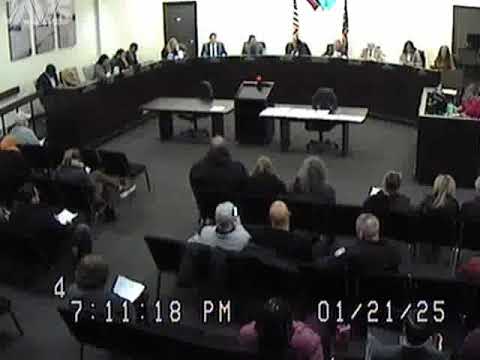
Mayor Michael T. Bivens used the Whitehall City Council meeting on Jan. 21, 2025, to read a proclamation declaring January 2025 as National Human Trafficking Prevention Month in Whitehall and to highlight local efforts to support survivors.
The mayor invited representatives of Still I Stand and Whitehall police to add context before reading the proclamation. Cara Austin of Still I Stand told council the organization and local partners serve survivors of domestic servitude, labor trafficking and sex trafficking and that awareness is critical because traffickers exploit vulnerabilities such as poverty, isolation and unstable housing. “If we don't acknowledge that it happens right here at home, we're not gonna be able to eradicate it,” she said.
Whitehall Police Chief Mike Crispin provided local and statewide figures, saying that in 2023 the Polaris hotline received over 850 calls for trafficking incidents in the state and that the Whitehall division investigated six local cases that year, many identified through traffic stops and the narcotics unit. He described a November operation in which law enforcement rescued multiple victims; he said some rescued people return to exploitation because of underlying vulnerabilities and emphasized the need for trauma‑informed services and a clear help pathway when survivors are ready to accept assistance.
The mayor's proclamation cited the federal Trafficking Victims Protection Act and national estimates of millions of people affected worldwide; it called on residents, businesses and organizations to raise awareness, support survivors and work collaboratively across sectors. The proclamation also thanked local partners — including Still I Stand and the police department — and Council Member Amy Harcourt for help drafting the language.
Why it matters: Council members and presenters said human trafficking is both a criminal justice and public‑health issue that requires coordinated, trauma‑informed responses. The proclamation does not by itself create new programs or funding but formalizes the city's commitment to awareness and cross‑sector coordination.
What was said: Mayor Bivens read the proclamation text into the record. Cara Austin and Chief Crispin described local outreach and enforcement work. Chief Crispin urged the public to know that help exists and that survivors often need sustained support beyond rescue.
What happens next: Council members praised the proclamation and thanked presenters. The city did not approve new funding or a specific new program at the Jan. 21 meeting; council members and the mayor suggested continued collaboration with local nonprofits and state partners to improve survivor services and public awareness.
Provenance: The presentation and proclamation began during the special presentation item and concluded when the mayor signed the proclamation at the dais.