Get Full Government Meeting Transcripts, Videos, & Alerts Forever!
Get email alerts on the Legislative Compensation topic
No spam. Unsubscribe anytime.
Idaho House approves resolution allowing legislators to donate compensation to tax relief fund
Summary
The Idaho House on Jan. 23 passed House Concurrent Resolution 4, which permits individual legislators to donate part or all of their legislative compensation to the state Tax Relief Fund; the measure passed 61-7 and will move to the Senate.
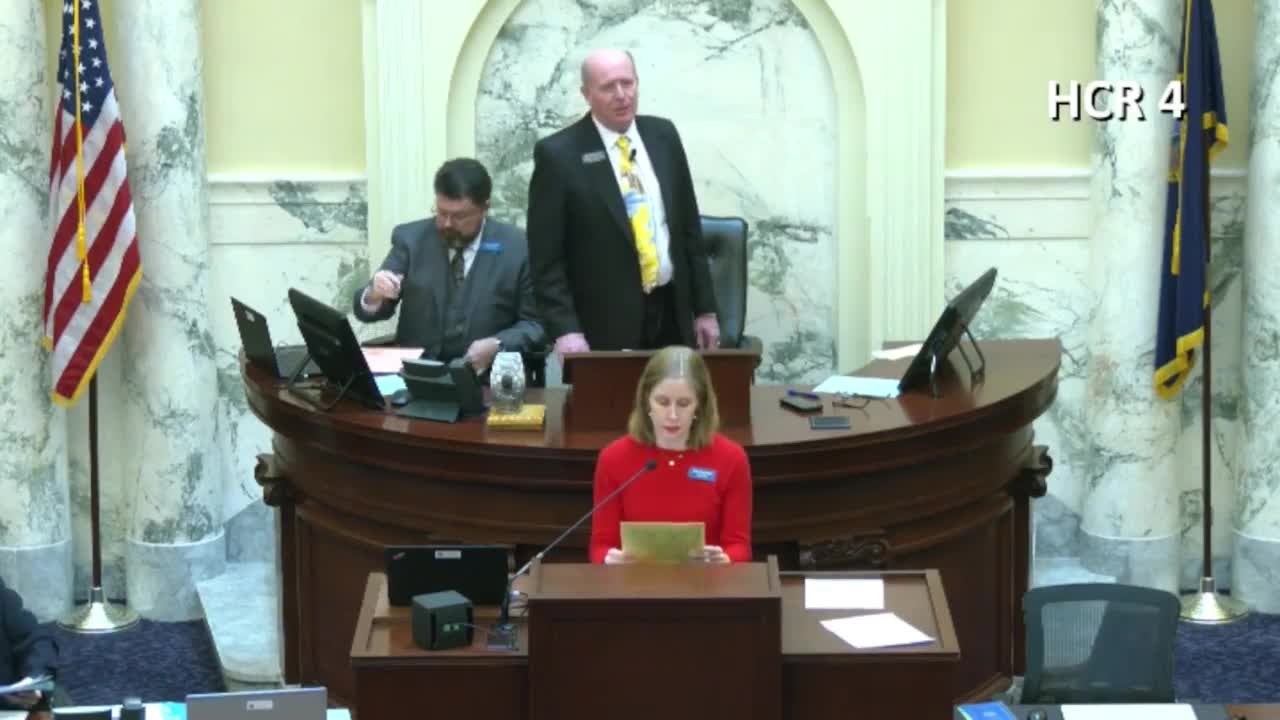
The Idaho House of Representatives on Jan. 23 approved House Concurrent Resolution 4, a measure that allows individual legislators to donate all or part of their compensation to the Tax Relief Fund established under Idaho Code §57-811. The resolution passed the House 61 yeas, 7 nays, with 5 members absent or excused and now moves to the Senate.
The resolution, read on the House floor, notes action by the Citizens Committee on Legislative Compensation setting a $25,000 base salary for legislators for the period Dec. 1, 2024, through Nov. 30, 2026, and says members who consider themselves overcompensated may donate pay to the Tax Relief Fund. Representative (District 22), the sponsor, told colleagues the measure provides “an option… if you believe that we’re getting paid too much, then you may donate.”
The measure drew sustained debate on the House floor over whether the resolution was necessary or an appropriate response to public concerns about legislative compensation. Opponents repeatedly framed the resolution as a symbolic or insufficient response to inflation and cost pressures affecting Idaho families. “This resolution… is a virtue signal,” said Representative (District 25), who urged colleagues to oppose referring the resolution elsewhere and instead vote it down. Representative (District 12) provided a concrete figure during debate, saying, “We make $19,913 a year,” to illustrate how the new base salary changes take-home amounts.
Procedurally, the House first voted 59 yeas, 5 nays, 6 absent to suspend the rules and consider HCR 4 immediately. A separate motion to send HCR 4 to general orders (a procedural referral) failed on a 5-63 vote. After further floor debate, members voted to adopt the concurrent resolution by a roll call of 61 yeas, 7 nays, 5 absent and excused. The sponsor emphasized that the resolution does not itself set pay rates; those are determined by the Citizens Committee on Legislative Compensation and the resolution only creates the donation option.
Supporters said the measure preserves the citizen-legislature model by making service more accessible to those without independent means, while giving members who object to higher compensation a direct mechanism to return funds to taxpayers. Critics said the resolution does not address underlying budget or cost-of-living concerns and described it as insufficient political theater.
The House transmitted HCR 4 to the Senate for consideration.