Get Full Government Meeting Transcripts, Videos, & Alerts Forever!
Get email alerts on the Invasive Species And Agency Budget topic
No spam. Unsubscribe anytime.
Idaho Agriculture Department details budget increases tied to quagga mussel response and investigator pay
Summary
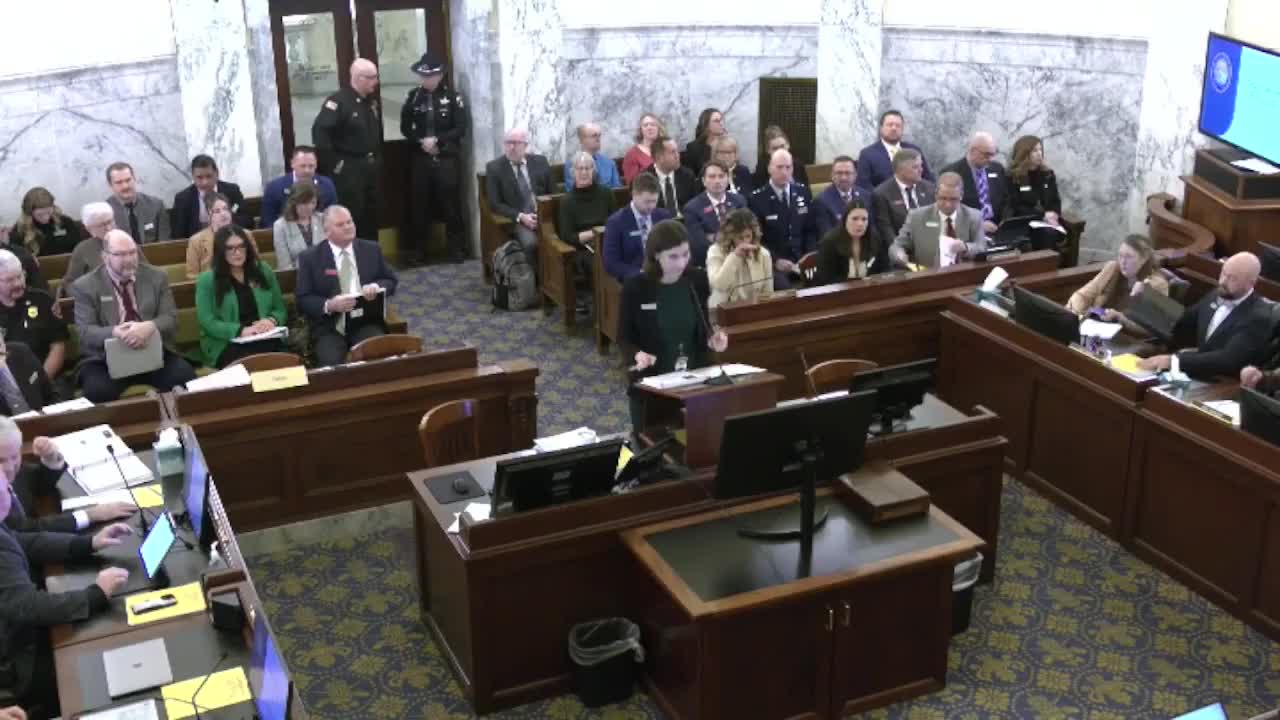
Department of Agriculture officials told the Joint Finance-Appropriations Committee that FY2026 requests include funding for quagga mussel response, investigator pay structure changes and vehicle and IT replacement; legislators pressed for details on funding sources and vehicle counts.
Frances Lippett, a budget and policy analyst with Legislative Services, told the Joint Finance-Appropriations Committee that the Idaho State Department of Agriculture’s fiscal 2026 request includes targeted funding to address invasive quagga mussels and to shore up investigator pay and equipment.
Lippett said the legislature approved a $5,000,000 cash infusion from the general fund to the invasive species fund during the last session and that the governor recommended ongoing general fund support of about $1,500,000 for quagga mussel response to support staffing and check-station needs. "The projected decline that you see in the fund balance reflects the extent of that effort rather than any decline in sticker fee revenue," Lippett said, referring to watercraft sticker fees that primarily fund the invasive species program.
The department’s director, Chanel Tewell, told the committee the agency doubled statewide water sampling and nearly doubled the number of watercraft inspections after the 2023 detection on the Snake River. "We asked for funding and ... to add three more stations," Tewell said. "What we did with adding three more stations and expanding the work at every station was to almost double the amount of watercraft we inspected last year compared to the year before." She said the extra work included more personnel and communications at check stations.
Why it matters: the quagga mussel actions are the main driver of a notable one-time and ongoing increase in the department’s appropriation. Committee members asked analysts and the director where the money comes from and how it will be spent.
Budget and personnel details
Lippett reviewed the department’s structure and finances, saying the agency is organized into eight budgeted programs and is authorized 231 full-time-equivalent positions (FTE), above a five-year average of 220.7 FTE. She reported the department maintained about a 91% staffing rate and spent roughly 76%–83% of appropriations in recent years. "In fiscal year 2024 the department expended a total of $42,986,900; 59.5 percent of that was in personnel costs," she said.
For FY2026 the department requested $518,300 in ongoing enhancements, including $340,400 to create a pay structure for 53 agricultural investigator senior positions. Lippett said 23 of those investigators have been with the department less than two years, and nine have 10 or more years of experience; the requested pay structure is intended as a career ladder to improve retention. The department also requested change-in-employee-compensation (CEC) adjustments for fresh fruit and vegetable (FFV) inspectors; those inspector positions are not covered by the statewide CEC decision, she said.
Replacement items requested for FY2026 include $1.1 million on a one-time basis (about $891,000 for vehicle replacement and $214,700 for IT hardware such as laptops). Director Tewell confirmed the department would provide a vehicle list when asked by Representative Mitchell and said she believed the replacement count was about 17 vehicles, “most of which are pickup trucks and a couple of SUVs.”
Funding mechanics and clarifications
Committee members asked why the budget presentation showed a $10,000,000 appropriation and then a $5,000,000 net reduction. Lippett explained that when the general fund makes a cash transfer there must be an appropriation in both the receiving dedicated fund and in the general fund; the net effect is the $5,000,000 state cost shown on the consolidated page. She described certain dedicated funds (for example the invasive species fund, funded primarily by a watercraft sticker fee) and noted the legislature approved the $5,000,000 general fund infusion and an ongoing $1.5 million general-fund appropriation for quagga response.
On the pest control fund, Lippett said a balance of about $1,700,000 shown on the slides was incurred in FY2024 and was being requested for payment in FY2025 due to Mormon cricket treatment and monitoring costs.
What remained unsettled
Several legislators asked for follow-up material: Representative Mitchell requested a vehicle list and counts; Senator Cook and others asked for status updates on quagga mussel sampling and the outlook for ongoing costs; Representative Tanner flagged a line in the department’s submission that he thought showed Department of Justice or Health and Human Services revenue flowing into a victim-services account and asked for clarification. Director Tewell acknowledged possible typographical or slide errors and offered to follow up.
Ending
Tewell thanked the committee and emphasized the investigator pay proposal and the invasive species response as priorities, saying high turnover among investigators is costly to the farming community because those investigators are "the first responders" to complaints. Lippett concluded the department’s presentation and said analysts would provide requested follow-up details to committee members.