
District reports progress on five-year curriculum reviews for ELA and math; new directors and professional development emphasized
Get AI-powered insights, summaries, and transcripts
Sign Up Free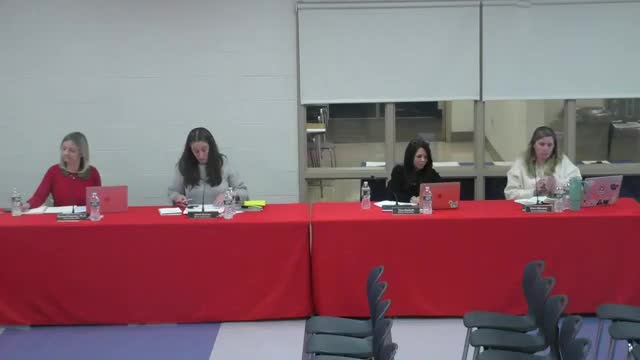
Summary
Administrators described ongoing curriculum review cycles (year 3 ELA, year 2 math), new district hires to support curriculum, use of routines and programs (Keys to Beginning Literacy, Kate Roberts, Writing Revolution, ST Math), pilot evaluations and plans for further classroom modeling and data collection.
Dr. Nicole Moriarty and curriculum staff updated the Rockville Centre Union Free School District Board of Education Jan. 23 on a multi-year curriculum-review process and professional development tied to English language arts (ELA) and mathematics.
Moriarty said the district follows a five-year review cycle and is in year 3 for ELA and year 2 for math. She said the administration recently reorganized the curriculum office and hired two directors: Miss Nissler as director of humanities and Mr. Gaye Acardi as director of mathematics, science and technology. "Our teachers are our greatest asset," Moriarty said, explaining that the district is investing in training and coaching to align instruction across grades.
Presenters summarized several instructional programs and routines adopted or expanded across grade levels: Keys to Beginning Literacy (K–2), Keys to Comprehension (grade 3+), the Writing Revolution (Hockman routine), and routines informed by reading-science groups (Reading League and dyslexia resources). Consultant Kate Roberts has worked with upper-grade teachers to model literature instruction, book clubs and learning progressions; elementary teachers have developed integrated units for grades 3–5 and are building routines to connect reading and writing.
On math, presenters described alignment of grades 6–8 to the Next Generation standards, ongoing work on geometry and upcoming algebra 2 alignment. The district piloted MAP Accelerator in K–6 and subsequently piloted ST Math; staff reported a preference for ST Math in elementary grades after classroom feedback. The district also brought outside trainers—identified in the presentation as Brendan Scribner and Annalise Recker/Record (transcript spelling varies)—to model "building thinking classrooms" and math-practice routines, and reported teacher interest in classroom visits and coaching.
Staff reported anecdotal teacher feedback and preliminary survey results showing strong interest in the math practices training and positive changes in student engagement and behaviors. Examples highlighted included middle-school teachers using AI tools to give students immediate feedback during multi-draft writing assignments, and a high-school principal who led a professional-development session on the Writing Revolution that resulted in rapid adoption by social-studies teachers.
The presenters and board members discussed the role of in-district collaboration, cross-content literacy strategies, piloting procedures, and the importance of longitudinal data. Board members asked for more cohort-tracking data, budget/ROI analysis for curriculum decisions, and disaggregated outcomes for special-education and ELL students; staff said they will continue data collection and return with more complete analyses as the review proceeds. No formal board action was taken on curriculum on Jan. 23; the presentation was informational.