Get Full Government Meeting Transcripts, Videos, & Alerts Forever!
Get email alerts on the Tangible Personal Property topic
No spam. Unsubscribe anytime.
Bill to reinstate $10,000 de minimis exemption for business equipment draws business and county interest
Summary
Sen. Tony Sorrentino introduced LB200 to restore a $10,000 de minimis exemption on tangible personal property assessed as part of Nebraska business property taxes.
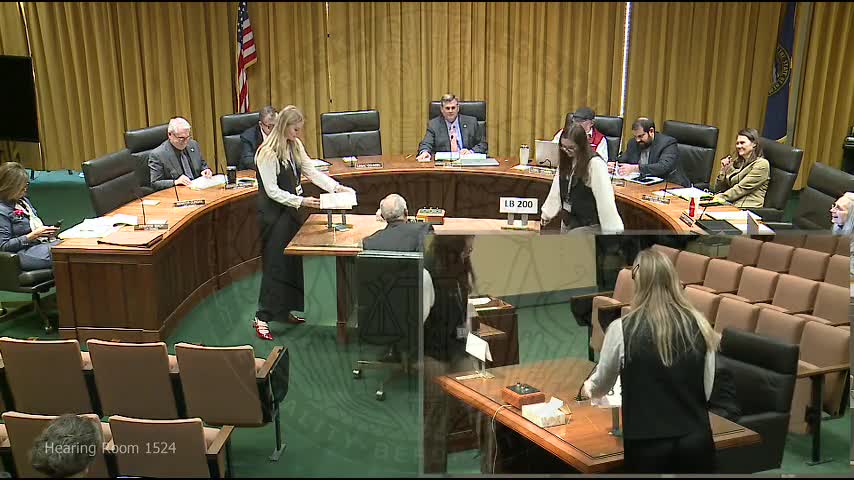
Senator Tony Sorrentino introduced Legislative Bill 200 to reinstate a $10,000 de minimis exemption for tangible personal property — the business equipment and machinery businesses must currently report and tax — during a Revenue Committee hearing.
Sorrentino said the tax on tangible personal property (TPP) imposes compliance costs and can discourage investment; he described the reinstatement of the $10,000 exemption, which was repealed in 2020, as a way to reduce administrative burden on small businesses and improve Nebraska’s competitiveness.
Why it matters: Testimony described the tax as administratively burdensome and disproportionately affecting small businesses and farmers. Supporters said a modest de minimis would remove many small businesses from the TPP tax rolls and help retain investment. Opponents were not present; the Nebraska Association of County Officials (NACO) and county officials testified in a neutral capacity and noted long‑running legal and central‑assessment issues tied to exemptions.
Nicole Fox, director of government relations for the Platte Institute, urged restoring the $10,000 exemption as a step toward phasing out TPP taxation. Fox said reinstating the exemption would remove many small businesses from the tax rolls and noted other states have higher thresholds. She also testified to an approximate fiscal impact included in committee materials: Sorrentino and proponents referenced a fiscal note estimating roughly $16 million in reduced state revenue for the next revenue cycle associated with the measure.
Multiple business groups and local chambers — including the National Federation of Independent Business and the Lincoln Chamber of Commerce — supported LB200. Witnesses emphasized small operators’ administrative burdens and offered examples of entrepreneurs who must track depreciated values and file assessments. NFIB counsel Jerry Stillmock and chamber representatives said the exemption would reduce compliance costs and encourage small business formation.
County and central‑assessment considerations: John Cannon of NACO testified in a neutral role and provided historical context showing how earlier exemptions and court challenges to central assessment (railroads, pipelines) prompted special legislative responses and compensating payments to local jurisdictions. He noted that any broad exemption requires mechanisms to avoid unequal treatment of centrally assessed properties and to compensate local governments for lost tax base.
Key figures and clarifications from testimony: The fiscal note cited by the introducer was described as approximately $16 million for the next revenue cycle; proponents also cited total annual TPP tax collections in the record (speakers used the figure in testimony but figures were transcribed inconsistently). Several testifiers said the exemption would amount to roughly a 7 percent tax reduction for businesses currently subject to TPP taxation. Committee members discussed options including phased approaches.
No formal vote was taken. The committee received proponent and neutral testimony and closed the public hearing on LB200.