Get Full Government Meeting Transcripts, Videos, & Alerts Forever!
Get email alerts on the Motor Vehicle Homicide Unborn topic
No spam. Unsubscribe anytime.
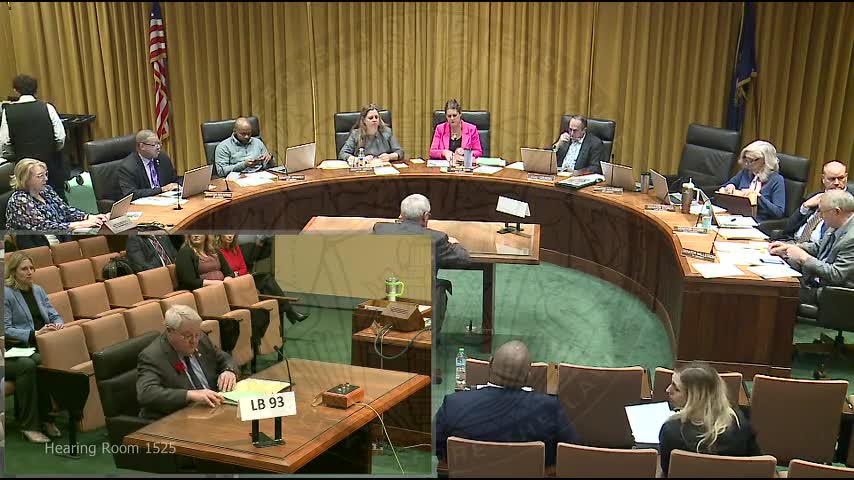
Senate hearing seeks tougher penalties for motor-vehicle homicide that kills an unborn child
Summary
Sen. Rick Holcroft asked the Judiciary Committee to harmonize penalties so motor vehicle homicide resulting in the death of an unborn child while driving under the influence carries the same felony classification (2A) and sentencing range as motor vehicle homicide for other victims.
Sen. Rick Holcroft introduced LB 124 to align penalties for motor vehicle homicide when an unborn child dies while a driver is under the influence with the penalties for motor vehicle homicide of any other person.
Holcroft told the Judiciary Committee the current statute treats motor-vehicle homicide of an unborn child while driving under the influence as a Class 3A felony with a maximum of three years, while motor vehicle homicide of another person in the same circumstances is a Class 2A felony with up to 20 years. He said the difference is an anomaly and asked the committee to harmonize the statutes so judges have the same sentencing discretion when the fatality is an unborn child.
Ryan Lindbergh, Deputy Douglas County Attorney and representative of the Nebraska County Attorneys Association, supported the bill and described prior cases in which an unborn child died due to an intoxicated motorist. Lindbergh said the disparity in available sentences created an arbitrary distinction and that harmonizing the penalty would ensure consistent treatment across fatality statutes. Several victim advocates and family members testified in favor: Darla Bengtson described the 2022 death of her daughter, the unborn child, and another family member in a high-speed crash involving an intoxicated driver and urged the committee to support tougher penalties. Public-safety advocates and organizations including Project Extra Mile and Nebraska Right to Life also testified in support.
Opponents included the Nebraska Criminal Defense Attorneys Association (represented by Spike Eicholdt), whose testimony argued that increasing the penalty risks over-criminalization and could alter defendants' incentives to litigate meritorious defenses, with broader consequences for plea dynamics and court resources. He urged caution and proposed alternative approaches, such as adjusting penalties differently to preserve proportionality across statutes.
Committee members asked clarifying questions about who would be charged, how penalties aggregate when both mother and unborn child die, and whether harmonizing penalties would change prosecutorial practice. Supporters said the bill would simply harmonize classifications and provide judges more latitude in sentencing; the sponsor said he formerly carried similar legislation and planned to move the measure forward again.
No committee vote was recorded at the conclusion of the hearing.