Get Full Government Meeting Transcripts, Videos, & Alerts Forever!
Get email alerts on the Opioid Reversal Medications topic
No spam. Unsubscribe anytime.
Nebraska committee hears bipartisan bills to broaden statutory language for opioid reversal drugs
Summary
The Judiciary Committee heard a joint presentation on LB 5 and LB 195 to change Nebraska statute language from naming naloxone specifically to a broader term, "opioid overdose reversal medication," to allow newer FDA-approved drugs and generics to fall under standing orders and immunity protections.
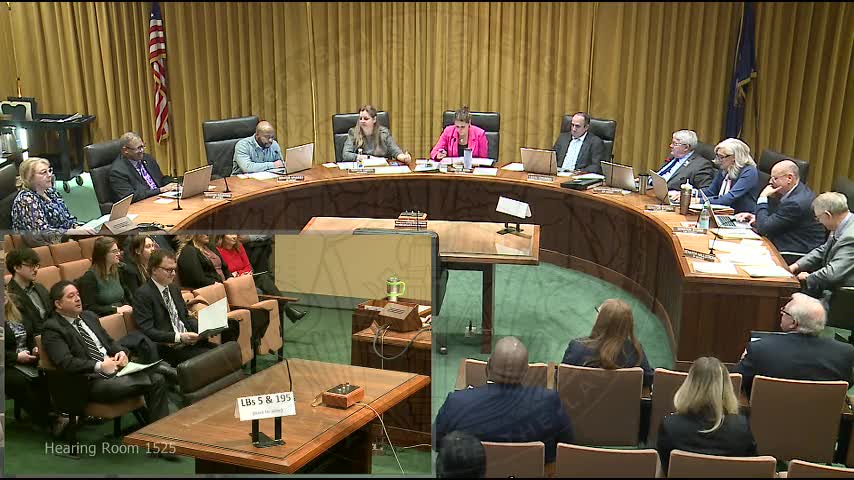
Sen. Carolyn Bosn, chair of the Judiciary Committee, opened a combined hearing on LB 5 and LB 195, bills that would expand Nebraska statutory language to cover opioid overdose reversal medications beyond brand-name naloxone.
Supporters told the committee the change would let the state's standing order and civil/criminal immunity clauses cover generic naloxone products and future FDA-approved reversal agents, which could improve access in rural and underserved areas.
Sen. Glenn Meyer, sponsor of LB 195, said the bills would update state law to reflect market changes since the statute named naloxone specifically. “LB 195 will improve access to opioid overdose reversal medications by updating the statutory language to include the broader term opioid overdose reversal medication,” Meyer said at his opening. Dr. Thomas Janousek, acting director of the Division of Behavioral Health at the Department of Health and Human Services, and Dr. Roger Donovic, the department’s executive medical officer, testified in support and urged the committee to adopt broad language so future FDA-approved products would be covered without repeated legislative changes.
Dr. Donovic told the committee opioid reversal drugs are safe and effective and that expanding the statute would remove barriers to life-saving interventions. He said the broader term would avoid limiting the statute to a single therapeutic class and allow later agents, such as nalmefene if it becomes appropriate for lay use, to be included.
Committee members asked whether over-the-counter versions would be covered, whether there are adverse effects if a reversal agent is given to someone not experiencing an overdose, and whether federal funds cover distribution of naloxone programs. Witnesses said typical side effects are mild (dizziness, headache, gastrointestinal upset), allergic reactions are rare, and the state currently distributes naloxone largely using federal grant dollars. Staff from DHHS clarified the standing order language and said an amendment or coordination with the standing order could address whether over-the-counter products should be explicitly included.
Support letters were filed: the record noted seven letters in support for LB 5 and four proponents for LB 195. Both sponsors said they intend to advance LB 195 because it uses the broader language and asked that letters supporting LB 5 be considered.
With no opponents at the hearing, sponsors and witnesses asked the committee to move one of the bills to general file so Nebraska can expand access to reversal medications and ensure immunity protections apply to new, FDA-approved options.
The hearing record shows proponents from DHHS and public-health advocates presenting technical and policy reasons to broaden the statute; the committee did not take a vote during the hearing.