Get Full Government Meeting Transcripts, Videos, & Alerts Forever!
Get email alerts on the Public Health topic
No spam. Unsubscribe anytime.
Bill would require two additional syphilis tests during pregnancy as Nebraska faces rising congenital cases
Summary
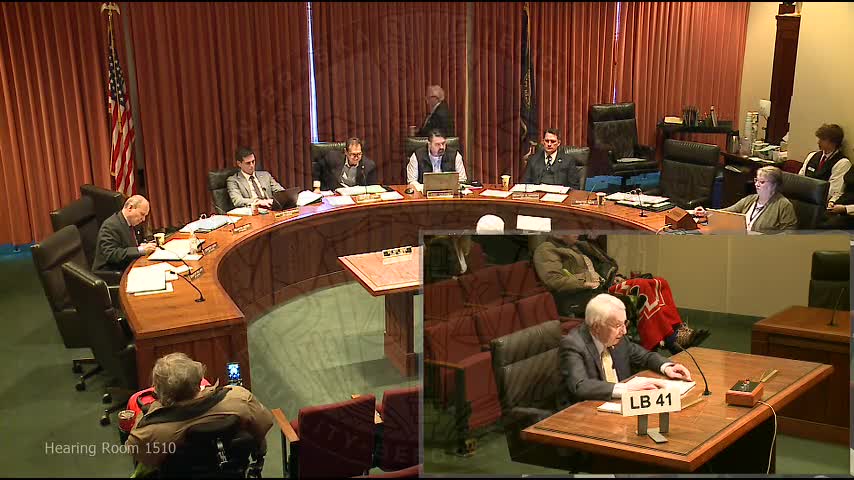
Sen. Murph Rippey introduced LB 41 to require two additional syphilis blood tests during pregnancy—one in the third trimester and one at delivery—after witnesses said congenital syphilis rates have climbed in Nebraska.
Senator Murph Rippey introduced LB 41 to require two additional syphilis blood tests for pregnant women—one in the third trimester and one at delivery—on top of the first prenatal screening already required by state law.
Supporters, including clinicians and county public-health officials, told the Health and Human Services Committee that Nebraska has experienced sharp increases in syphilis among women and in congenital syphilis. They said earlier and repeated screening during pregnancy would identify infections that occur after an early negative test and allow treatment with penicillin, which prevents transmission to the fetus.
Why it matters: Witnesses described a rise in syphilis statewide since 2017 and concentrated increases in Douglas and Lancaster counties. Dr. Anne Anderson Berry, a neonatologist, told the committee she treated only one case of congenital syphilis in the first 20 years of her practice but now sees infants needing prolonged NICU care for congenital infection. She testified that “syphilis is easily and inexpensively treated with penicillin when detected.” Public-health officials said screening three times—first prenatal visit, third trimester, and at delivery—aligns with updated 2024 CDC and ACOG guidance and reduces infant harm and high downstream costs.
Committee members asked about the statute’s language and opt-out provisions. Witnesses confirmed pregnant patients may decline testing and that the bill mirrors existing opt-out structure. Several witnesses emphasized the cost-effectiveness: Dr. Berry described the high cost of NICU care (typical NICU stays can cost tens of thousands of dollars), and other witnesses noted that preventing a small number of NICU admissions would likely offset the added testing expense.
What didn’t change today: The committee took testimony but did not record a final vote on LB 41 during the hearing.
Ending note: Proponents urged the committee to adopt LB 41 to bring Nebraska’s statutory screening rules into alignment with national guidance and to prevent avoidable congenital infections and their long-term costs.