Get Full Government Meeting Transcripts, Videos, & Alerts Forever!
Get email alerts on the School Schedule Innovation topic
No spam. Unsubscribe anytime.
Naperville CUSD 203 presents multi-level proposal to redesign school day; no action taken
Summary
District administrators presented a two-part “innovating the school experience” plan that would change start times, add elementary minutes, expand math time at middle school, and introduce a block schedule at high school. Board members asked for more implementation detail; the board will discuss final models Feb. 3 with no vote scheduled.
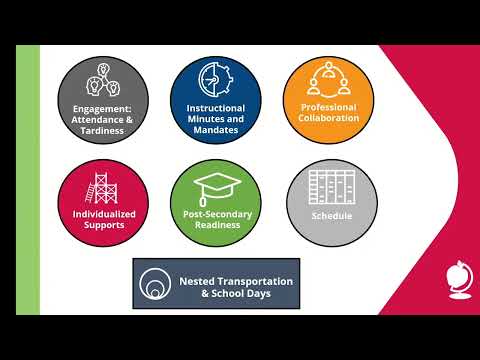
At a Board of Education meeting, Naperville CUSD 203 administrators presented the first of a two-part overview of a proposed redesign of the district school day intended to increase instructional and collaboration time and expand “work-based” and interdisciplinary learning opportunities.
The presentation—described by a district administrator as an overview with “no formal recommendation for action being presented tonight”—maps proposals from early childhood through high school and says final recommended models will be presented to the board on Feb. 3 for further discussion (not for immediate action).
Why it matters: administrators framed the proposals as responses to persistent gaps in student growth and engagement (for example, middle school growth in mathematics was described as near the 42nd percentile despite higher achievement percentiles), long high-school days and long student day-stays driven by transportation, and chronic absenteeism. The district argued structural changes to time and schedules are required to increase individualized supports, deepen learning, and improve student well-being.
What the district proposed: at the elementary level, add 15 minutes to the student day to create a daily homeroom/morning meeting and a built-in intervention/extension block while protecting core instructional minutes; at middle schools, increase daily math minutes to roughly 53–60 minutes and attach a 20-minute daily intervention period (described in the presentation as a “back 20” or “what I need” period); at high school, move to a block model with four 85-minute block days and a mid-week anchor day of shorter periods to preserve regular contact and reduce passing time; and at early childhood, adjust session timing for 3‑year-olds versus 4–5 year‑olds, add planning time for teachers, and increase home‑visit/community outreach time.
Data cited: the district said its elementary day is currently 6 hours 15 minutes (starting about 8:15 a.m. and ending about 2:30 p.m.), graduation rates exceed 95 percent, and more than 85 percent of graduates enroll in postsecondary education. The presentation said chronic absenteeism is about 15 percent and that nearly half of all tardies are first‑period tardies at secondary schools. Administrators also described the district as having one of the longest high‑school days in the region and as the only nearby unit district using nested (overlapping) start/stop times across levels rather than staggered times.
Board and stakeholder concerns raised: board members and meeting participants focused on implementation detail and timeline, professional development needs for staff, equity impacts across student groups, childcare and family logistics, transportation consequences, and how the district will measure early indicators of success. Board member Amanda proposed structuring Q&A by level “so we all stay focused.” Board member Donna emphasized that the Feb. 3 presentation will be discussion only and asked for specifics the board will need before any future vote. Board member Kristen flagged math achievement gaps and welcomed the added middle‑school math minutes; she asked for clear success metrics and multi‑year outcomes tied to any rollout.
Responses from administrators: district presenters said the work builds on planning since 2018, on a 2021 blueprint commitment to analyze innovative school‑day models, and on design teams formed in spring 2024 that included teachers, support staff, students and union leadership. Administrators acknowledged bargaining implications with employee associations, committed to a communications timeline and additional professional learning, and said the Feb. 3 materials will include summarized stakeholder feedback from recent Focus 203 sessions and written comments. A district administrator said the intent is to begin implementation as early as next school year but that bargaining, transportation planning and other operational issues will inform the final timeline.
Discussion vs. decision: the meeting recorded discussion and questions but no motions or formal actions. Administrators repeatedly noted that the presentation was informational; final models and any recommended start dates, bargaining language, or formal proposals will return to the board for future consideration.
Next steps and follow-up: administrators said they will (1) incorporate feedback from Focus 203 events, students, staff and board input into recommended models; (2) publish summaries of written comments and FAQs to the district website; (3) present recommended final models for board discussion on Feb. 3 (not for immediate action); and (4) collaborate with the district’s four associations to assess bargaining implications and develop professional learning for staff prior to any implementation.
Community groups and families can expect a public timeline and a posted FAQ as the district finalizes models and consults with employee groups. Administrators said transportation route analysis and bus scheduling remain outstanding tasks tied to any change in start/end times.