Get Full Government Meeting Transcripts, Videos, & Alerts Forever!
Get email alerts on the Network Adequacy topic
No spam. Unsubscribe anytime.
Lawmakers press regulators and insurers on network adequacy, credentialing delays
Summary
Committee members pressed DFR and carriers about provider 'ghosting', credentialing timelines, and measures in Senate Bill 822 to set quantifiable network standards; regulators said the agency can measure network adequacy but lacks authority to fix provider shortages.
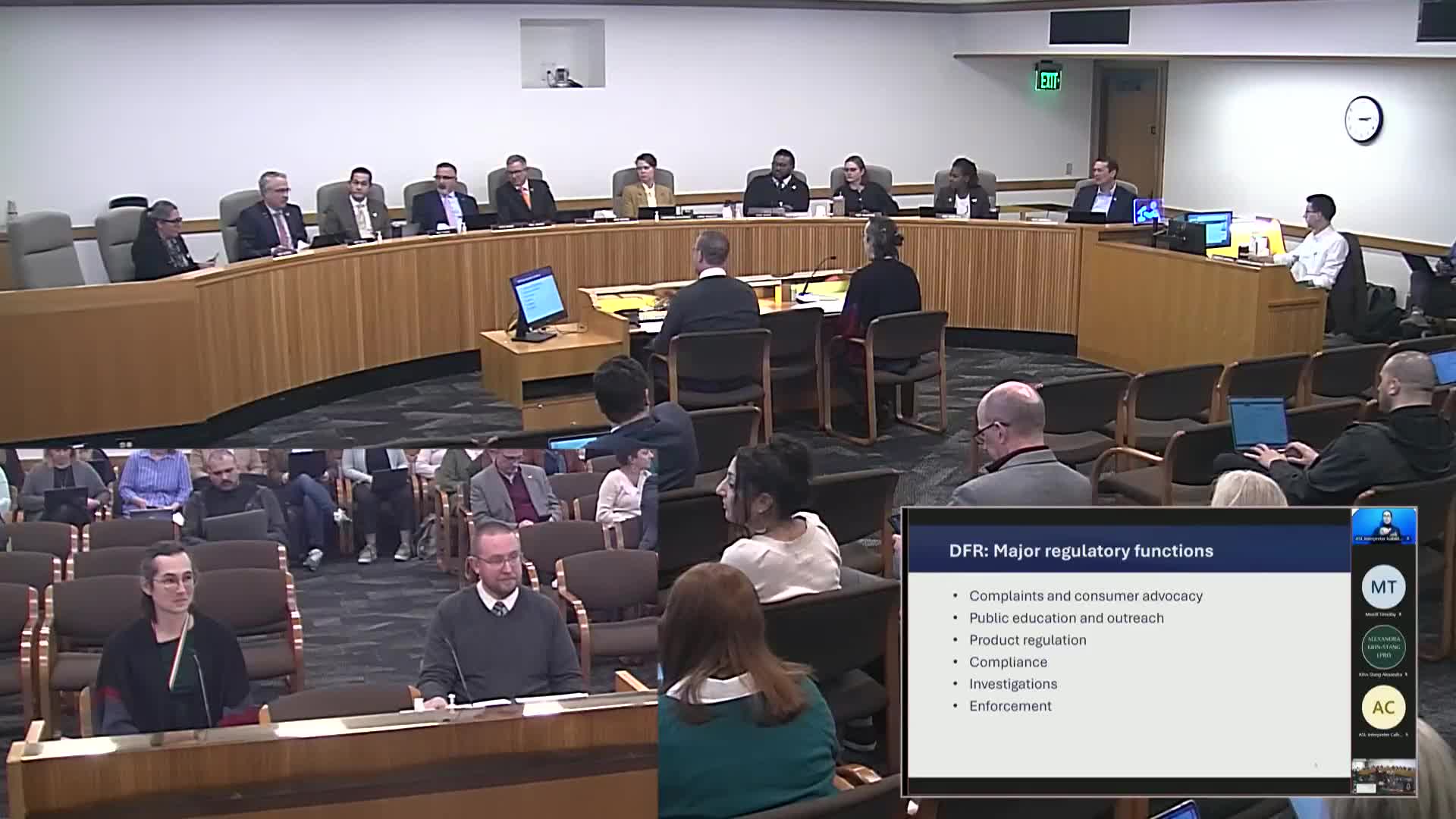
Lawmakers at an informational hearing on Jan. 23 pressed regulators and insurers about patient access to providers, delayed credentialing and so‑called “ghost” providers who appear in networks but have no appointment availability.
Noomi Bridal Griffith of the Division of Financial Regulation told the committee that Oregon law requires annual carrier reports on network adequacy for small‑group and individual markets, but the standard is not clearly defined in statute. DFR said it will run a Senate bill (SB 822) this session to create quantifiable standards—time‑to‑appointment and time‑and‑distance measures—and to expand oversight to fully insured large‑group plans.
“Part of what we would like to address” with SB 822, DFR said, is the problem of providers listed as available who are not actually accepting patients or have zero appointment availability. Regulators acknowledged limits: they can measure network adequacy and audit carrier attestations, but they cannot on their own solve workforce shortages. “We can measure it, but maybe not fix it,” Bridal Griffith said.
On credentialing, committee members asked who enforces statutory timelines for insurers to respond to provider credentialing applications. Jesse O’Brien said the insurance code includes a response time for credentialing but that the statute provides limited procedures beyond the deadline; DFR enforces the code when carriers fail to respond, but providers often fail to submit complete applications and DFR frequently returns incomplete filings for additional documentation. DFR staff said about 40% of credentialing applications they see lack required documentation and are returned; applications that go silent can be closed if applicants don’t respond to requests for more information.
Why it matters: Regulators told lawmakers that improving network adequacy enforcement will require clearer statutory standards and that SB 822 aims to provide those metrics. The agency cautioned that workforce shortages—especially in behavioral health—limit carriers’ ability to meet any quantitative standard.
Ending: DFR and insurers agreed SB 822 could help by requiring carriers to verify provider availability and standardize reporting, but committee members and agency staff noted that solving provider supply shortages will require parallel policy action beyond insurance regulation.