Get Full Government Meeting Transcripts, Videos, & Alerts Forever!
Get email alerts on the Public Safety Little Saigon topic
No spam. Unsubscribe anytime.
Little Saigon business owners and residents urge Seattle to act as navigation center prepares to leave
Summary
Multiple speakers at the Jan. 21 Seattle City Council meeting urged the city to release roughly $1.5 million in budgeted funds, maintain police and cleanup services after the DESC navigation center closes in March, and create a task force and community-led planning process for Little Saigon and the Chinatown-International District.
Business owners and residents of Little Saigon and the adjacent Chinatown-International District urged the Seattle City Council on Jan. 21 to step up enforcement, cleanup and funding as the DESC navigation center prepares to leave in March.
Tanya Wu, speaking on behalf of several Little Saigon business owners, said many proprietors are afraid to speak publicly and asked the city to release funds the council designated last year. “We had over 500 people sign the petition,” Wu said, and she asked for a community meeting that would include the mayor, the future District 2 appointee, county officials and other stakeholders.
The speakers said the mix of public-safety incidents and chronic street conditions has eroded business activity along 12th Avenue and Jackson Street. “Little Saigon has been under siege for 7 years,” said Sue Mar, who said she has an office in the neighborhood and listed shootings, drug sales and aggressive behavior as continuing problems.
Why it matters: Business owners and community leaders told the council they need the city to maintain policing, social-worker outreach and street-cleaning after the navigation center exits, and to make explicit use of about $1,500,000 the council budgeted last year for safety and cleanup work in the area. Speakers asked for a task force including community leaders, service providers and government representatives to guide a neighborhood plan and to ensure the neighborhood’s needs are prioritized after the navigation center’s transition.
Other commenters added historical and planning context. David Della, a longtime Seattle resident and community consultant, said the neighborhood’s problems have worsened despite recent city efforts and urged the council to “move swiftly on actions and funding to help that community.” Patty Fong said the city and King County should close the DESC navigation center immediately, saying the district has “endured the consequences of this drug dealing shelter long enough.” Retired city planner Gary Lee pointed the council to an existing 2035 comprehensive-plan policy that calls for avoiding overconcentration of human-service facilities in a single area.
Speakers also raised neighborhood-specific concerns: Randy Wu Ng reported graffiti and a defacement of a Japanese American internment memorial in Japantown, and asked for accountability; speakers also described fears of violent crime and the economic domino effects on surrounding communities.
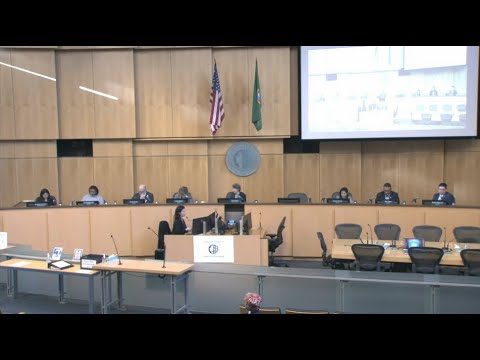
No council action or vote on these requests occurred at the Jan. 21 meeting. Council President Sarah Nelson closed the public-comment period after a coordinated sequence of in-person and remote speakers and later noted upcoming council schedule items, including a special meeting on Jan. 23.
Looking ahead: Speakers requested a mayoral walk-through and an official task force to coordinate the post-navigation-center transition, and urged release of previously budgeted funds. The council did not adopt any new legislation at Tuesday’s meeting related to Little Saigon; the requests were presented during the public-comment period.