Get Full Government Meeting Transcripts, Videos, & Alerts Forever!
Get email alerts on the District2 Appointment topic
No spam. Unsubscribe anytime.
Six candidates at Seattle District 2 forum stress public safety, housing and transit fixes
Summary
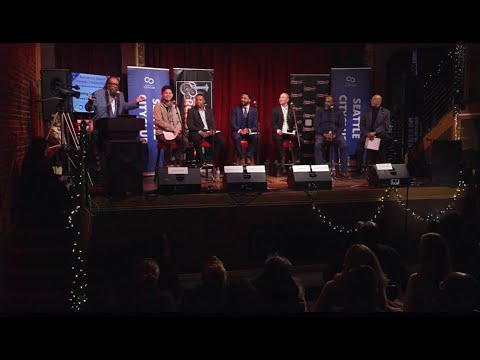
A public forum hosted by Seattle City Club and Rainier Avenue Radio drew five of six applicants for the vacant Seattle City Council District 2 seat to Columbia City on Sunday for more than two hours of statements, questions and audience comments about public safety, housing, transit and small-business concerns.
A public forum hosted by Seattle City Club and Rainier Avenue Radio drew five of six applicants for the vacant Seattle City Council District 2 seat to Columbia City on Sunday for more than two hours of statements, questions and audience comments about public safety, housing, transit and small-business concerns.
The council vacancy opened when Councilmember Tammy Morales resigned effective Jan. 6; under the city charter the City Council had a 20-calendar-day window that began Jan. 7, 2025, to appoint a replacement who will serve until the 2025 general election results are certified by King County Elections. Candidates at the event emphasized that the appointee must be responsive to neighborhood needs during that interim and beyond.
The forum’s most frequent topic was public safety. Adonis Duxworth, who said he works in the mayor’s office as a transportation advisor, told the room, “Number 1, we’re gonna address the state of emergency that is happening at Twelfth and Jackson,” and proposed recruiting fairs and outreach to bring officers who reflect the neighborhood into District 2. Several candidates said they would press for more police presence where shootings and burglaries have risen, while also calling for violence-interruption programs and expanded mental-health services.
Candidates differed in emphasis but not in the urgency they attached to housing and displacement. Thaddeus Gregory, a land-use lawyer, said he would use his experience with the comprehensive plan and land-use code to “create a comprehensive plan ... that fosters plentiful, diverse, affordable housing.” Edward (Eddie) Lynn, who said he works in the City Attorney’s Office, said he supports progressive revenue measures that fund housing, including the payroll expense tax, and noted past city funding streams directed to affordable housing.
The Chinatown-International District’s light-rail planning prompted repeated warnings from candidates about disruption and displacement. Several candidates urged Sound Transit and city officials to engage the community and to fund mitigation for small businesses and elderly residents. Chakundi Salisbury, who described years of community outreach work and said she has led events on the comprehensive plan, pointed to her experience working alongside Morales on community outreach and urged planners to “sit down and listen to the community.”
Lake Washington Boulevard — and the debate over pedestrianizing sections of it — drew layered responses. Many candidates said they supported multi-modal access rather than a permanent pedestrian-only closure. Adonis Duxworth recalled negotiating earlier compromises and said the boulevard should allow “cars, bikes, people walking” and suggested planning to accommodate all users. Multiple candidates acknowledged neighborhood parking and enforcement problems that arise when the boulevard is temporarily closed for events.
Public health and substance-use policy also drew extended attention. Candidates described fentanyl as an urgent health crisis and proposed a range of responses from expanded harm-reduction and naloxone access to more long-term rehabilitation, case management and housing supports. Chakundi Salisbury called for “prioritiz[ing] resources to programs like the care team” and for a “velvet glove” approach that pairs compassion with interventions. Several candidates said law enforcement must target suppliers while the city expands treatment capacity.
Small-business concerns were a recurrent theme in audience questions. Business owners from Columbia City told candidates they face rising costs, police response delays and insurance increases; candidates offered a mix of near-term ideas — more community policing and Crime Prevention Through Environmental Design (CPTED) measures, targeted outreach and mitigation during construction — and longer-term approaches such as commercial technical assistance, incentives and partnering with business improvement associations.
Audience engagement and constituent service were central campaign themes. Candidates repeatedly said they would show up in neighborhoods, return calls and use existing city staff expertise to translate constituent concerns into policy work. Several candidates said they would run in November to secure an electoral mandate if appointed; Eddie Lynn explicitly said he would run in the November election to be accountable to voters.
The forum closed with 60‑second remarks from each candidate and a reminder from the moderator that the council will choose an appointee within the charter timeline. No formal action or vote took place at the forum; the event was presented as part of the selection process and public outreach.
Ending: The City Council appointment process is underway; any appointee will serve through the 2025 general election certification by King County Elections. Candidates urged residents to contact current councilmembers and to follow forthcoming developments as the council prepares to make its selection.