Get Full Government Meeting Transcripts, Videos, & Alerts Forever!
Get email alerts on the Infrastructure Dpw Fire Station topic
No spam. Unsubscribe anytime.
Village debates scaled DPW building vs. new fire station as long-term capital costs loom
Summary
Trustees and residents spent more than an hour debating options for a new DPW garage and fire-station additions, weighing lower-cost “pole barn” storage against multi‑million‑dollar new-station options and long-term tax impacts.
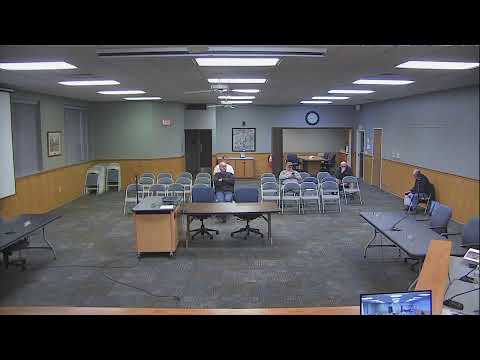
Trustees and residents on the Village of Waukesha Village Board spent the bulk of their Jan. 23 meeting debating how to shelter public works equipment and whether to pursue a new fire station or an addition to the existing station, with trustees directing further design work on a storage building for DPW equipment and postponing a decision on a full fire‑station rebuild.
The discussion mattered because speakers said deferred building and equipment purchases are already driving up repeated borrowing and could substantially increase property taxes if the village funds multiple projects at once. Trustee Chad provided multi‑year projections that showed cumulative borrowing for roads, trucks and a large fire station could meaningfully raise village levies over five years.
Across public comment and trustee discussion, several residents urged a pragmatic, lower‑cost approach to protect vehicles from winter damage and keep vital equipment ready. Mike Portrait, a resident, said the village should avoid an expensive “Taj Mahal” for DPW and instead consider simpler metal‑panel buildings, adding that “you could put up one hell of a building for $1,000,000.” Rob Nelson, another resident, urged the board to get trucks under cover now and said a structural steel or pole‑barn solution could fit within levy limits without a referendum.
Board members and staff discussed options presented by architects Fisher & Theis at a prior workshop. Trustees reviewed three conceptual ranges the firm provided: smaller additions and modest DPW garages at lower cost, and larger combined campus builds (including a new 12,000–14,000 square‑foot fire station) with multi‑million‑dollar price tags. Trustee discussion repeatedly returned to the uncertainty of material choices and the large range in the architect’s estimates — for example, one combined option was estimated in the $5.0 million range while a larger new‑station option was presented in the approximately $6.3–$7.3 million range.
Trustees debated scope. Several members favored directing the architect to produce a bare‑bones, drive‑through DPW building sized for eight trucks so the village can compare realistic price points; others argued an addition to the existing fire station could be more defensible if the village intends to staff overnight shifts in future. The board coalesced on asking the president to meet with the architect and request an 8‑truck, drive‑through DPW proposal priced to a modest budget, and to “hold off on the addition” while the village refines five‑year budget and staffing estimates.
Fire department leaders said sleeping quarters and NFPA‑compliant decontamination and staffing standards are central to maintaining the village’s paramedic service. A speaker identifying as fire department personnel said the paramedic licensure and staffing necessary to deliver that level of prehospital care would be difficult to sustain without appropriate facilities and recurring operating funds.
Trustees also asked staff for more detailed five‑year estimates from DPW and the fire department on personnel and equipment needs, and for the village engineer to refine road‑program costs used in the board’s multi‑year projections. Those numbers, trustees said, are needed before the board commits to large capital projects that could require additional borrowing or referenda.
The board did not vote to authorize construction funding or to adopt a final site plan for a new fire station at the meeting. Instead, trustees agreed to: (1) ask the architects to prepare a modest, 8‑truck DPW garage design as a next step; (2) defer any decision on a new fire station or major addition until staffing and five‑year financial projections are complete; and (3) continue outreach and a future workshop so residents can review options and cost estimates.
Trustees and several residents emphasized timing: some argued that delaying would continue to expose trucks and equipment to winter damage and increase maintenance costs, while others urged caution because combined future projects could substantially increase the village tax levy.
The board’s next steps are to collect refined cost and staffing projections and then set a public workshop to present consolidated options and estimated tax impacts.