Get Full Government Meeting Transcripts, Videos, & Alerts Forever!
Get email alerts on the Community Mental Health Programs topic
No spam. Unsubscribe anytime.
Local mental health authorities describe county‑level delivery, funding mix and a $65 million gap for mandated services
Summary
The Association of Oregon Community Mental Health Programs summarized the county‑based community mental health system, its funding mix (about 60% Medicaid, ~30% state general fund) and said an initial phase of a cost study identified a $65 million gap for civil commitment, aid‑and‑assist and crisis services.
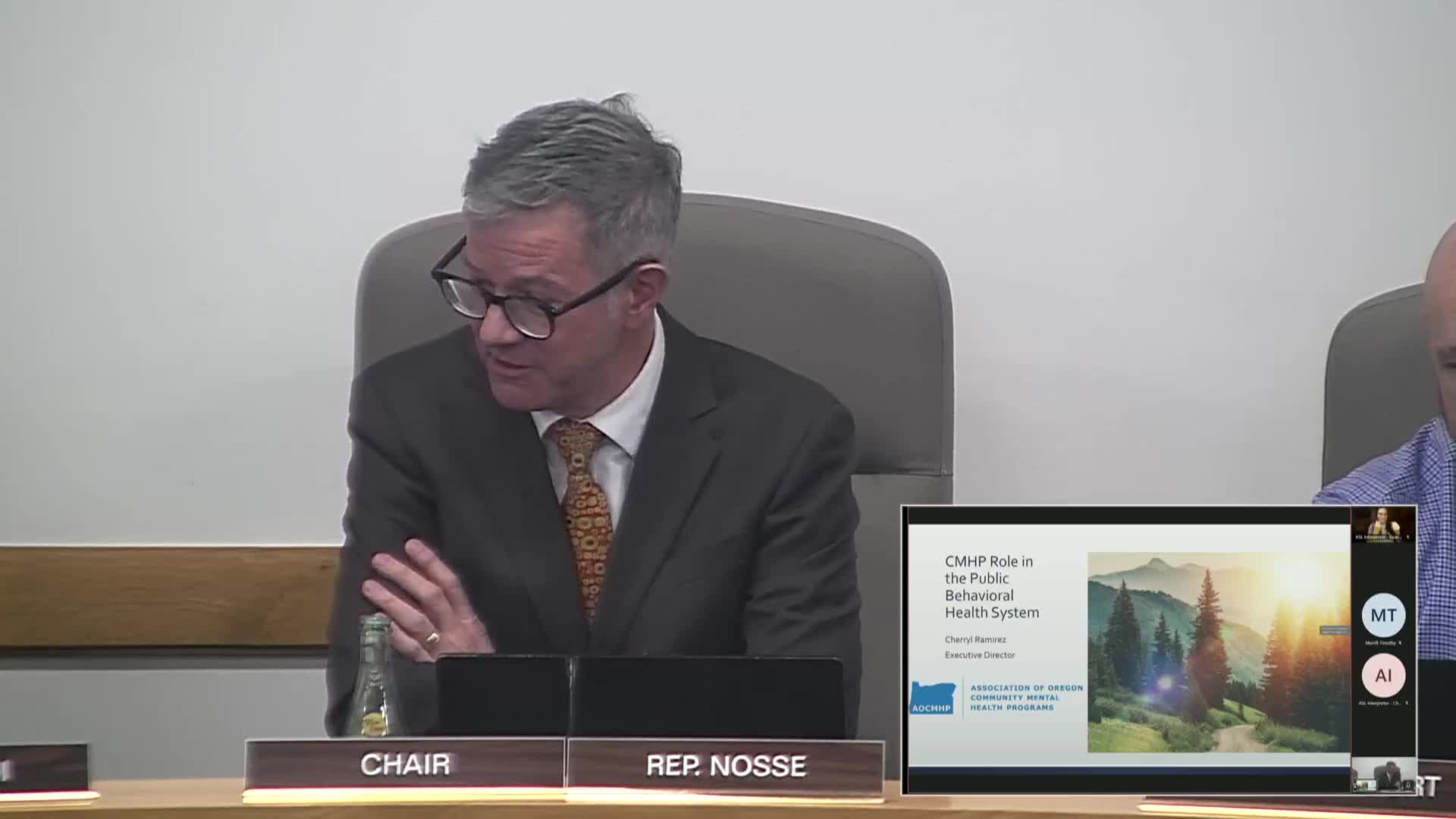
Cheryl Ramirez, executive director of the Association of Oregon Community Mental Health Programs, told the committee on Jan. 21 that community mental health programs (CMHPs) are county‑designated entities that manage local behavioral health systems and provide direct services to residents regardless of insurance status.
Ramirez summarized the statutory framework that makes counties (or designated non‑profits in some rural areas) the local mental health authority and described a typical funding mix: “About 60% of the funding comes from Medicaid, another 30% from state general funds,” she said. That mix leaves many CMHPs dependent on state-match Medicaid dollars and subject to both state contracting requirements and local capacity constraints.
Ramirez described six consolidated service buckets the agency uses to streamline funding and local planning: system planning and management; civil commitment and forensic services; outpatient and wraparound services; mental health promotion and prevention; residential and housing supports; and crisis and stabilization services. She said CMHPs must both provide direct services and contract for community‑based providers, and that rural programs often deliver many services directly because local provider markets are thin.
On gaps, Ramirez highlighted the first phase of a state cost study tied to legislative requests. The study — limited to aid‑and‑assist, civil commitment and crisis services — found a $65 million funding shortfall for just those mandated services; Ramirez said additional phases of the study will assess the rest of the statutory service array and that counties need sustained funding for workforce and crisis capacity.