Get Full Government Meeting Transcripts, Videos, & Alerts Forever!
Get email alerts on the Behavioral Health System topic
No spam. Unsubscribe anytime.
OHA behavioral health director outlines statewide challenges: workforce, crisis care and state hospital pressures
Summary
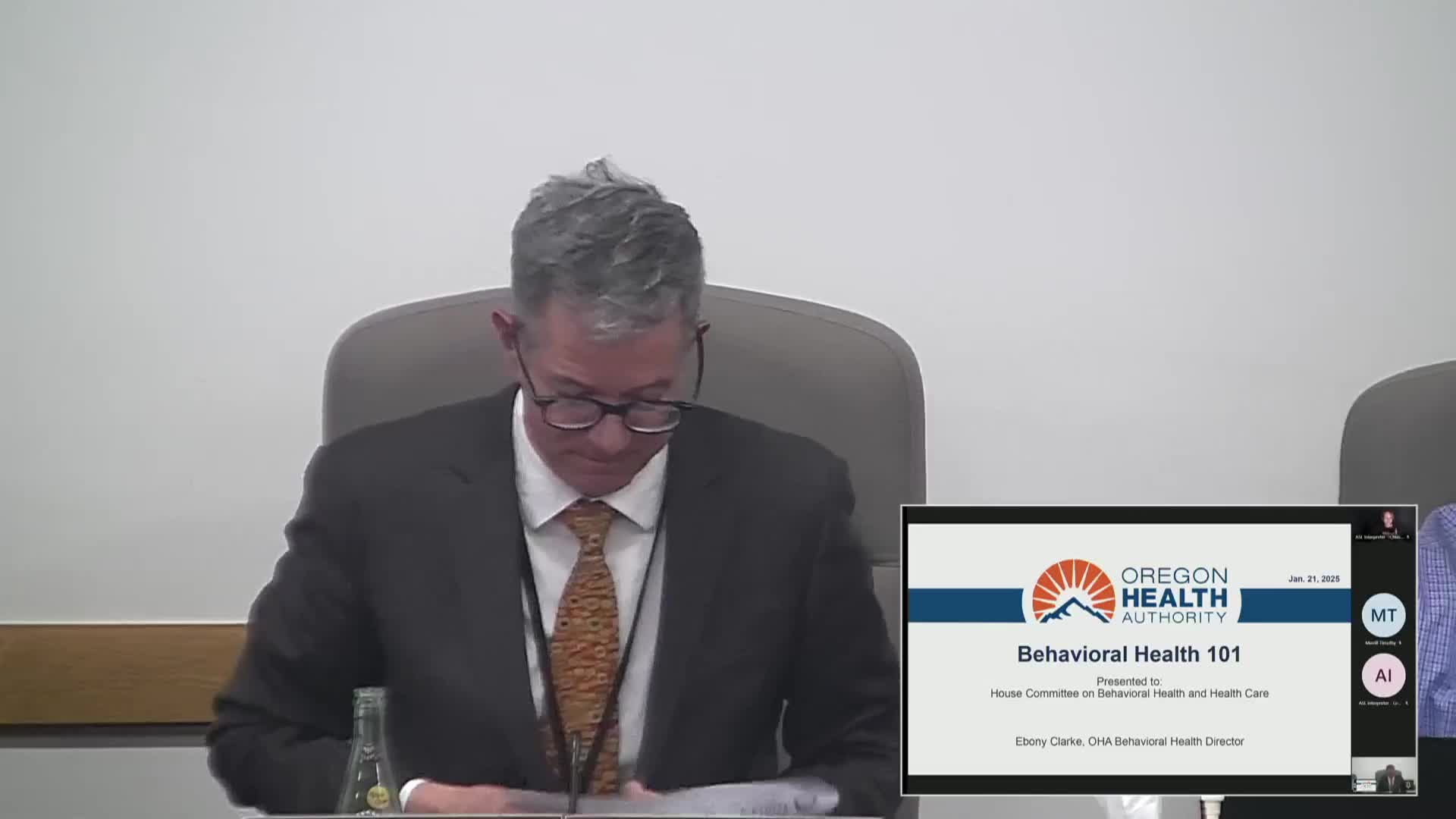
OHA Behavioral Health Director Ebony Clark briefed the committee on Jan. 21 about Oregon’s behavioral health system, emphasizing social determinants, workforce shortages, the opioid crisis and state hospital capacity issues tied to court‑ordered timelines.
Ebony Clark, director of OHA’s Behavioral Health Division, gave the House committee a systems‑level overview of behavioral health in Oregon on Jan. 21, highlighting social determinants of health, workforce shortages and the strain on the state hospital.
Clark said behavioral health “includes both mental health, substance use disorder, and other addictions such as gambling,” and urged the committee to consider prevention and social drivers — housing, food, transportation and stable relationships — when crafting policy. She emphasized peers (people with lived experience) as a key workforce and support element for recovery.
Clark described rising rates of substance use and mental‑health diagnoses since the pandemic, the impact of fentanyl in the unregulated drug supply and continuing workforce shortages across psychiatrists, counselors, peer supports and other roles. She said the Oregon State Hospital now cares largely for people under aid‑and‑assist orders and that legal timelines and restoration workloads have increased community demand for residential and crisis options.
The director cited recent investments and early results: new beds and licensed residential capacity, growth in peer support and opioid‑treatment capacity, expanded telehealth and the Health‑Related Social Needs benefits launched under the 1115 waiver. Clark said more work remains to expand a prevention continuum, address workforce and build long‑term housing and community supports that reduce reliance on hospitals and jails.