Get Full Government Meeting Transcripts, Videos, & Alerts Forever!
Get email alerts on the Contractor Tax Compliance topic
No spam. Unsubscribe anytime.
House Revenue Committee hears bill to tighten contractor tax compliance checks
Summary
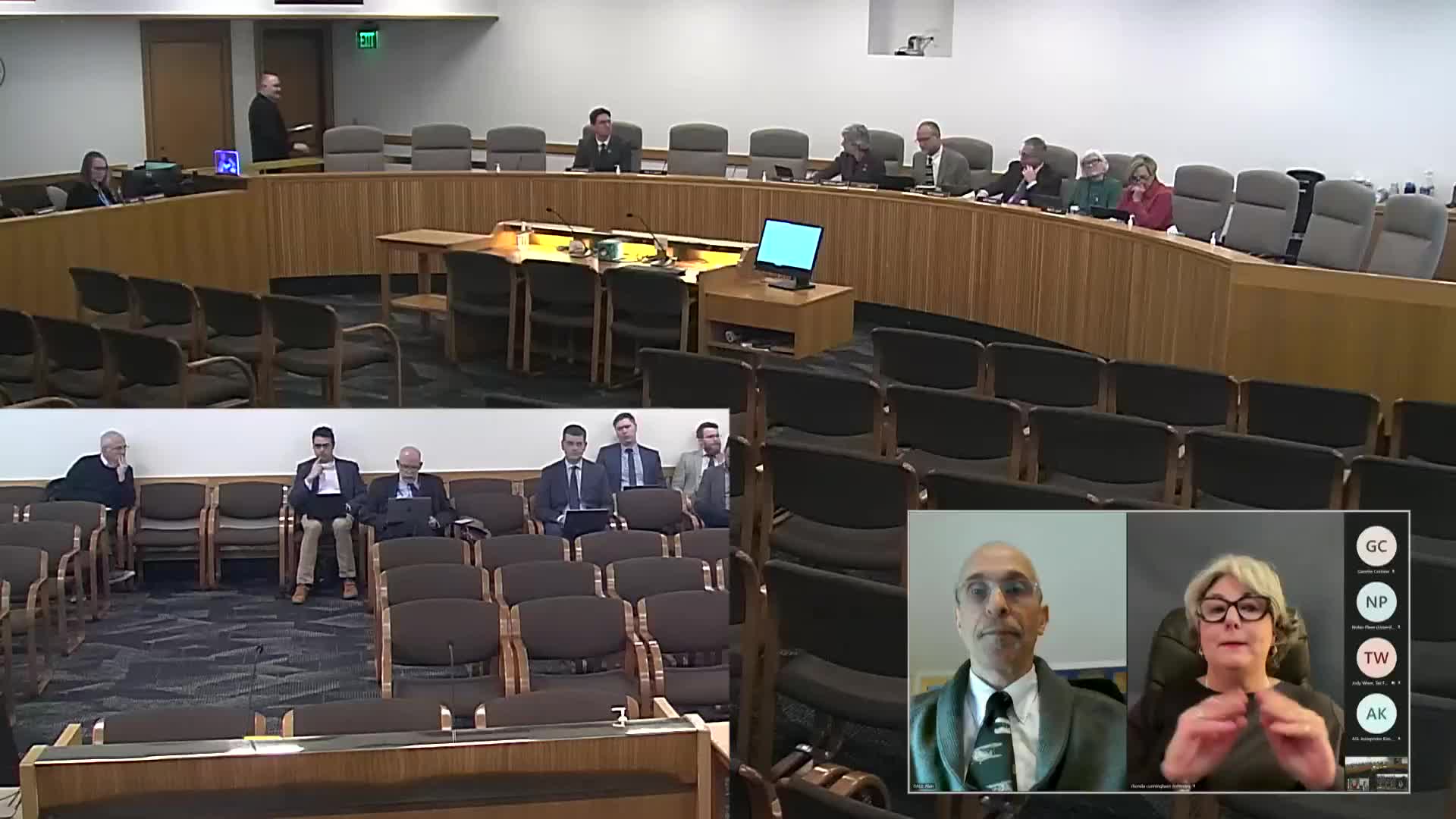
The House Committee on Revenue opened a public hearing Thursday on House Bill 2084, a proposal that would require state contracting agencies to determine a contractor’s tax compliance in consultation with the Oregon Department of Revenue and local governments and to check compliance periodically during a contract.
The House Committee on Revenue opened a public hearing Thursday on House Bill 2084, a proposal that would require state contracting agencies to determine a contractor’s tax compliance in consultation with the Oregon Department of Revenue and local governments and to check compliance periodically during a contract.
The bill’s sponsor told the committee the measure would let the Department of Revenue disclose a contractor’s compliance status to contracting agencies and provide criteria for determining compliance. Chair Nathanson opened the hearing and said she plans to convene a work group to resolve implementation questions.
Why it matters: Reporters have identified businesses holding large state contracts while owing substantial tax liabilities, prompting lawmakers to consider whether public funds should be awarded to contractors who are not current on taxes. Proponents and local-government representatives supported stronger enforcement but urged the committee to design an approach that avoids large new costs or delays to procurement, especially for emergency work.
League of Oregon Cities lobbyist Nolan Pleshet said the association “appreciate[s] the intent of this bill to ensure better protection of public funds” but asked for clarity on how agencies would verify compliance without creating large new burdens for procurement staff. Jim Scherzinger of Tax Fairness Oregon said his group “advocate[s] improved enforcement” and urged focusing on larger noncompliant contractors while minimizing agency workload.
Several witnesses raised specific concerns. Jody Weiser, a volunteer with Tax Fairness Oregon, cited an Oregonian report that found a single contractor with about $70,000,000 in state contracts while owing roughly $1,600,000 in taxes, and argued the current attestation form lacks precision on what “compliance” means. Mark Landauer, representing the Special District Association of Oregon and the Oregon Public Ports Association, warned that requiring verification for emergency contracts could impede rapid responses to infrastructure failures.
Deanna Mack, administrator of the Department of Revenue’s collections division, told the committee how DOR defines compliance under existing administrative rules: “We consider somebody to be in tax compliance if they are subject to a tax program and they have filed all the returns required for that program and paid all the tax. . . . As long as they’re in a department approved payment plan, we also consider them to be in compliance.” Mack said DOR issues tax-compliance certificates to third parties (for example, to the Oregon Liquor and Cannabis Commission for licensees) and recommended using a uniform definition and a certificate-based process to reduce agency burden. She also said DOR would participate in a legislative work group.
Throughout testimony, lawmakers and witnesses pressed for answers on several implementation points: who pays for verification, whether DOR or agencies must proactively notify contracting bodies of changes in compliance, how to treat disputes and appeals, and how to handle corporate structures where a related entity may be noncompliant. Representative Reschke and others asked whether money paid on a contract could be used to satisfy tax debts; witnesses said the bill does not by itself secure collections and that payment plans and tax-court appeals complicate the picture.
Chair Nathanson said she intends to form a work group to coordinate with Senate counterparts and to resolve the detailed implementation issues raised at the hearing. The committee closed the public hearing without voting on the bill.