Get Full Government Meeting Transcripts, Videos, & Alerts Forever!
Get email alerts on the Public Safety 911 topic
No spam. Unsubscribe anytime.
Berrien County highlights new recruitment videos, CTE partnership and AI options for 911 staffing
Summary
Berrien County 911 Director Caitlin Sampson showed recruitment videos produced pro bono, described a Career Technical Education partnership to build a dispatcher pipeline, and outlined where artificial intelligence might assist call handling as the center recruits five new telecommunicators.
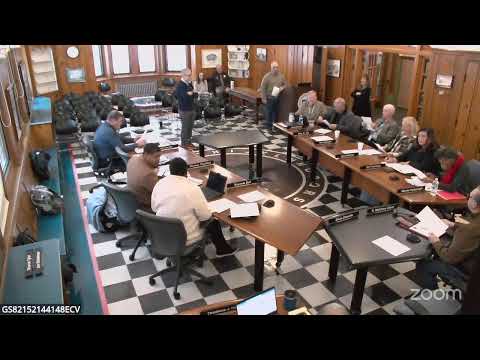
Caitlin Sampson, director of Berrien County 911, told the county board that the dispatch center is using short recruitment videos and a pilot Career Technical Education (CTE) program to address staffing shortages and to build a local pipeline of trained telecommunicators.
Sampson said the county won a free recruitment-video package from vendor Zybex and used footage from the county dispatch center and partner agencies. “Welcome to Berrien County 911. I'm Caitlin Sampson,” she said in the presentation. The videos include short staff interviews and calls to action intended for social media and the department website.
The videos feature current telecommunicators and public-safety partners. Bobbie, a Berrien County telecommunicator, said in one clip, “I love my job because I love helping people.” Tony, a dispatch supervisor, said the role provides “a great feeling to know that you're helping your community every day.” Sheriff Chuck Hite and Buchanan City Police Chief Harvey Burnett also recorded endorsements urging applicants to apply.
Nut graf: The presentation framed recruitment as part of a broader strategy that pairs outreach with training. Sampson outlined the center's staffing and training constraints — the center employs 34 telecommunicators, typically staffs 5–10 people per shift, and can train only a small cohort at a time — and said the CTE partnership is intended to increase applicants who already meet basic training requirements.
Sampson described a pilot partnership with the Berrien Springs CTE program and instructor Rich Albers to create a dispatch-specific track. The school’s course will satisfy Michigan’s required basic 40-hour telecommunicator training and includes a simulator module. Under the pilot, juniors will sit in monthly job-shadow sessions and seniors will spend more time working with trainers; Sampson said the center can train about four new hires at a time and that the full in-house training timeline from initial call-taking through dispatch proficiency typically takes about nine months.
Sampson also described the center’s technical capabilities: the center uses computer-aided dispatch (CAD) consoles, handles text-to-911 statewide, and uses tools for location and medical pre-arrival instructions. “We also have text to 911 here in Berrien County as well as throughout the state of Michigan,” Sampson said.
Board members asked about artificial intelligence and mapping. Sampson said mapping and location services have improved and that AI is beginning to appear in call handling elsewhere, citing Kalamazoo’s pilot as an example. She noted potential assistive uses, such as language recognition and translation, but said barriers include recurring software-as-a-service costs and public or staff acceptance. “As far as barriers, a lot of it comes down to cost,” she said, noting vendors are increasingly competitive and costs are shifting as options expand.
Ending: Sampson said the center currently has five open positions and capacity to bring one trainee on immediately; additional hires will follow as current trainees complete the program. She asked the board to help publicize openings and praised partner agencies for contributing footage and support for the recruitment effort.