Get Full Government Meeting Transcripts, Videos, & Alerts Forever!
Get email alerts on the Committee Rules And Workplan topic
No spam. Unsubscribe anytime.
House Committee on Revenue adopts committee rules; hears Legislative Revenue Office overview and work plan
Summary
The House Committee on Revenue on Jan. 21 adopted its committee rules and received an overview of Legislative Revenue Office staff, publications and the committee’s work plan, including the scope of bills it will handle and upcoming forecast dates.
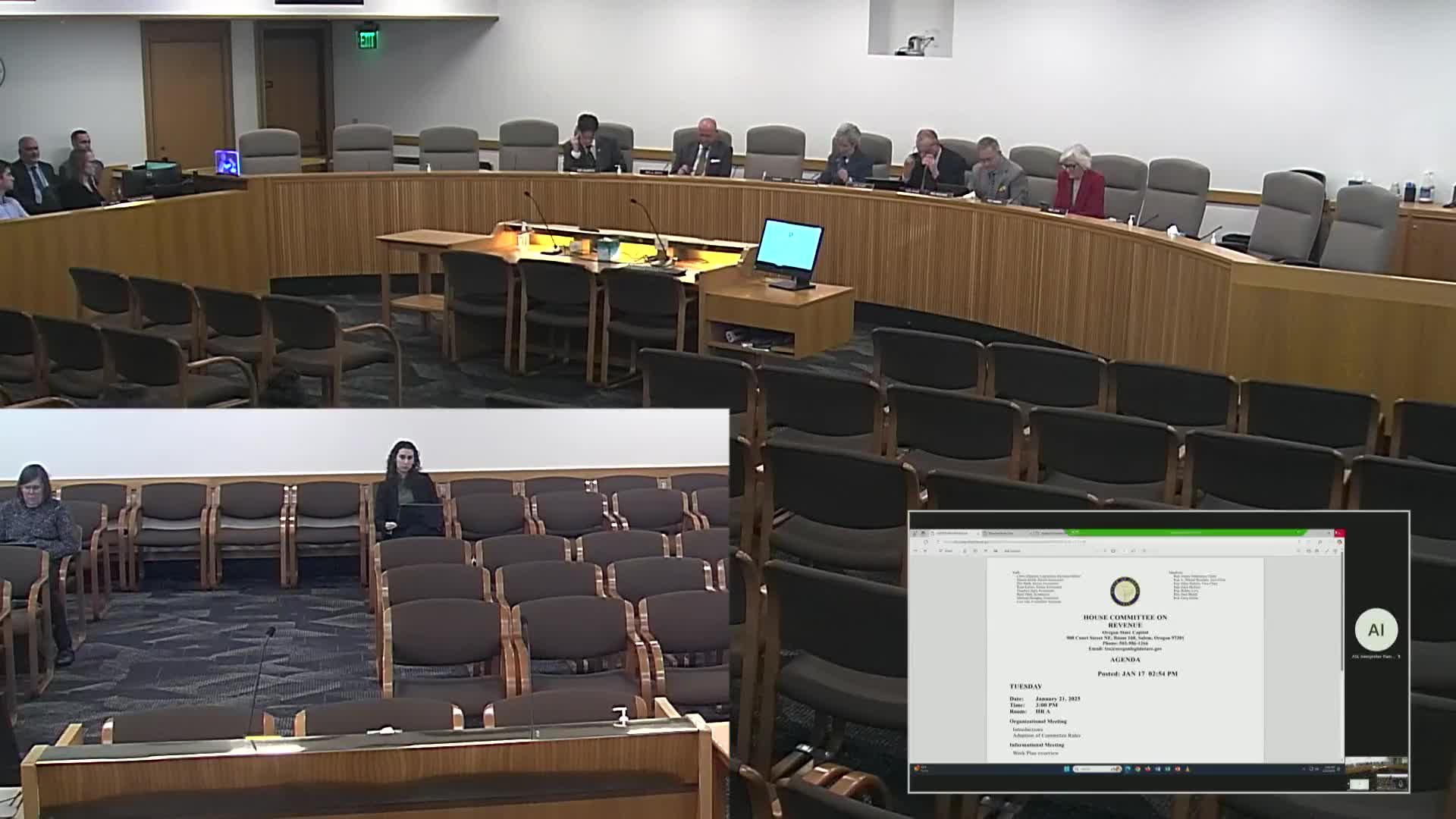
Chair Nancy Nathanson, state representative for House District 13, called the House Committee on Revenue to order Jan. 21 and led the committee in adopting its 2025 committee rules before moving into introductions and an overview of the Legislative Revenue Office’s (LRO) staffing and planned work for the session.
The committee voted to adopt the “house committee rules on revenue, committee rules dated, January 21, 2025.” Representative E. Werner Raschke moved the adoption. After the chair asked if there were objections and none were voiced, the chair declared the motion passed. Representative E. Werner Raschke said, “I move that the committee adopt the house committee rules on revenue, committee rules dated, January 21, 2025.”
The nut of the meeting: the rules establish routine procedures (including the minority-report timeline), and the LRO briefed members on the office’s staffing, publications and the large docket the committee will face this session. The chair and LRO emphasized that the rules largely mirror chamber rules used in prior years and reinforced the minority-report deadline: two committee members must notify the chair and committee staff no later than two hours after adjournment if they wish to register opposition, and then have until 5 p.m. of the second business day to file the minority report (as explained by LRO staff).
Most of the meeting comprised member introductions and LRO orientation. Members introduced themselves and the districts they represent, including newly seated Representative Zach Hudson (House District 49) and returning members such as Representative Gregory Smith (House District 57), Representative Pam Marsh (House District 5), and Representative Bobbie Levy (House District 58). LRO staff identified themselves and their areas: Chris Alenac (Legislative Revenue Office; office lead since 2018), Corinne Gavett (office manager), Hyun Baek (K–12 finance, lottery and gambling, medical provider tax), Kyle Easton (personal income tax and tax credits), Michael Dowdy (corporate activities tax and cannabis tax), John Hart (corporate income tax, tobacco and estate taxes), and Beau Olin (property tax). Lisa Vance was introduced as the committee assistant for House Revenue and Eli Farrell as the Senate Finance and Revenue committee assistant who may assist with joint committee work. LRO staff noted that economist Mazin was not present because he was participating in a highway cost allocation study meeting.
LRO described key reference materials and timing for the committee’s work. The office’s 2025 Basic Facts (about 100 pages) and several tax-system reports are available through OLIS; LRO added a link for revenue-forecast summaries. The committee will receive two official revenue forecasts this session: the Feb. 26 forecast (when Ways and Means co-chairs typically present their framework) and a May forecast ahead of the close of session. LRO staff also flagged the property tax exemption review process and tax-expenditure reviews: the committee will consider four income tax credits and five property tax exemptions scheduled to sunset in the biennium, and the joint committee on tax expenditures (JCTE/JTACS) may convene later in the session to address credits and exemptions.
Chair Nathanson and LRO staff summarized the committee’s subject-matter buckets for the session: (1) tax-policy questions, including potential corporate and estate tax changes, forest-products harvest tax extension bills that routinely appear in long sessions, and possible discussions tied to federal action on provisions of the Tax Cuts and Jobs Act of 2017; and (2) detailed technical and compliance issues that require deep operational knowledge of tax programs. Chris Alenac told members that the committee had been assigned roughly 71 bills at that point. Staff also noted potential senior-property-tax relief proposals and that some items (for example, medical-provider taxes) may be referred from other committees such as Health Care.
Committee logistics discussed included scheduling (the committee was assigned two afternoon meeting slots and the chair signaled an intent to keep meetings short where possible), physical office location (LRO is currently located in the Public Service Building across the street from the Capitol), and tools for finding past testimony and materials (LRO has compiled a searchable spreadsheet of past meetings and presenters to help members locate prior hearings).
The meeting concluded with the chair saying the committee will begin hearings on bills soon and noting that some public hearings could run longer if public interest warrants. The session was then adjourned.