Get Full Government Meeting Transcripts, Videos, & Alerts Forever!
Get email alerts on the Criminal Justice Grants topic
No spam. Unsubscribe anytime.
Criminal Justice Commission outlines statewide grants portfolio, seeks better data to measure impact
Summary
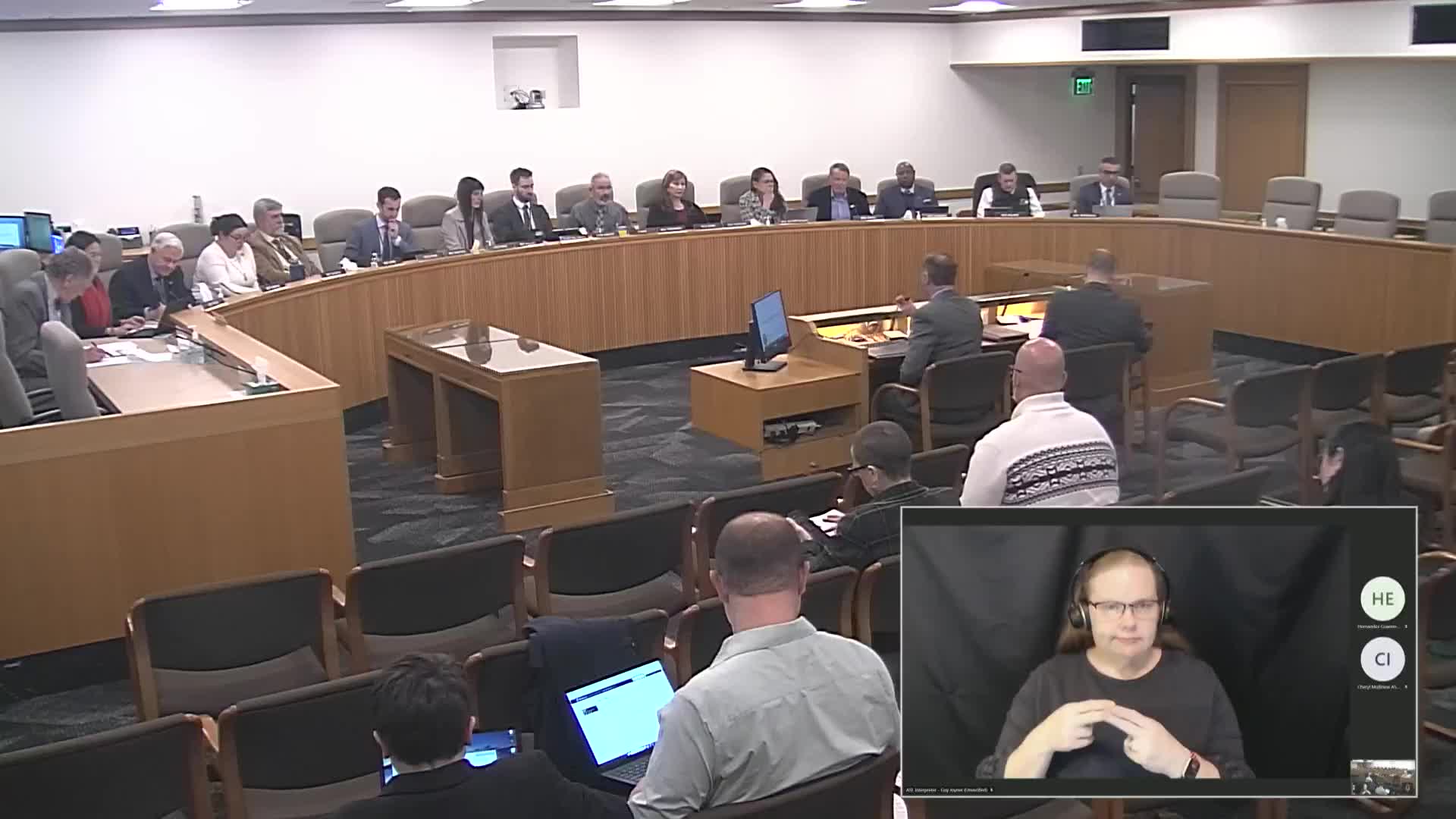
Ken Sanchgren, executive director of the Oregon Criminal Justice Commission, and Deputy Director Ryan Keck described the commission’s grants portfolio for the House and Senate judiciary committees on Jan. 22, highlighting programs that fund supervision, treatment, reentry services and targeted enforcement across Oregon.
Ken Sanchgren, executive director of the Oregon Criminal Justice Commission, and Deputy Director Ryan Keck described the commission’s grants portfolio for the House and Senate judiciary committees on Jan. 22, highlighting programs that fund supervision, treatment, reentry services and targeted enforcement across Oregon.
Sanchgren said the commission administers the Justice Reinvestment grant program (created in 2013 by House Bill 3194) and that the program now directs more than $50 million per biennium to counties for supervision, client services, treatment and housing supports aimed at reducing prison populations and recidivism. He told lawmakers that justice reinvestment and later changes (including House Bill 3078 in 2017) have reduced certain prison intakes and that reporting tied the program to an estimated $600 million in avoided costs compared with roughly $200 million invested.
Keck outlined several other commission programs: the treatment‑court grant program (supporting about 55 of the state’s 66 specialty courts), the illegal marijuana market enforcement grant (initially funded at $3 million in 2018 and later expanded), the IMPACTS grant program created by Senate Bill 973 (funded at about $10 million per biennium to serve high utilizers at the intersection of behavioral health and criminal justice), and a recent deflection grant established by House Bill 4002 (roughly $21 million initial appropriation). Keck also described the jail‑based medications for opioid use disorder (JMOOD) bridge grants (about $10 million appropriated; 21 local jails funded to date) and a restorative‑justice grant program that is starting in multiple jurisdictions.
Both presenters described common administrative features: some programs are ongoing in the agency’s base budget (for example, justice reinvestment and treatment courts), while others are competitive, one‑time appropriations that require solicitations, review committees and commission approval. Keck described typical timelines for applications, award decisions and quarterly monitoring and said the commission uses site visits and quarterly reporting to monitor grantees.
On measurement, Sanchgren acknowledged gaps. When asked about the illegal marijuana market enforcement grants, he said the commission and partner agencies are working to establish reliable denominators and metrics to determine whether enforcement dollars are reducing illegal growing and trafficking in a sustained way, and that a definitive causal answer is not yet available. Senator McClain pressed for performance metrics; Sanchgren said the commission is pursuing improved tracking but that definitive impact measures remain a work in progress.
Lawmakers asked about program sustainability and monitoring. Keck said application solicitations state whether funding is a one‑time biennial award and that some grantees expect recurring funding (justice reinvestment and treatment courts are budgeted each biennium, others depend on legislative appropriations). Representative Wallen and others asked how monitoring influences future awards; the commission said past performance and reporting inform review committees and commission recommendations.
Committee members also asked whether some grants address fentanyl and other illicit opioids; Sanchgren said fentanyl responses are largely indirect in current grant programs unless the legislature authorizes and funds a specific, targeted grant.
The commission said it will continue to provide data and follow-up to committees as legislative decisions on appropriations and program design move forward.