Get Full Government Meeting Transcripts, Videos, & Alerts Forever!
Get email alerts on the Corrections topic
No spam. Unsubscribe anytime.
Oregon DOC tells legislature staffing, aging population and facilities drive budget and program priorities
Summary
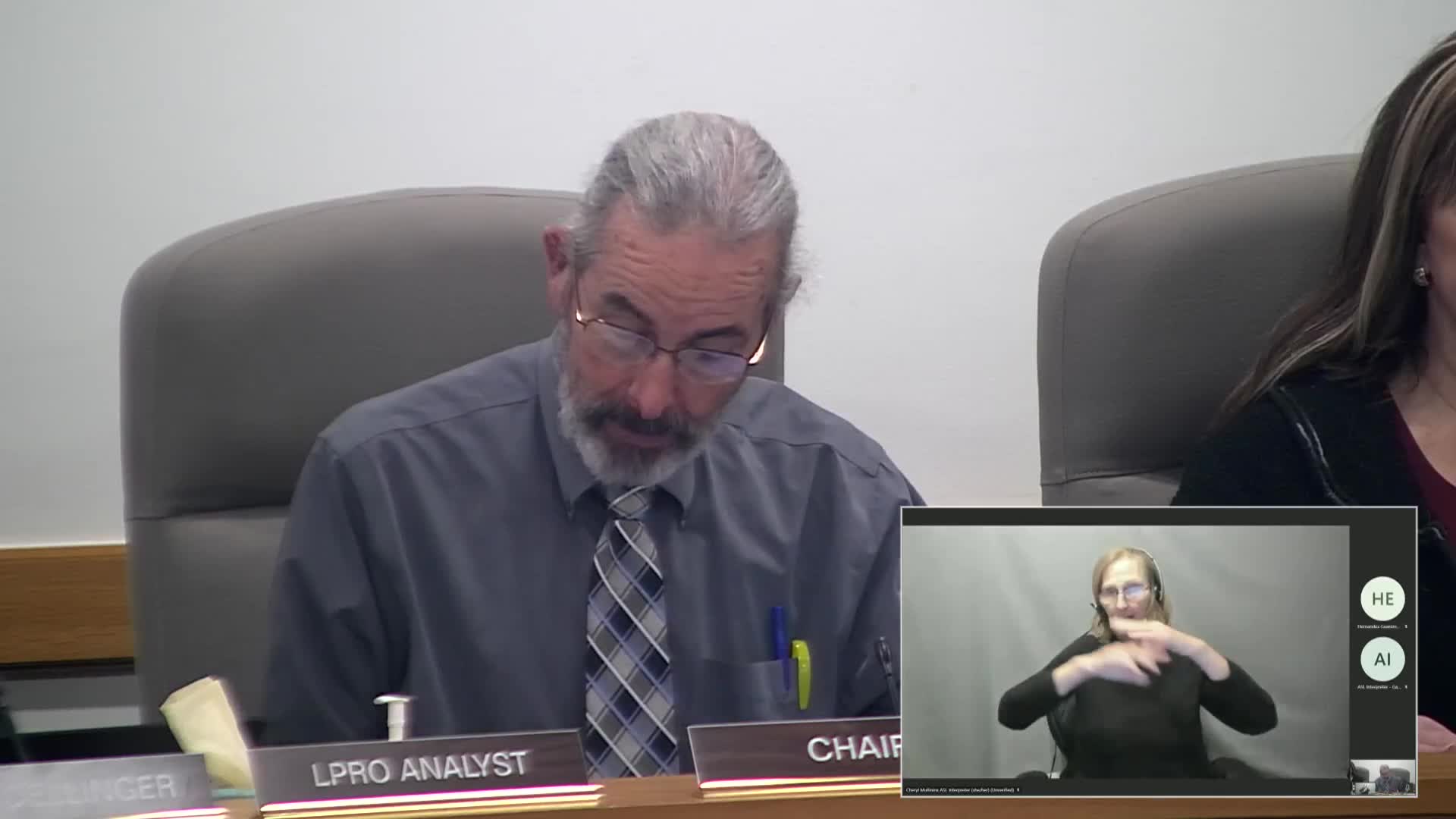
Oregon Department of Corrections Director Mike Rees briefed the House and Senate judiciary committees on Jan. 22 on the agency’s statewide operations, staffing shortages, aging incarcerated population and efforts to reduce contraband and expand treatment services.
Mike Rees, director of the Oregon Department of Corrections, told the House and Senate judiciary committees on Wednesday, Jan. 22, that the agency manages a statewide corrections system with 12 prisons, more than 12,000 adults in custody and an operating biennial budget of about $2.4 billion.
The overview outlined DOC’s dual mission of protecting community safety and “transforming lives” by preparing most people in custody to return to their communities. Rees described three principal challenges: staffing shortages, an aging incarcerated population that increasingly needs medical and geriatric care, and modernization needs including an outdated IT system.
Rees said staffing shortfalls are most acute in security positions and health care. "We can't just shut down — we are a 24/7 operation," Rees said, describing repeated mandatory overtime and its toll on employees. He told lawmakers DOC has shortened hiring timelines and is hiring people with lived experience as peer mentors and treatment staff to help scale programs more quickly.
The director described the system’s health and programming workload: about 65% of people in custody have substance-use disorder needs, roughly 50% need basic education such as a GED, and about 30% have a severe mental-health diagnosis. Rees said DOC provides health services under what he called a constitutional and moral mandate and that health care is one of the largest budget items.
Rees also emphasized the agency’s changing demographic: "We have over a thousand adults in custody who are 60 years of age or older," he said, and added that many present with health needs typical of people 15 years older than their chronological age. Rees told the committees that aging populations are occupying infirmary and hospice beds and that DOC will present replacement and strategy proposals for aging facilities — including the nearly 100-year-old Oregon State Penitentiary — during upcoming budget talks.
On contraband, Rees said DOC has expanded interdiction efforts: canine teams at two institutions, mailroom rule changes implemented last month, wastewater testing at several facilities and an evaluation of body-scanner technology to reduce enclosed searches and detect contraband without invasive procedures. Rees said the agency has scaled medication-assisted treatment, increasing from several hundred people receiving Suboxone and Sublocade to more than 1,000 over the last year.
Lawmakers pressed for details and follow-up. Representative Lewis asked for an update on contraband interdiction measures; Rees described the canine pilot, mailroom changes and a pilot for body scanners. Representative Tran asked when addiction treatment begins; Rees said the agency’s goal is to identify and begin treatment at intake and continue it until release, but that the effort is “a work in progress.”
Committee members also raised housing and workforce recruitment in rural regions as hiring barriers for some prisons and suggested exploring creative housing or retirement-return programs to address overtime and staffing gaps. Rees acknowledged those concerns and said he was willing to meet with members outside the hearing to discuss specifics.
The committee closed the informational hearing and moved on to other agency overviews scheduled for later in the session.