Get Full Government Meeting Transcripts, Videos, & Alerts Forever!
Get email alerts on the Judiciary Overview topic
No spam. Unsubscribe anytime.
Oregon Judicial Department briefs joint House and Senate judiciary committees on court caseloads, programs and judgeship needs
Summary
State court leaders told a joint House and Senate Judiciary informational hearing that caseloads have increased since 2020, courts are expanding programs (remote child-support docket, family treatment courts, pretrial services) and that demand for judges and staff exceeds current requests; OJD also described technology and guardianship audits.
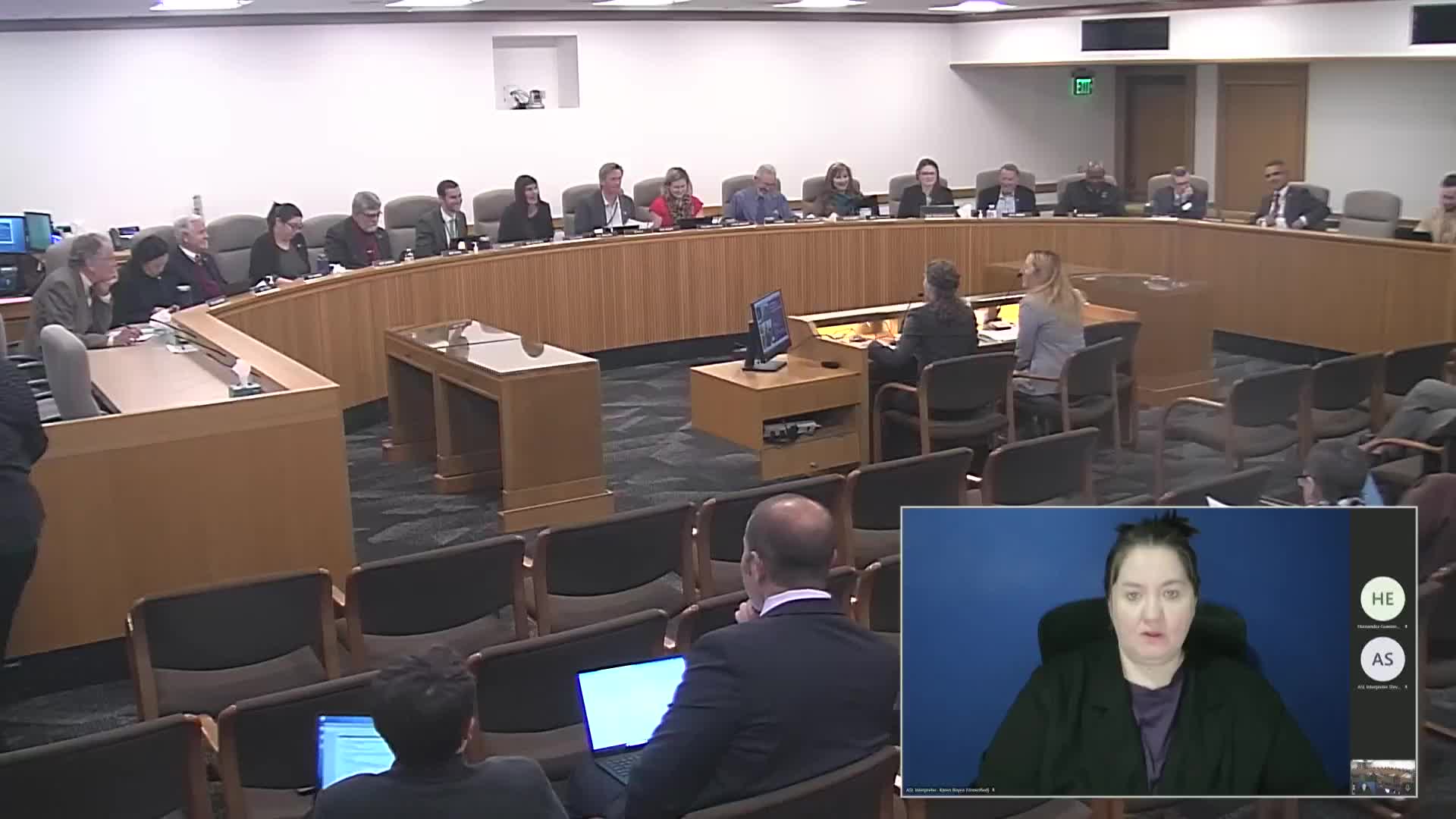
Nancy Kozine, Oregon’s state court administrator, and Amy Miller, assistant deputy state court administrator, briefed the joint House and Senate Judiciary committees on Jan. 21, 2025, outlining court structure, rising caseloads, program expansions and resource needs across the state court system.
“Oregonians rely on a strong court system,” Kozine said as she summarized the role of the Oregon Judicial Department (OJD) and the unified state court system. The department, she said, oversees the Supreme Court, Court of Appeals, Tax Court and the circuit courts. Kozine told the committees OJD supports courts through the Office of the State Court Administrator (OSCA), providing budget, IT, human resources, training and communications to more than 200 elected officials and roughly 2,000 staff statewide.
The presentation reported a long-term rise in filings since 2020 and highlighted particular pressure points: landlord‑tenant (eviction) filings have “really spiked,” misdemeanors and civil filings have risen, and aid‑and‑assist proceedings related to fitness to proceed have increased. Kozine noted protective‑order filings remain high relative to historical levels. Miller said courts see consequences for self‑represented litigants and are using technology and programs to improve access.
“We developed programmatic support and coordination in high need areas,” Miller told the committees. Miller described three programs OJD highlighted:
- A statewide, centralized remote child‑support docket staffed by a court facilitator to help typically unrepresented litigants complete forms, guide them through process questions and connect them to resources; Miller said that docket is matched with federal dollars.
- Growth of family treatment courts from five to 12 and exploration of remote veteran treatment courts to reduce geography as a barrier.
- A statewide pretrial program created after passage of Senate Bill 48 (2021) that places trained release assistance officers in every judicial district to interview defendants, contact victims and make release recommendations intended to improve community safety.
Miller also described OJD work on record clearing after passage of Senate Bill 397 (2021), saying filings for criminal set‑aside requests have risen and the department has automated routine clearing for single‑charge and eviction cases where appropriate.
Kozine explained the state–county “grand bargain” that centralized court staffing, judges and technology at the state level while leaving facilities and security primarily a county responsibility; she said that split can affect how quickly additional judgeships can be added because counties must provide courtroom space and other facility support.
On judgeship staffing, members asked about workload studies and the need for additional judges. Kozine said OJD maintains a workload dashboard and that the department’s workload study is being updated; she said demand for judges “far exceeds” the number requested for the session and that the department can provide prioritized lists and additional information to members about facilities and county capacity.
Miller and Kozine described other initiatives and tools: a statewide case management system, electronic filing and eCourt public case access, text‑message reminders for hearings and payments (implemented statewide where contact information exists), remote hearings, and a centralized financial auditing program for guardianship and conservatorship cases after a federal grant and subsequent self‑assessment.
Miller told the committee that OJD is statutorily prohibited from administratively controlling the public defense system and that courts remain concerned about representation gaps despite investments in public defense capacity. Kozine and Miller urged collaboration with the legislature to address capacity and to consider data the department can provide, including reconciled 2024 dashboards that are still being finalized.
Members pressed on specifics: Representative Tom Anderson asked about paralegal involvement in landlord‑tenant and domestic cases; Kozine said early reports are positive but too soon for firm conclusions. Representative Kevin Mannix and others asked for workload and staged implementation projections; Kozine said the department can provide workload dashboards and prioritization lists. Senators asked about Lane County needs for judges; Kozine said she would follow up with facility and capacity details.
Kozine closed by listing a short set of bills OJD expects to present this session — requests on new judges and support staff, judicial compensation, family law/mediation and a technical housekeeping bill — and introduced the department’s government relations team.
The session was informational; no formal committee votes on OJD policy or budget requests were taken during the hearing.