Get Full Government Meeting Transcripts, Videos, & Alerts Forever!
Get email alerts on the Solar Energy Regulation topic
No spam. Unsubscribe anytime.
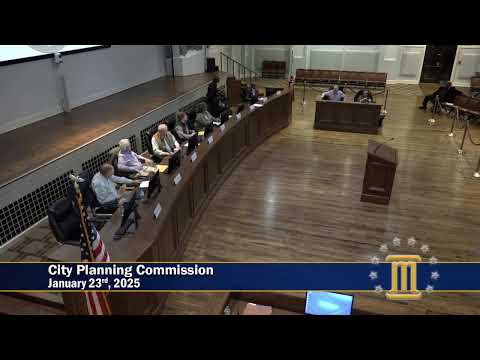
Planning commission recommends new zoning rules for solar farms after public protests
Summary
The Montgomery City Planning Commission voted 6-2 to recommend a text amendment to the city zoning ordinance that sets standards for large- and small-scale solar energy facilities, including setbacks, decommissioning guarantees and disaster cleanup plans, after extended public comment and debate.
The Montgomery City Planning Commission voted 6-2 to recommend approval of a text amendment to the city zoning ordinance that would add rules for large- and small-scale solar energy collection facilities.
The measure, introduced by Robert Smith, the city planning director, establishes where large solar farms may be located, requires a decommissioning and disaster cleanup plan, and sets technical limits including a 1,000-acre maximum for a single facility and a 75-foot equipment setback from the site edge (200 feet for noise-generating equipment).
The amendment matters because it creates the city’s first comprehensive local standards for utility-scale solar and clarifies how rooftop and residential installations are treated.
Robert Smith, the city planning director, summarized the ordinance and its purpose, saying the language “is to have specific standards that regulate and control solar energy collection facilities in certain land use locations within the city of Montgomery City limits and the city planning jurisdiction.” He said the proposed rules distinguish large-scale facilities — treated as a principal use and allowed only by special exception to the Board of Zoning Adjustment in Ag-1, Ag-2, M-1, M-2 and M-3 districts — from small-scale systems, which would be permitted by right as an accessory use in all districts.
Under the proposed text, large-scale facilities would be subject to these specific standards: a maximum size of 1,000 acres; equipment set back 75 feet from the site edge (200 feet for equipment that generates noise); on-site utilities placed underground; an enhanced landscape buffer; and a financial guarantee for decommissioning equal to 115% of the estimated decommissioning cost. Small-scale installations on rooftops would be allowed to extend up to 5 feet above the roof line. Applicants for a special exception must file a cleanup plan addressing natural disasters and a decommissioning plan describing how and when the site will be restored to a condition similar to its pre-development state, and any solar easements must be recorded with the Montgomery County Probate Judge’s Office.
The proposal followed several recent local cases. Smith noted two solar farm proposals that the Board of Zoning Adjustment had approved: one near the airport inside the city planning jurisdiction and a second just south of the Hyundai plant. He said those applicants complied with local conditions and additional state and federal permit requirements.
Public comment was lengthy and frequently critical. Kim Kline (given in the record as Kim Cline), a resident who identified her address in the planning jurisdiction, told commissioners that residents were not opposed to solar energy but urged stronger protections for neighborhoods and environment. “We had met numerous times … Everything that we agreed on has been conveniently dropped from this document,” Kline said, citing concerns about setbacks, tornado or wind damage, soil and water testing, wildlife impacts and firefighting capacity in outlying areas.
Commissioners and staff addressed those concerns during the hearing. Smith said the ordinance requires a cleanup plan in the event of a natural disaster and noted the city expects solar developers to obtain required insurance and federal, state and regional permits. He also pointed to recent Board of Zoning Adjustment approvals that included on-the-record commitments by developers to meet conditions discussed at hearings. A municipal attorney noted the city’s regulatory authority is limited to land-use controls; some technical or environmental requirements fall under state or federal jurisdiction or other agencies.
The commission debated details including whether the ordinance should refer explicitly to the Board of Adjustment (some commissioners requested clarifying language), how decommissioning financial guarantees are calculated, and whether the 75-foot setback was adequate. Supporters of the measure said it fills an existing regulatory gap; opponents said it lacked sufficient teeth and asked for stricter setbacks, mandatory pre- and post-development soil and water testing, and clearer liability language for off-site damage.
Vote and next steps: The planning commission’s recommendation passed on a 6-2 vote. The motion to recommend the zoning text amendment does not by itself adopt the ordinance; it forwards the proposal to the City Council (and any subsequent hearings or approvals required) as the commission’s formal recommendation.
What remains unresolved: Commissioners and public speakers repeatedly asked for post-adoption amendments and clearer written commitments from developers; staff said the ordinance can be amended as needed after adoption. Smith advised that some issues raised by speakers (for example, certain environmental permits or county-level rules) lie outside municipal zoning authority and require state or federal action or private agreements between developers and neighboring landowners.
The full ordinance language and explanatory materials were included in the meeting packet and will appear with the commission’s formal recommendation to the City Council.