Get Full Government Meeting Transcripts, Videos, & Alerts Forever!
Get email alerts on the Criminal Justice Commission topic
No spam. Unsubscribe anytime.
Criminal Justice Commission outlines growing grant portfolio: justice reinvestment, deflection and treatment funding highlighted
Summary
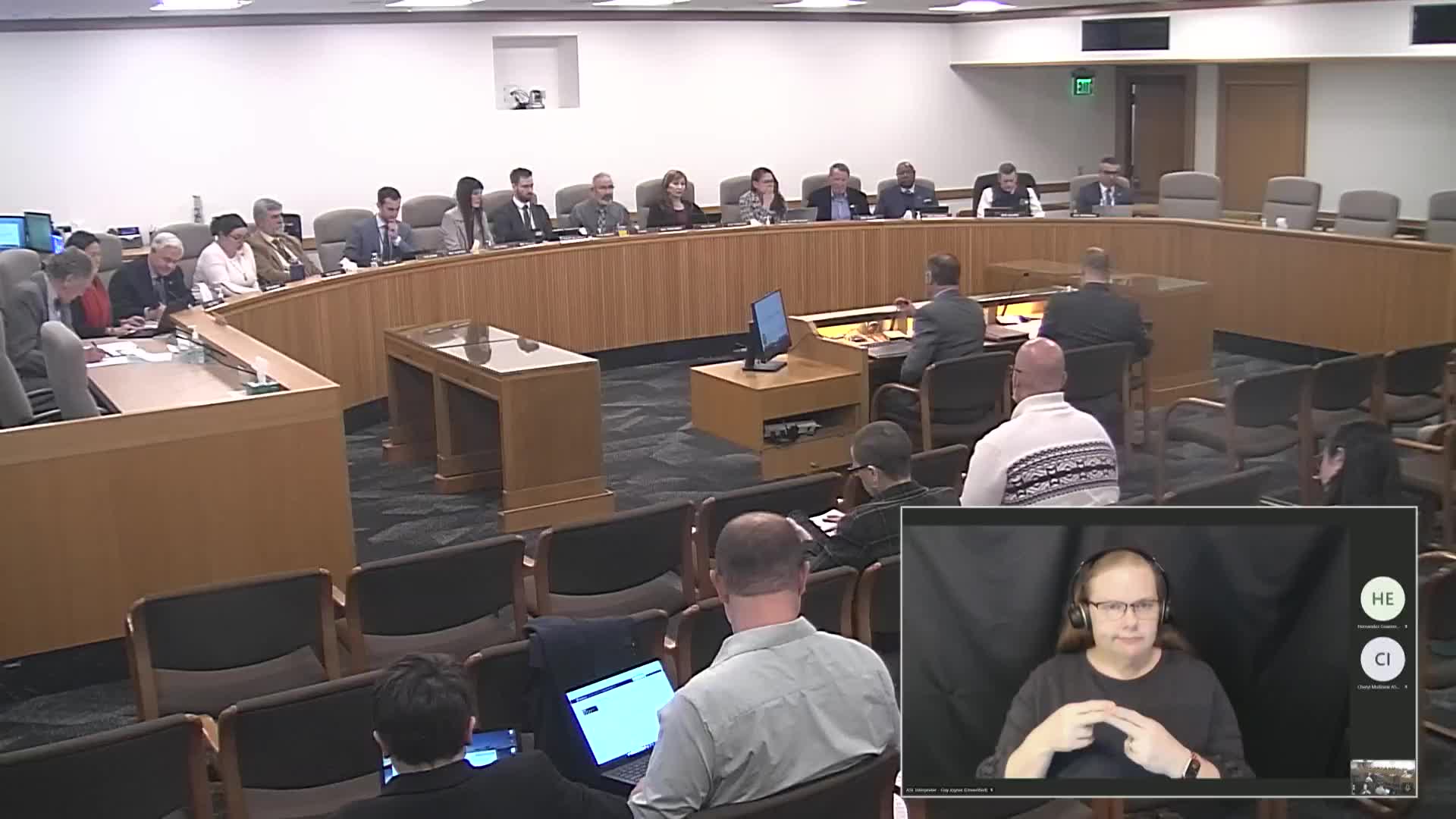
The Oregon Criminal Justice Commission told the judiciary committee on Jan. 22 that its grant portfolio has expanded from a few programs in 2018 to multiple grant lines including justice reinvestment (~$50M/ biennium), treatment courts, impacts grants, and new deflection funding from HB 4002.
Ken Sanjukin, executive director of the Oregon Criminal Justice Commission, told a Jan. 22 informational hearing that the commission’s grant portfolio has grown substantially since 2018 and that the agency now administers multiple grant programs aimed at treatment, supervision, enforcement and community supports.
Sanjukin said the commission’s flagship justice reinvestment program — created by House Bill 3194 and later amended by House Bill 3078 — redirects resources toward community supervision, treatment and services and that the commission now administers roughly $50 million per biennium through justice reinvestment grants.
He summarized several major grant programs: justice reinvestment and its downward‑departure competitive grants (originally capitalized at $7 million, now roughly $8 million with inflation adjustments); treatment court grants that support peer mentors and drug testing across specialty courts; the impacts grant program (created in Senate Bill 973) that funds services for high utilizers at the behavioral health/criminal justice intersection with about $10 million per biennium; and newer programs from House Bill 4002 including a $21 million deflection grant portfolio and a $10 million medication for opioid use disorder (JMOOD) bridge grant for jails.
Sanjukin described justice reinvestment as having reduced some prison intakes and estimated avoidance of about $600 million in prison costs compared with roughly $200 million invested through justice reinvestment to date. He said the commission also administers enforcement‑focused grants, including illegal marijuana market enforcement (initially funded at $3 million and increased over time) and an organized retail theft grant program initially funded at $5 million.
Committee members pressed for stronger outcome measurement. Senator McClain asked whether the marijuana enforcement grants show measurable impact; Sanjukin said the commission is "working in that direction" but that establishing an appropriate denominator and causal proof has been elusive. He and deputy director Bridal Keck described monitoring and application processes: solicitations can take two to five months, award decisions typically take about two months, monitoring is generally quarterly, and the commission relies on staff analysis, review committees and the commission for final approvals.
Members also raised sustainability concerns and whether grantees understand funds may be one‑time appropriations; commission staff said some programs (justice reinvestment, treatment courts) have more stable biennial support, while newer grants depend on legislative appropriations. Sanjukin invited legislators to request data from the commission: "If you have questions about different types of crimes... those are the types of things that CJC staff are ready to provide for you," he said.
The commission said it funds local innovation (for example, Deschutes County converted a stabilization center to a 23‑hour facility under an impacts grant and several counties have implemented officer‑referral deflection programs). Sanjukin and Keck said the commission will continue to develop reporting and evaluation capacity and encouraged lawmakers to engage with staff during bill drafting and budget deliberations.