Get Full Government Meeting Transcripts, Videos, & Alerts Forever!
Get email alerts on the State Resilience Continuity Plan topic
No spam. Unsubscribe anytime.
State resilience officer reviews recent disasters, continuity planning and a federally funded statewide resilience plan
Summary
State Resilience Officer Janna Papa Efemieux briefed the House committee on recent incidents (storms, winter storm, heat, fentanyl emergency, tsunami advisory), continuity of operations planning and a HUD‑funded statewide resilience planning grant; she said the governor supports House Bill 2581 to expand the office’s duties.
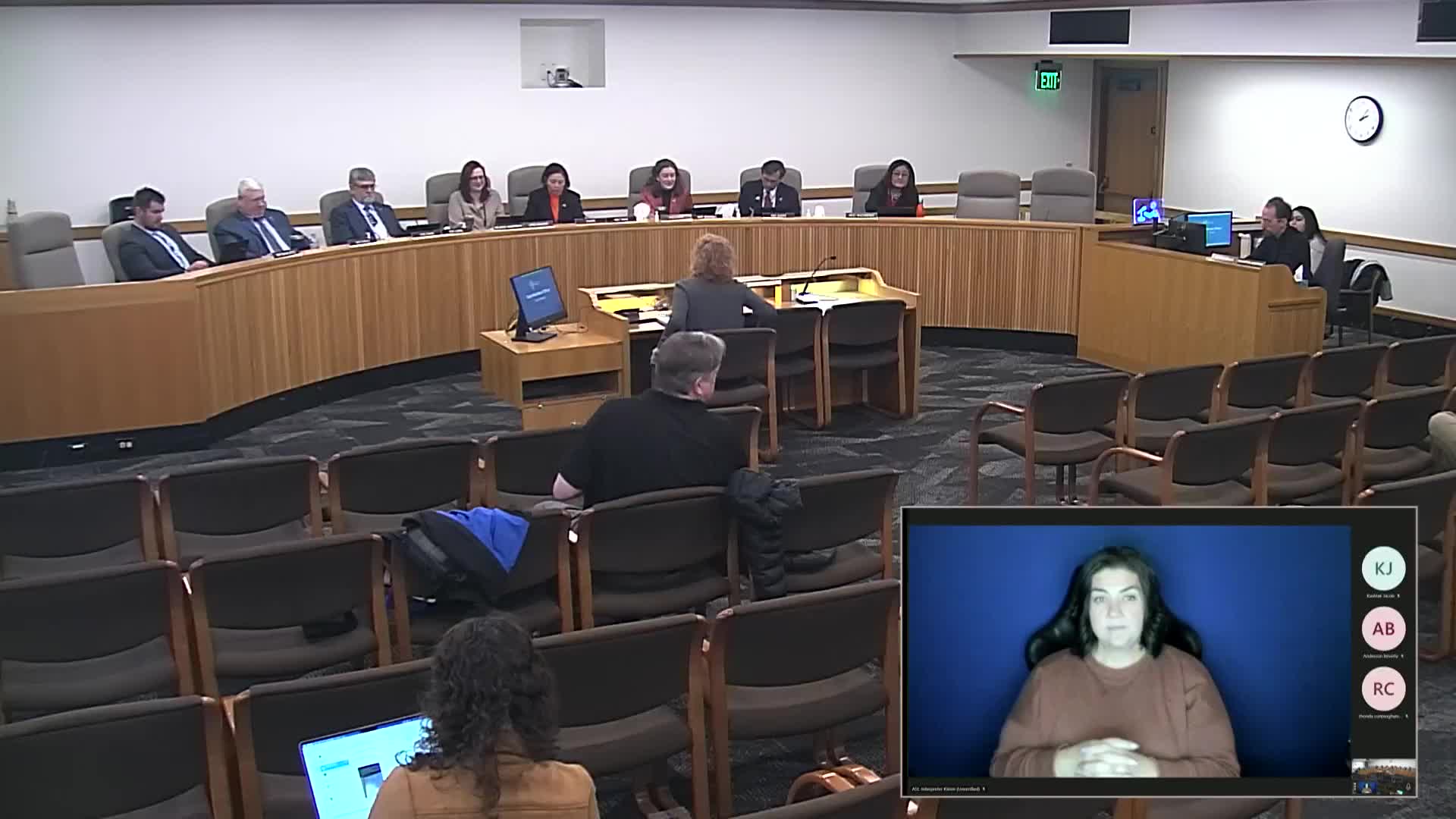
Janna Papa Efemieux, Oregon’s State Resilience Officer, updated the House Committee on Emergency Management, General Government, and Veterans on Jan. 23 about last year’s major incidents, continuity of operations (COOP) planning and a statewide resilience plan funded through a HUD grant.
Papa Efemieux reviewed a sequence of incidents that engaged state response: a New Year’s rainstorm and landslide that damaged coastal roads and led to a state emergency declaration, a severe winter storm that contributed to a presidential disaster declaration and reimbursable response costs, drought declarations that allow expanded emergency drinking water and federal program flexibilities, an extreme heat event that prompted an executive declaration and was tied to 11 hyperthermia deaths, and a tsunami notice issued for three southern coastal counties after an offshore earthquake alert.
The nut graf: The resilience officer framed continuity and preparedness as year‑round work — “continuity of operations is the plan to continue your essential functions or to resume your essential functions after a disruptive event” — and said the office will use HUD funding tied to wildfire recovery to produce Oregon’s first statewide resilience plan that centers community priorities.
Papa Efemieux said that, under the governor’s direction, two full‑time continuity planners are available to help state agencies improve COOP plans and that the governor’s office reviews agency progress. She told the committee that COOP planning considers all hazards, including cyberattacks and catastrophic Cascadia Subduction Zone earthquakes, and that the governor has a continuity plan (not discussed in detail) that enables executive functions to continue from another location if Salem becomes unusable.
On resilience planning, Papa Efemieux said Oregon received approximately $422,000,000 in HUD wildfire recovery funding and will allocate a small, federally required share to create a statewide resilience plan. She described the plan as intended to crosswalk existing agency resilience strategies, center community priorities (including rural, frontier, coastal and urban communities facing disparate impacts) and produce a publicly informed roadmap. The governor supports expanding the State Resilience Officer’s duties in House Bill 2581, she said.
Committee members raised continuity and agency accountability. One lawmaker urged a policy choice to require an agency deputy to own COOP planning so the work gets done; Papa Efemieux agreed this helps sustain planning momentum. The resilience officer said she meets weekly with OEM and DHS resilience staff and that she will return to the committee with further updates on the statewide plan later in the year.
Ending: Papa Efemieux said the statewide resilience plan will include community engagement this summer and a fall briefing to the committee on early findings.