Get Full Government Meeting Transcripts, Videos, & Alerts Forever!
Get email alerts on the Wildfire Response And Funding topic
No spam. Unsubscribe anytime.
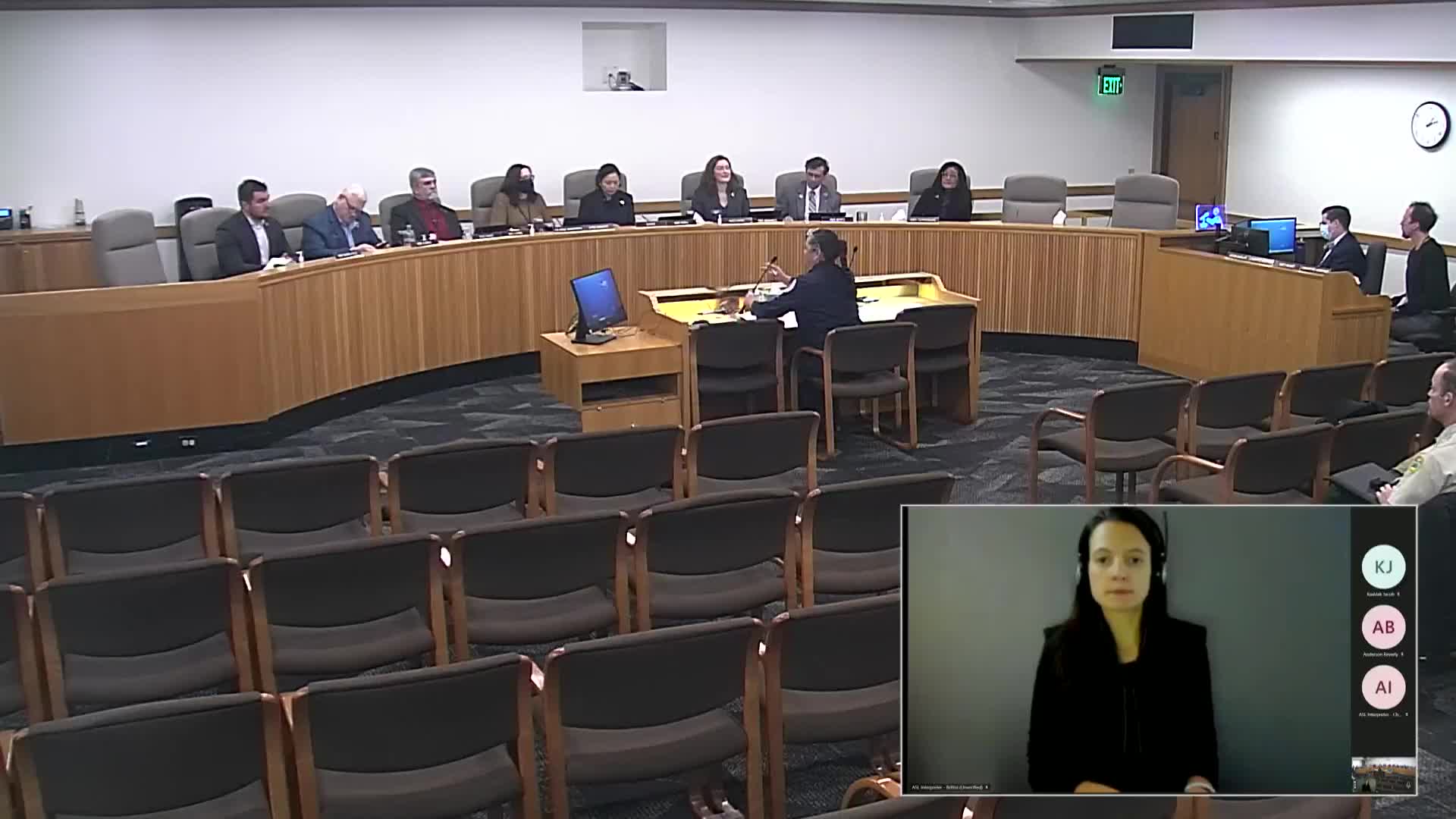
State fire agencies brief House committee on growing wildfire risk, mobilizations and funding needs
Summary
Oregon State Fire Marshal Mariana Rees Temple and Oregon Department of Forestry deputy director Kyle Williams told the House Committee on Emergency Management, General Government and Veterans on Jan. 21 that wildfire risk, complexity and out‑of‑state mobilizations have increased and that durable funding, modernization and workforce capacity are urgent needs.
Mariana Rees Temple, the Oregon State Fire Marshal, and Kyle Williams, deputy director for fire operations at the Oregon Department of Forestry, told the House Committee on Emergency Management, General Government and Veterans on Jan. 21 that Oregon’s wildfire risk and response demands have increased rapidly in recent years and that sustained funding, modernization and workforce capacity are top priorities.
Temple, identified as the Oregon State Fire Marshal, described the Department of State Fire Marshal’s mission to protect people, property and the environment from fire and hazardous materials and said the office became an independent Department of State Fire Marshal in 2023. She told the committee the agency administers the Oregon Fire Mutual Aid System, which she said comprises about 11,000 structural firefighters across roughly 306 fire departments and three all‑hazards incident management teams. Temple also said the agency supports a statewide engine program that was expanded after 2018 to pre‑position engines in rural areas and areas at higher wildfire risk.
"Our mission is to protect people, property, and the environment from fire and hazardous materials," Temple said, summarizing the agency’s responsibilities and its all‑hazards response role.
Temple described hazardous‑materials capabilities maintained by the department: 12 state hazmat teams positioned around the state and approximately 220 hazmat technicians. She said the department also deploys under interstate agreements and through EMAC; the most recent EMAC deployment she described included 21 task forces, 370 firefighters and 105 engines. Temple said out‑of‑state reimbursements are handled by the receiving state and that reimbursement from California typically takes about seven to eight months.
Temple and committee members discussed community risk reduction and defensible space. Temple explained the "0 to 5" zone — the area zero to five feet from a house — and said removing combustible vegetation and using noncombustible materials near structures can reduce structure losses.
Kyle Williams of the Oregon Department of Forestry told the committee that ODF protects 16.2 million acres of private, county, state and tribal lands and that the agency relies heavily on seasonal employees; the agency reported 469 FTE dedicated to fire protection (about 791 positions when seasonal staff are included). Williams said 2024 was the state’s largest recent season: ODF recorded 1,005 fires on its protection lands in 2024 and about 306,000 acres burned on ODF‑protected lands; statewide acreage that agencies responded to was roughly 1.9 million acres.
Williams said rangeland and grassland fires accounted for a large share of acres burned in 2024 and that a sequence of hot days, dry lightning events and wind produced conditions that outpaced suppression capacity in multiple areas. He described ODF’s network of 38 local offices and partnerships with three forest protective associations and private landowners as key elements of the state’s protection system.
Chris Cline, ODF’s protection division chief, described the agency’s three fully rostered incident management teams (type 1 national rating) and said the teams have been dispatched more than 200 times historically, including 12 times in the prior year. He said the teams are all‑hazards capable and have supported wildfire response, floods, hurricanes and pandemic response.
Both agency leads stressed workforce challenges and the need for durable funding. Temple identified a Governor’s Recommended Budget (GRB) figure (about $106 million for the department, she said) and said the GRB included 160 positions and three policy option packages for OSFM, including funds to modernize the mutual‑aid billing system, enhance community risk reduction staffing and the new responsibilities tied to fuel‑station self‑service rules. Williams said ODF would work with the legislature and partners to provide cost estimates for expanding incident management team capacity when asked by lawmakers.
Committee members asked about “islanding” — whether remote communities have enough local capacity to sustain response when cut off; Temple said that in many cases the answer is no and that building community resilience is a continuing need. Members also discussed partnerships with federal agencies, private landowners and contractors and noted that private landowners and loggers often provide immediate local capacity that can help keep small fires small.
Both agencies said they would make data and analysis available to the committee staff on specific questions such as volunteer firefighter losses, HAZMAT responses by county, and costs to scale incident management teams. Chair Tran closed the informational session and said agencies will appear again to follow up on topics including the Cascadia subduction event and emergency management planning.