Get Full Government Meeting Transcripts, Videos, & Alerts Forever!
Get email alerts on the Public Universities topic
No spam. Unsubscribe anytime.
Public universities urge state investment; student speakers say funding widened access
Summary
Representatives of Oregon’s seven public universities told the committee that underinvestment shifts costs to students, hampers statewide workforce goals and may contribute to student migration out of state; a University of Oregon student described how state aid and university support made her degree possible.
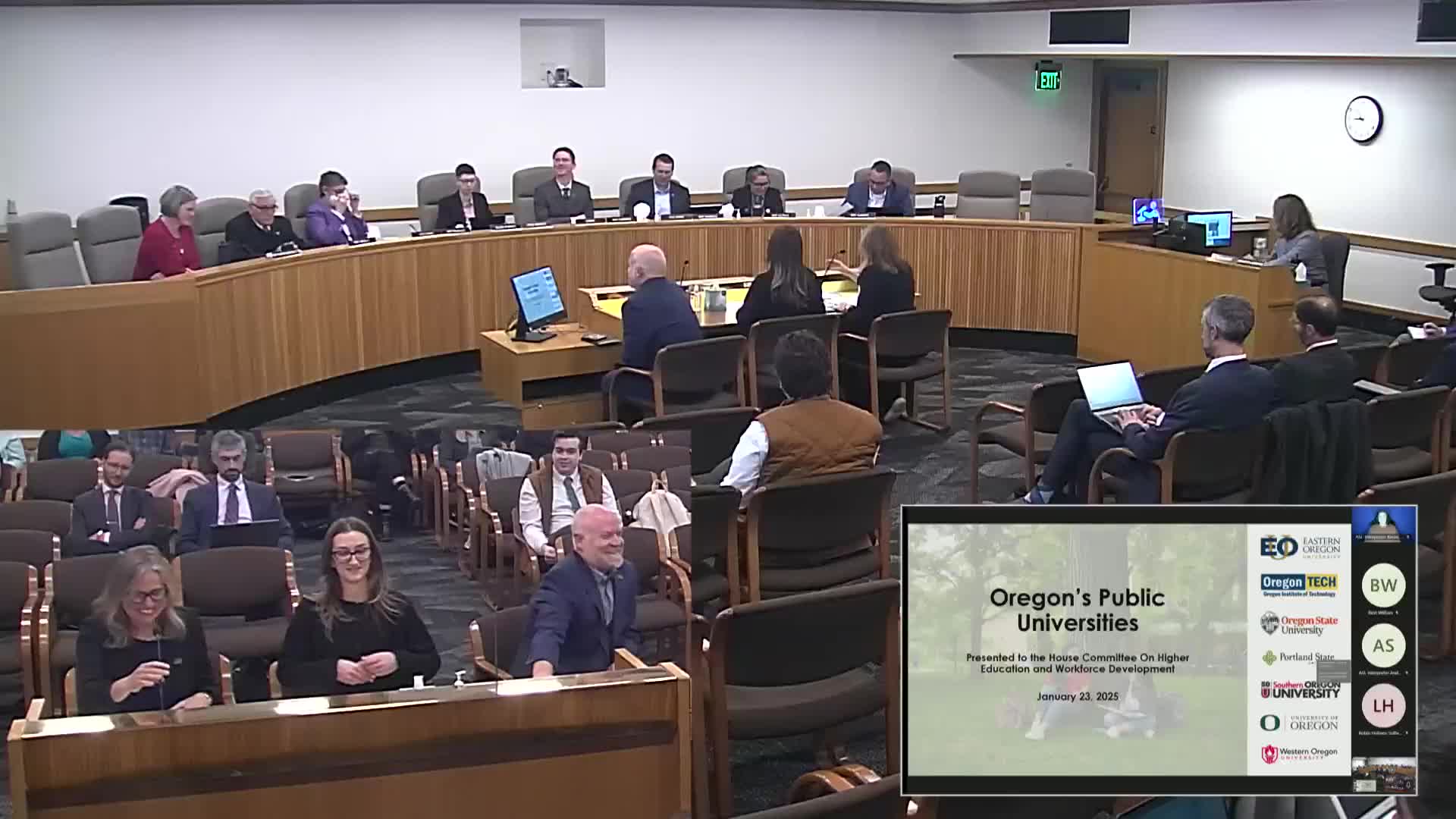
Kelly Ryan, president of Eastern Oregon University, told the House Higher Education and Workforce Development Committee that Oregon’s seven public universities educate about 100,000 undergraduate and graduate students and play roles beyond instruction, including research, community partnerships and workforce development.
“Oregon is home to seven public universities,” Ryan said. “Each with unique strengths, missions, and communities that reflect the very diverse needs of our state.”
Ryan and other university representatives told the committee that Oregon funds its public universities at levels below the national average, which shifts costs onto students and can push talent out of state. She cited statistics describing higher lifetime earnings for adults with bachelor’s degrees and framed state investment in universities as an economic development priority.
A student example: Zoe Alexander, a senior at the University of Oregon, told the committee she is a first‑generation college student whose path to higher education depended on state and university funding and financial aid. “Without it, I would not have been able to make the most of my college experience,” Alexander said, describing study abroad, tutoring and internships that she said were made possible by state support.
Ryan said federal Pell Grants are critical for many students and that universities await federal guidance about a recent executive order addressing campus diversity programs before proposing local policy changes. She noted that her own institution’s student population includes a substantial share of Pell‑eligible students and that federal compliance requirements are strict.
Other university leaders emphasized regional missions and tight budgets at smaller, regional campuses. One president said rising enrollments did not remove the need for state funding after his university made $5 million in budget cuts while trying to maintain operations.
Ending: University representatives urged the legislature to consider targeted investments to keep tuition affordable, support student services and sustain research and workforce programs that benefit Oregon communities.