Get Full Government Meeting Transcripts, Videos, & Alerts Forever!
Get email alerts on the Environmental Regulation topic
No spam. Unsubscribe anytime.
DEQ briefs committee on air, land and water programs; highlights nitrate groundwater work and recycling rollout
Summary
Matt Davis of the Oregon Department of Environmental Quality reviewed DEQ programs, the agency’s budget and priorities, including expanding air monitoring, the reestablished Climate Protection Program, implementation of the Recycling Modernization Act and plans to address nitrate contamination in three groundwater management areas.
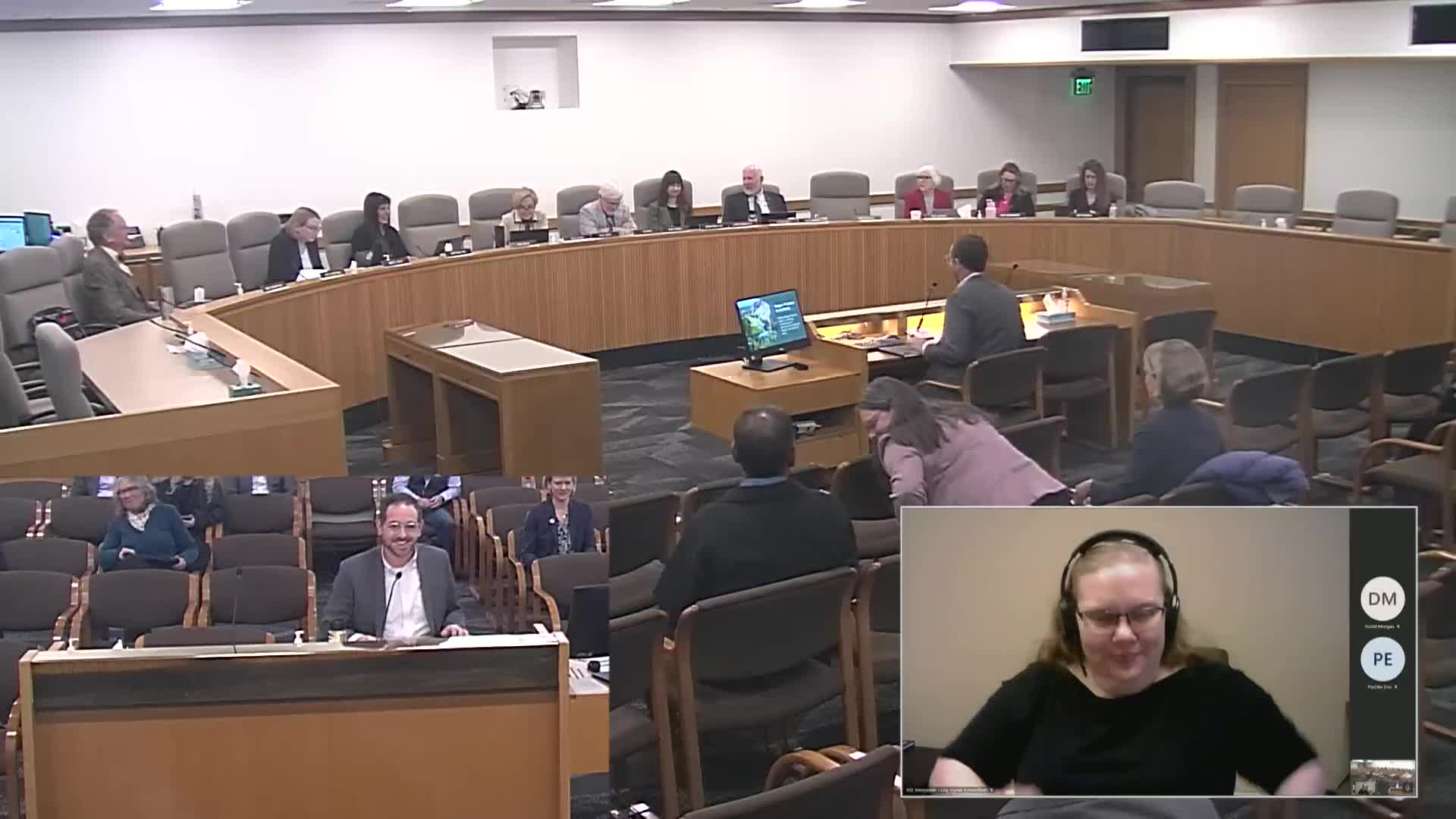
Matt Davis, policy and external affairs manager for the Oregon Department of Environmental Quality, briefed the House Committee on Climate, Energy and Environment on Jan. 21, 2025, on DEQ’s organizational structure, regulatory context and program priorities for the coming biennium.
Davis summarized DEQ’s mission to protect Oregon’s air, land and water, noting the agency’s work is heavily structured by federal statutes and federal oversight through the U.S. Environmental Protection Agency. He said DEQ’s legislatively approved budget for the current period is $753,000,000 and the agency employs roughly 860 full-time equivalents.
Air quality and monitoring Davis described an expanded air-monitoring program driven by longer wildfire seasons, and said DEQ has shifted from slower laboratory filter analysis to more real-time particulate monitors to provide actionable information to the public, employers and outdoor workers. He noted the state remains obligated under the federal Clean Air Act to maintain National Ambient Air Quality Standards and to submit plans where areas are not in attainment.
Climate and greenhouse gas work Davis summarized DEQ’s greenhouse gas work, including the Climate Protection Program. He said the Environmental Quality Commission reestablished the program in November after a court decision that affected the original rulemaking; the updated program includes a declining emissions cap, a credit system, new oversight of voluntary community climate investments, and a change to directly regulate key manufacturing sectors (with a temporary three-year exemption as DEQ develops sector-specific approaches).
Recycling modernization DEQ discussed implementation of the Plastic Pollution and Recycling Modernization Act, which requires producer responsibility and a single statewide recycling list. DEQ said it had adopted two sets of rules; a program plan from a prospective producer responsibility organization, the Circular Action Alliance, is currently out for public comment with a rolling implementation to begin in July 2025. DEQ said the rules aim to expand recycling access, particularly for apartment residents and rural areas.
Water quality and nitrates Davis said the state has three groundwater management areas designated for nitrate contamination: the Lower Umatilla Basin, Northern Malheur and the Southern Willamette Valley. DEQ and partner agencies published an updated nitrate reduction plan in the fall of 2024 aimed at reducing nitrate concentrations toward a benchmark of 7 milligrams per liter. DEQ’s role includes updating wastewater permits in the Lower Umatilla Basin, partnering with counties on septic-system oversight and maintaining long-term testing networks. Davis also described an emergency declaration by Governor Tina Kotek allowing limited application of wastewater at the Port of Morrow to manage storage capacity issues during high-rainfall conditions.
Other priorities and implementation Davis said DEQ expects to continue drawing federal funds—in excess of $200,000,000 in recent biennia—to support program work, to modernize permitting systems (including the YourDEQ online system), and to improve customer service and permitting timeliness. He invited committee members to tour DEQ’s laboratory in Hillsboro and offered the agency as a resource to the committee over the session.
Committee members asked questions about septic systems and support for low-income residents in the Lower Umatilla Basin, emergency wastewater management and coordination with county and local partners. Davis said the nitrate reduction plan includes actions addressing septic systems and that DEQ will share more detailed responses and the plan’s sections with the committee.