Get Full Government Meeting Transcripts, Videos, & Alerts Forever!
Get email alerts on the Residential Ombudsman Capacity topic
No spam. Unsubscribe anytime.
Residential facility ombudsman warns staff shortfalls as monitored homes rise 75% since 2013
Summary
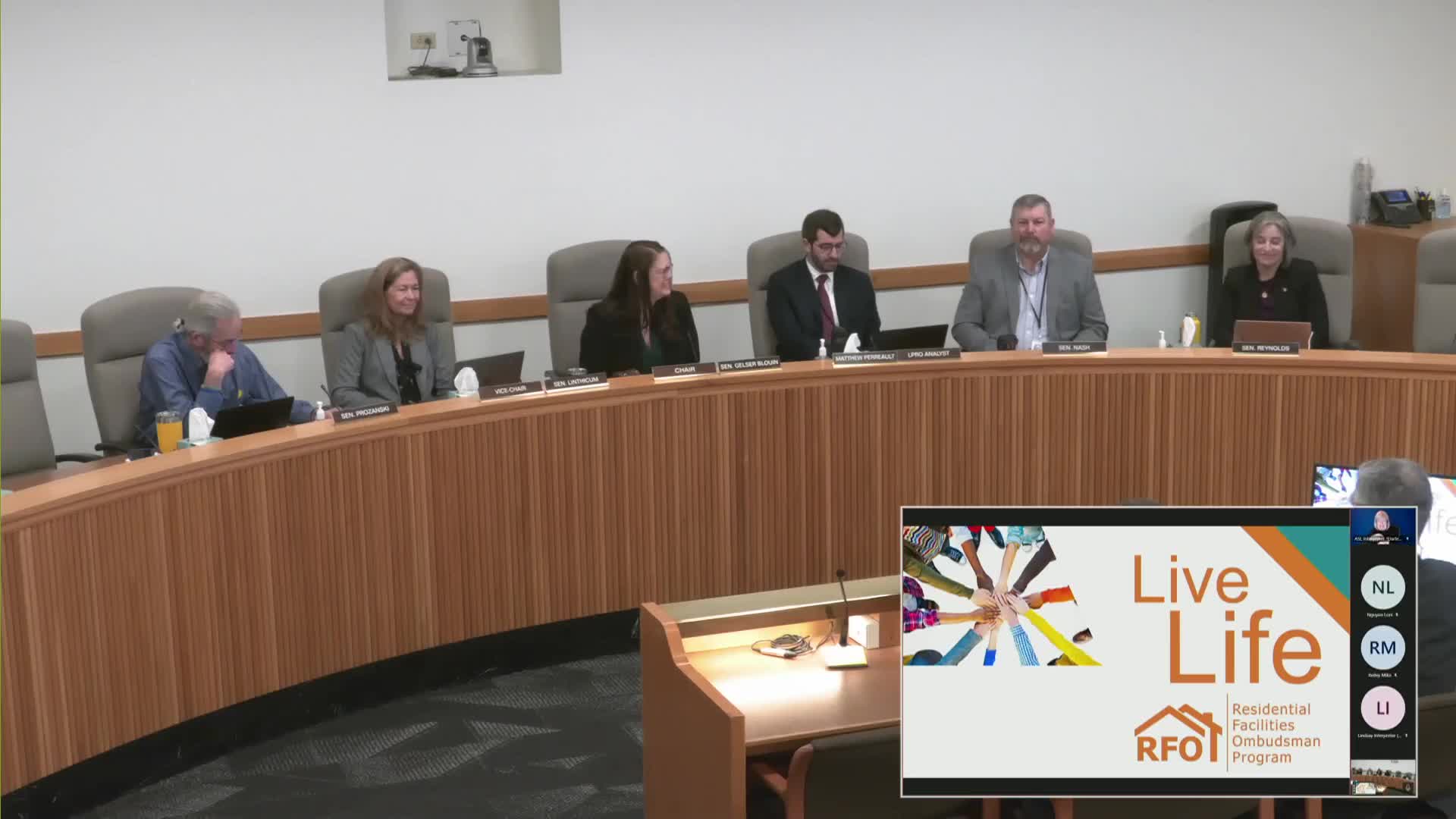
Leslie Sutton, Oregon's residential facility ombudsman, told the Senate Human Services Committee that the number of licensed homes in her purview has grown from about 1,800 to 3,219 since 2013 while staff numbers in her office have not increased, creating capacity challenges for oversight and advocacy.
Leslie Sutton, Oregon’s residential facility ombudsman, told the Senate Committee on Human Services on Jan. 21 that her office faces growing workload and staffing pressures as the number of residential settings for people with developmental disabilities and mental-health needs has risen sharply since 2013.
Sutton said the residential facility ombudsman covers adult mental-health residential facilities, adult developmental-disability foster homes, 24-hour group homes, and, in some cases, child foster homes through the developmental-disability system. She said her office now covers about 3,219 licensed settings — a 75% increase from roughly 1,800 in 2013 — while the program’s staff level has not grown commensurately.
Sutton told the committee that the office served about 11,000 Oregonians: roughly 87% in developmental-disability settings and 13% in mental-health facilities. She said the program opened 2,800 visits last biennium, visiting about 31% of homes in its purview and 25% of individuals. Since 2016 she reported an approximately 800% increase in case volume.
The residential ombudsman said unannounced home visits, subpoena authority to obtain records for investigations, and routine systems recommendations are core tools. She emphasized person-centered practice and federal and state rules that support giving people with disabilities greater control over daily decisions, a policy shift she traced in part to federal changes in 2014 related to person-centered Medicaid services.
Sutton said her office uses five deputy ombudsmen, a program coordinator and volunteers; two deputies were on temporary rotations at the time of testimony. She urged legislators to consider resourcing and staffing as the committee reviews proposals affecting residential settings and mental-health residential services.
Sutton also noted that 26% of the cases her office opens come from people the office has worked with before, and that 22% of cases originate from unannounced visits initiated by ombudsmen.
She described the ombudsman program as both a partner for providers seeking to improve care and a watchdog that represents resident rights and recommends policy changes to state agencies and the legislature.