Get Full Government Meeting Transcripts, Videos, & Alerts Forever!
Get email alerts on the Wage And Hour Law topic
No spam. Unsubscribe anytime.
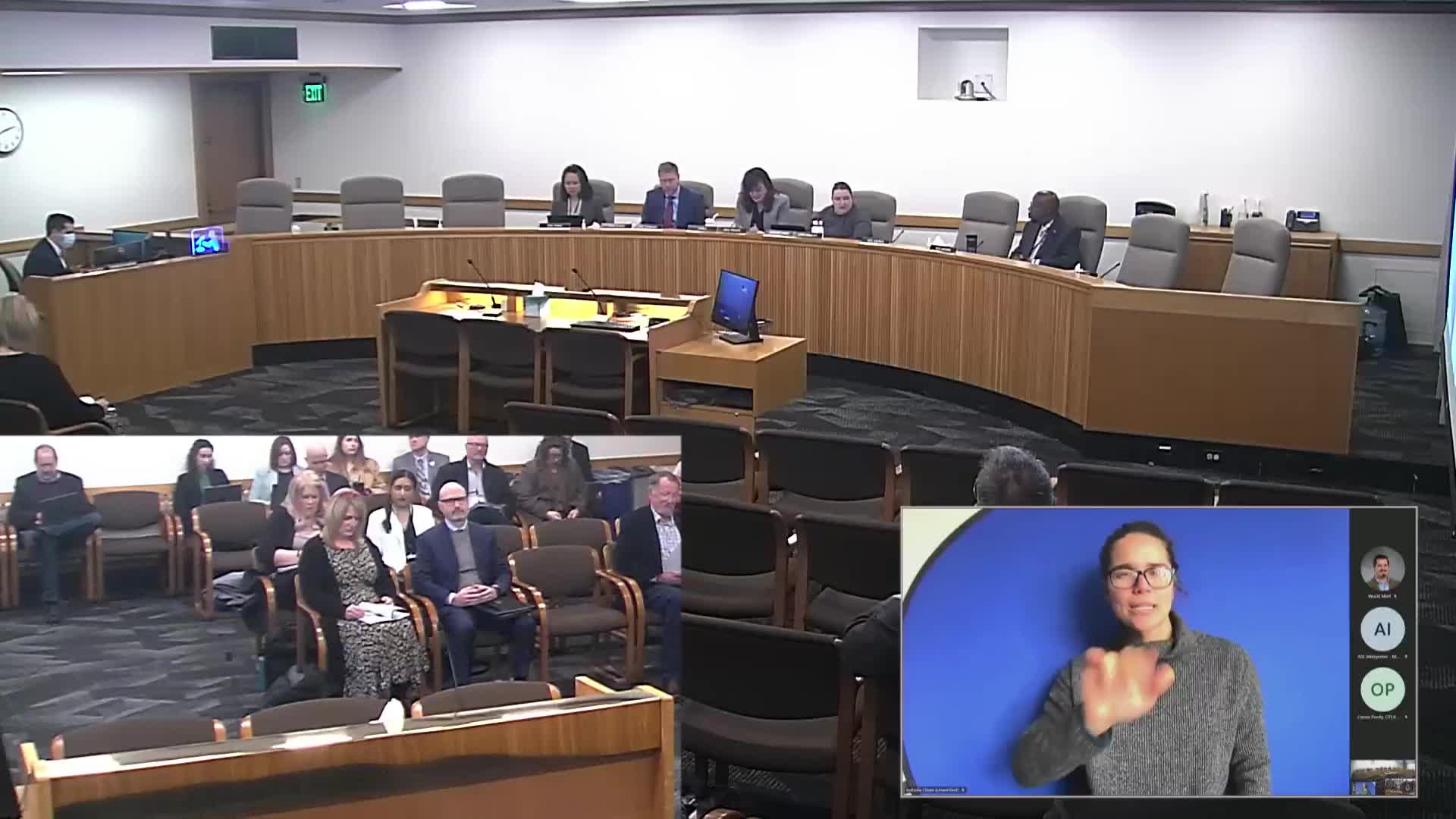
Debate in committee over bill to allow federal-style time rounding for wage calculations
Summary
Senate Bill 397, sponsored by Sen. Fred Gerard, would permit employer time-rounding policies that comply with federal standards. Business groups supported the bill as modernization; unions, worker advocates, and BOLI warned it would weaken Oregon’s stronger protections requiring pay for all minutes worked and cited a 2022 district court decision.
Senate Bill 397, introduced by Sen. Fred Gerard, would allow employers to adopt time-rounding policies for calculating wages if those policies comply with federal time-rounding standards. The committee opened a public hearing on Jan. 21, 2025; no amendments had been filed at the time.
Gerard characterized SB 397 as “more of a clarification than it is a policy bill” and said the bill would make clear that the federal standard for rounding hours is appropriate to use. Derek Singston, policy director and counsel for Oregon Business and Industry (OBI), testified in support and said the change would “bring balance” and allow employers to adopt rounding policies similar to Washington and California. Singston told the committee that rounding reduces the administrative burden of calculating minute-by-minute pay and can give workers flexibility to be a few minutes late or leave a few minutes early without losing pay.
Opponents told the committee the bill would weaken Oregon protections. Cassie Purdy, political director for the Oregon Trial Lawyers Association, testified that SB 397 “could have wider reaching implications” and would “effectively tak[e] away the pay of hardworking minimum wage employees” because federal rounding standards are broader than Oregon law. Katie Tyson of the Oregon AFL-CIO and Alyssa Aguilar of Oregon AFSCME echoed concerns that current Oregon law is more protective and that modern timekeeping makes rounding unnecessary. Purdy and witnesses referenced a 2022 federal district court decision (the transcript referred to the plaintiff as “Bridal” v. Home Depot) as a recent case in which the court concluded Oregon law did not permit time rounding.
A representative from the Bureau of Labor and Industries (BOLI) explained the agency’s view of current law: “It requires employees to be paid for all of the time they work. No rounding is allowed.” Committee members asked for clarification about how federal rounding frameworks work; Singston said employers establish a rounding procedure but must ensure it does not “always disadvantage the employee” and that rounding sometimes results in rounding up rather than always rounding down. He said common permissible intervals include rounding to the nearest 6 or 15 minutes, with limitations in federal guidance that rounding cannot always shortchange the worker.
Senators closed the public hearing after receiving testimony and asked staff to circulate additional materials. No committee action or vote on SB 397 occurred at the hearing.
The committee record includes both business-support testimony arguing for administrative simplification and labor/advocate testimony warning about lost wages and citing state law and court decisions that currently require payment for all time worked.