Get Full Government Meeting Transcripts, Videos, & Alerts Forever!
Get email alerts on the Environment Water topic
No spam. Unsubscribe anytime.
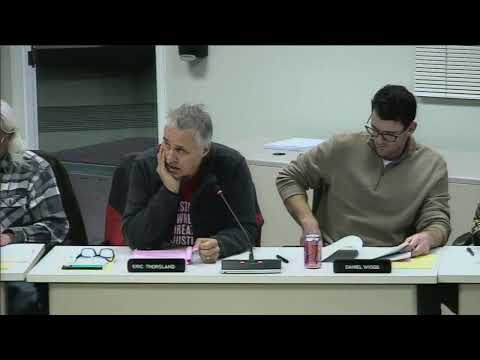
Champaign County Board adopts 12‑month moratorium on carbon sequestration beneath Mahomet Aquifer
Summary
After public comment and a heated board debate, the Champaign County Board approved a temporary 12‑month moratorium that bars carbon dioxide sequestration activity beneath the county’s portion of the Mahomet Aquifer; an amendment to make the moratorium permanent failed in a roll‑call vote.
CHAMPAIGN, Ill. — The Champaign County Board on Jan. 23 approved a temporary moratorium on carbon dioxide (CO2) sequestration activity beneath the county’s portion of the Mahomet Aquifer, voting to bar permitting or siting of subseabed CO2 injection in county zoning for 12 months while staff and committees draft permanent rules.
The moratorium aims to protect the sole‑source Mahomet Aquifer, which speakers at a lengthy public comment period said supplies drinking water to communities across central Illinois. Board members debated an amendment to remove the 12‑month expiration and make the ban rescindable only by future board action; that amendment failed on a roll‑call vote before the board approved the original moratorium ordinance.
The moratorium matters because the Mahomet Aquifer supplies drinking water to municipalities and residents across central Illinois. Public commenters said contamination would leave no economically viable alternative source for affected communities. "This moratorium is a crucial step in the right direction," one speaker told the board, adding that contamination risks include mobilization of heavy metals and formation of carbonic acid.
Speakers during public participation urged the county to act. Andrew Wren told the board the aquifer is a sole source and that contamination would leave "no other economically viable drinking water source," and encouraged a vote for the moratorium: "I urge a yes vote on the moratorium." Graduate student Vijay Shah explained chemical risks he said are associated with supercritical CO2 and described alternative sequestration approaches such as mineralization and terrestrial sequestration. Marsha Morrow and Al Wierman, a licensed civil engineer who helped prepare the original sole‑source petition, described local dependence on groundwater and the lack of alternatives; Wierman said the county "pump[s] somewhere over easily over 20,000,000 gallons a day." The mayor of Urbana (unnamed in the transcript) noted the U.S. Environmental Protection Agency designated the aquifer as a sole‑source aquifer in 2015.
Board debate centered on process and legal defensibility. Board member JJ proposed an amendment to strike the ordinance language that would automatically expire after 12 months and replace it with language making the moratorium rescindable only by future county board action; the amendment sought to make the ban effectively permanent until rescinded. Multiple board members said they shared the amendment’s goal but opposed adopting a substantially revised ordinance without further committee review and public comment, citing the risk of legal challenges and the need to craft a ‘‘watertight’’ permanent ordinance through the county’s Environment, Land Use and County Affairs (ELOC) committee and zoning board. "One year is better than nothing. My confidence in Springfield is 0," one board member said after the amendment failed.
The amendment failed on a roll‑call vote; the board then approved the original 12‑month moratorium by roll call. The moratorium’s text places a temporary prohibition on zoning approvals, permits or activities that would authorize CO2 sequestration beneath the county’s portion of the Mahomet Aquifer while staff and relevant committees draft permanent regulations.
Next steps described by board members include directing ELOC and planning and zoning staff to use the 12‑month window to draft and vet a detailed permanent ordinance, coordinate with the Prairie Rivers Network and other community stakeholders, and seek alignment with state efforts. County staff member John Hall was identified in public remarks as staff supporting the drafting work.
Votes and formal motions appear in the record: the moratorium ordinance (item A1) was moved and seconded on the floor, an amendment to make the moratorium permanent was proposed and failed, and the original moratorium ordinance passed in a subsequent roll‑call vote. The board also removed the moratorium item from the consent agenda to allow public comment and board discussion.
Public comment and board discussion made clear many board members favor a long‑term prohibition but opted for a time‑limited moratorium to allow a robust rulemaking process that staff and committees can complete within a year. The board directed staff and committee chairs to begin work immediately on drafting a permanent ordinance.
The board’s action does not itself change state law or preclude actions by other counties; several speakers and board members urged coordination with state legislators and neighboring counties to secure broader protections for the Mahomet Aquifer.
The county clerk’s roll‑call record and committee agendas will provide the official ordinance language and next steps for drafting a permanent rule.