Get Full Government Meeting Transcripts, Videos, & Alerts Forever!
Get email alerts on the State Tax Distribution topic
No spam. Unsubscribe anytime.
Senate committee advances plan to shift 4 cents of sales tax distribution toward local governments
Summary
Senate File 60 would change the split of the 4-cent state sales tax so that a larger share (35% rather than 31%) is returned to local governments, reducing the state general-fund share from 69% to 65%; senators debated tradeoffs with state obligations and existing local distributions.
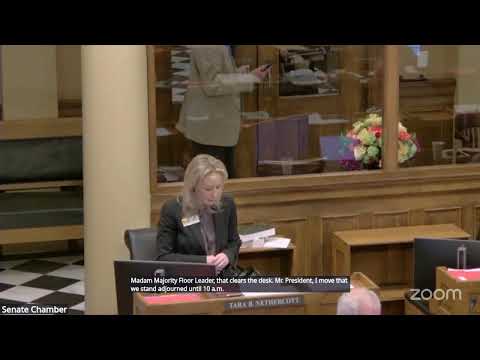
Senate File 60, a bill that reallocates how the states 4-cent sales and use tax is split between the general fund and local governments, passed the Committee of the Whole after extended floor debate over revenue, backfills and long-term fiscal policy.
What the bill would do: under current law the 4-cent statewide sales tax distributes approximately 69% to the state general fund and 31% to local communities (with one percentage point retained for administrative costs). The bill would move the distribution to 65% general fund and 35% local share, effectively directing roughly an additional $38.6 million per fiscal year to local governments beginning in fiscal 2026 according to the fiscal note cited on the floor.
Supportersarguments: sponsors said the change would give counties and municipalities a predictable, dedicated revenue stream rather than ad hoc backfill appropriations. Senator French argued counties and towns "are the state" and should retain a bigger share of sales tax revenue to implement and administer local services required by the Legislature. Backers said the shift would help jurisdictions that have seen revenue pressures and provide clarity about expected local dollars.
Opponentsconcerns: several senators warned the shift reduces general-fund revenue that supports statewide obligations such as the school foundation program and other state services. Senator Hicks outlined other state flows to local governments (mineral severance distributions, conservation funds, lottery proceeds, local government distributions in the budget) and warned repeated diversions reduce state capacity to meet obligations. Senator Anderson urged using targeted property-tax backfills rather than a recurring sales-tax distribution shift, saying that approach better preserves state priorities.
Fiscal notes and timing: the floor discussion referenced a CREG forecast and a fiscal note stating the fiscal-year 2026 impact would be approximately $38.6 million redirected toward the local share. The bill is effective July 1, 2025, with distribution changes taking effect for fiscal year 2026.
Actions and outcome: the Committee of the Whole reported Senate File 60 do pass; floor remarks recorded vocal "Aye" and "No" responses in committee-of-the-whole action but no roll-call tally was printed in the transcript excerpt.
Next steps and context: senators urged a more comprehensive review of the states overall tax and distribution policies before adopting piecemeal changes. Supporters said the bill brings predictability to local budgets; opponents said the Legislature should consider a holistic approach to revenue and expenditures rather than incremental adjustments.