Get Full Government Meeting Transcripts, Videos, & Alerts Forever!
Get email alerts on the Oil And Gas Bonding Pool topic
No spam. Unsubscribe anytime.
Senate committee backs bonding pool to help small oil and gas operators meet new federal bond rules
Summary
Senators approved an amendment to permit use of unexpended conservation funds to seed a risk pool and voted the bill out of committee; the measure would authorize the Oil and Gas Conservation Commission to create voluntary bonding options and a risk pool to meet federal bonding requirements that rose sharply in recent federal rule changes.
The Senate passed a committee amendment and the Committee of the Whole recommended passage of Senate File 20, a bill authorizing new bonding options and a bonding pool to help oil and gas operators meet recently increased federal bonding requirements.
Why it matters: federal rules raised minimum per-well bonds from $10,000 to $150,000 and increased statewide blanket bonds from $25,000 to $500,000; senators said those higher requirements could put small operators at risk and threaten a substantial portion of state production produced by smaller firms.
What the bill does: it directs the State Oil and Gas Conservation Commission (OGCC) to promulgate rules establishing voluntary pooling options that allow participating operators to aggregate risk. The commission may contract with a third party to create a bonding pool that can serve as financial assurance for plugging and reclamation obligations, or, if a contractor is unavailable, the commission may establish and manage a state-administered pool. The proposal layers protections: insurance on individual wells, a bonding pool as a second layer and, as a backstop, the state conservation fund.
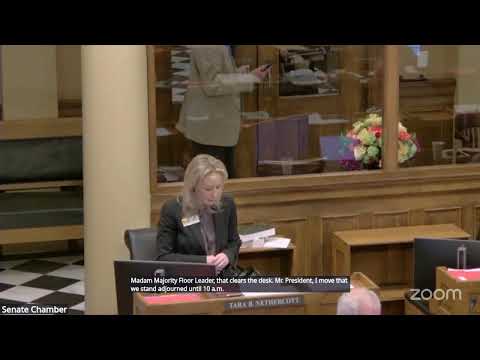
On the floor, sponsor Senator Rafais (Andersons motion recognized) explained the two options: a third-party-run pooled program that would be seeded by unobligated funds already in an OGCC account (identified in debate as funds collected from prior per-well fees), and a commission-run program if private partners are not available. The standing committee amendment the floor adopted clarified that unexpended and unobligated funds in the conservation account (identified by statute in debate) could be used to seed the pool. Senator Anderson emphasized these are industry-paid funds, not general fund dollars, and Senator Hutchings asked whether existing contributors would have to consent; the sponsor said the funds are collected fees and would not require individual member approval to seed the pool.
Senators also discussed program mechanics: participation would be voluntary, participating operators must be in good standing, and the commission may assess participating operators (a mill rate mechanism referenced in statute language) if necessary. The proposal includes reporting requirements to the Joint Minerals Committee and the Minerals Committee and allows the commission to negotiate agreements with federal agencies (such as the BLM) so the state could perform plugging and abandonment in place of full federal bond forfeiture in some circumstances.
Actions and outcome: the standing committee amendment (standing committee amendment number 1) clarifying the use of unexpended conservation funds was adopted by the Committee of the Whole. The Committee of the Whole then reported Senate File 20 do pass as amended. The amendment and floor discussion clarified that the funds cited are producer-paid fees held in the conservation fund and that initial assessments would begin at 0 mills with authority to increase to up to 0.5 mills per statute language over time if necessary.
Next steps and context: sponsors portrayed the bill as an immediate response to federal rule changes (effective June 30, 2026, for full implementation at the federal level) that threatened small operators' ability to operate. Senators described the program as an industry-backed, layered assurance model designed to avoid widespread forfeitures and maintain production, while preserving the operators primary responsibility for plugging and reclamation.
Votes recorded at floor: Committee of the Whole recorded verbal "Aye"/"No" votes in the floor process; the transcript does not include a roll-call tally for the amendment or the committee recommendation on the floor report. The standing committee amendment passed and the Committee of the Whole recommended Senate File 20 do pass as amended.