Get Full Government Meeting Transcripts, Videos, & Alerts Forever!
Get email alerts on the Local Government Funding topic
No spam. Unsubscribe anytime.
Senate adopts amendment to shift portion of sales-tax revenues to cities and counties
Summary
On Jan. 24, 2025, the Wyoming Senate adopted a second‑reading amendment to Senate File 60 to change how sales and use tax receipts are distributed between the state and local governments; sponsors said the change would provide steadier local funding, opponents urged caution about effects on the general fund and direct distribution formulas.
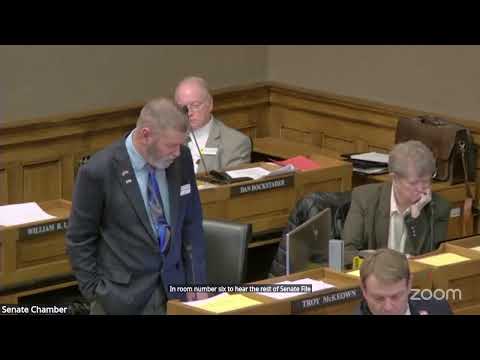
CHEYENNE — The Wyoming Senate on Jan. 24 adopted second‑reading amendment number 1 to Senate File 60, altering the distribution of sales and use tax receipts so a larger, fixed share flows to cities and counties.
Senator Bill Hicks, sponsor of the amendment, told the Senate the measure would split sales and use tax receipts roughly 50/50 between the state and local governments, producing a steadier, more predictable revenue stream for municipalities and counties. He said the calculation used 2024 collections as an example and described the fiscal effect in dollar terms.
The change drew a vigorous floor debate. Supporters, including Senator French and Senator Ih, said the amendment will give local governments more consistent funding. Opponents warned the shift would reduce the state general fund and could complicate Wyoming’s existing “direct distribution” formula that provides guaranteed minimum amounts to smaller communities.
Senator Hicks said Wyoming collected about $944 million in sales and use taxes in 2024. Under the amendment and related provisions already in the bill, he said, total distributions to cities, towns and counties would rise by about $149 million on top of amounts in current law and recent budgets; he described that as a reassurance of steady revenue for local governments. Multiple senators cautioned, however, that some small communities with little or no sales tax rely on the direct distribution mechanism and might require a separate backfill or adjustment.
The Senate adopted the amendment on a recorded roll call: the chief clerk announced the vote as 16 ayes, 14 noes and 1 excused. After adoption of the amendment, the chamber ordered the bill to third reading.
Why it matters: Sponsors framed the amendment as a way to stabilize local revenue amid volatility in severance and investment receipts. Critics argued the change is a large fiscal reallocation better suited for committee study or a broader review of distribution formulas.
Looking ahead: Senators said they expect additional information on how the change would interact with the state’s industrial siting provisions and the existing direct distribution formula as the bill moves forward.