Get Full Government Meeting Transcripts, Videos, & Alerts Forever!
Get email alerts on the School Facilities topic
No spam. Unsubscribe anytime.
Arlington board to seek $75 million capital levy to replace Post Middle School; ballots mailed Jan. 23
Summary
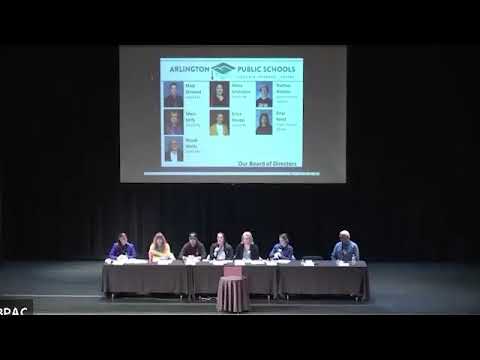
Arlington School District officials told a public forum that the board will ask voters to approve a $75 million capital levy to pay part of a $101 million project to replace Post Middle School, with district leaders saying they expect $25 million in state construction assistance.
Arlington School District officials told a public forum that the board will ask voters to approve a $75 million capital levy to pay part of a $101 million project to replace Post Middle School, with the district seeking an additional $25 million in state construction assistance.
Board President Mary Levesque said the district held a post‑election survey after a November measure failed and received roughly 700 responses; based on that feedback the board reduced the local ask and the scope of the project by about $6 million. "We do extremely value your feedback and your input," Levesque said, describing the smaller levy and a shortened building program.
Why it matters: District officials said Post is more than four decades old, does not meet modern safety and seismic standards, suffers poor indoor air quality from an aging HVAC network, and has recurring courtyard flooding and an unusable track — conditions the district says are cheaper to address through replacement than by renovation. The board and staff fielded questions about costs, timelines, contingency plans and who pays.
Key facts and figures - District ask: $75,000,000 local capital levy for the Post Middle School replacement; the district says it is eligible for $25,000,000 in state matching funds from the state construction assistance program, bringing the project total to about $101,000,000 as presented to voters. - Reduction from prior measure: District leaders said they trimmed roughly $6,000,000 from the original proposal to reduce the local tax impact; that reduction removed four classrooms and a weight room and reduced building square footage compared with the prior plan. - Household impact example: District presenters said the levy would cost a representative house with a $500,000 assessed value about "$54–$55 per month" (rough estimate shown at the forum and presented as illustrative). - Enrollment/transfer students: Board members reported the district had 775 transfer students as of Jan. 9, 2025, from other districts; staff said transfer funding "follows the student" and that student allocations tied to transfers represent millions in operating dollars. - Ballots and timing: Forum presenters said ballots were mailed Jan. 23, 2025, and outlined voter registration and drop‑box options and deadlines.
Reasons offered for replacement District staff and board members outlined multiple, interlocking problems at Post that they argue favor replacement over renovation: an aging array of 24 separate HVAC units with hard‑to‑source parts and recurring indoor air and carbon dioxide problems; multiple exterior classroom doors and open walkways that complicate modern safety and lock‑down protocols; seismic vulnerability (the gym lacks steel framing, presenters said); persistent courtyard flooding and deteriorating track and field surfaces; and asbestos presence that complicates extensive in‑place renovations. "Post Middle School was built more than four decades ago, and it's beyond its useful life," a district presenter said during the forum.
Cost estimates and how they were developed District staff said the $101 million figure includes hard construction costs, soft costs (architectural and permitting fees), and an allowance for escalation over the expected delivery timeline. The district identified Robinson Company as its cost estimator and explained that hard costs per square foot are multiplied by soft‑cost and escalation factors to arrive at the total project estimate.
Eligibility for state funds and earlier work Officials said the district qualified for larger state matching support after recent state changes that increased the district's eligibility from roughly $5 million to $25 million for this project. Staff also described prior facility planning: the facilities master plan and subsequent facility advisory committee reviews have identified Post for major renovation or replacement since the 2010s. The district said other building work has been completed under earlier capital levies and that the replacement project is targeted only at Post.
Contingency plans and triggers for temporary moves District leaders discussed contingency plans in case Post becomes unoccupiable before a new building is completed. Scenarios listed by staff include an electrical fire, an earthquake that compromises the structure, or simultaneous failure of multiple HVAC units. Contingency options mentioned include double‑shifting at Haller Middle School, moving sixth graders back to elementary schools, or using portables. Board members emphasized those are last‑resort measures and that no closure process or RCW statutory action has been started; the district said it would follow state law and required procedures if a closure or reorganization were necessary.
Public concerns addressed at the forum Forum presenters and staff responded to questions about: whether transfer students are responsible for the cost (the district said transfer students do not pay property tax locally but the state allocation "follows the student"); whether surplus properties have been sold (staff described a 2018 sale of the Highway 530/Betcher property and related contingencies); efforts to cut operating costs and seek grants (the district said it has undertaken public budget reductions, a budget advisory task force, applied for transportation and other grants, and tightened expenses); and how impact fees and commercial development factor into capital funding (staff described an active, limited impact fee program and noted impact fee revenue accrues slowly).
Safety and regulation When asked why Post remains open if it has hazards, district staff said the building is maintained and operated as constructed but does not meet modern codes; inspections and citations from Snohomish County Health Department (for elevated carbon dioxide measurements, among other items) have not risen to an imminent‑hazard closure threshold. The district also described an on‑staff certified asbestos manager who coordinates abatement and partial closures when necessary.
What the board has decided and next steps Board President Mary Levesque stated the board "decided as a board to move forward with another capital levy" after reviewing the survey results and trimming the project. Presenters encouraged attendees to review the district's online FAQ and materials for the levy and said staff will answer remaining questions by email for those who submitted them during the forum.
Ending District officials closed the forum after a roughly 90‑minute Q&A and reminded residents of the next regular board meeting and the voter deadlines. The district asked residents to consult the published FAQ and the ballot material for full details and timelines.
(Reporting limited to statements made at the public forum; financial examples are illustrative as presented by district staff and may vary by property and final assessed values.)