Get Full Government Meeting Transcripts, Videos, & Alerts Forever!
Get email alerts on the Child Welfare Professional Wellness topic
No spam. Unsubscribe anytime.
Experts urge child-welfare professionals to adopt self-compassion and stronger connection to reduce burnout
Summary
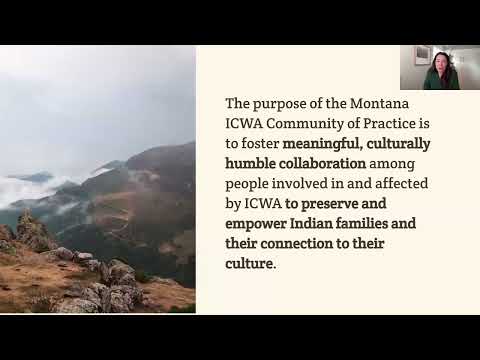
At its eighth meeting, the Montana ICWA Community of Practice hosted a virtual conversation in which Sherry Fremont, managing director of the judicial and national engagement consulting team at KC Family Programs, and Vivek Sankaran, clinical professor of law at the University of Michigan Law School, urged child-welfare professionals and court actors to prioritize self-compassion and human connection to reduce burnout and improve the quality of work with families.
At its eighth meeting, the Montana ICWA Community of Practice hosted a virtual conversation in which Sherry Fremont, managing director of the judicial and national engagement consulting team at KC Family Programs, and Vivek Sankaran, clinical professor of law at the University of Michigan Law School, urged child-welfare professionals and court actors to prioritize self-compassion and human connection to reduce burnout and improve the quality of work with families.
The discussion centered on why compassion and self-care matter in child-welfare practice and what practical steps individuals and organizations can take. “The short answer ... is not well,” Sankaran said when asked how the field is doing, describing high levels of exhaustion, anxiety and loneliness among professionals. Fremont and Sankaran framed compassion both as an ethical practice and a pragmatic tool to improve relationships with families and to support professionals’ decision-making.
Why this matters: speakers linked workforce strain to downstream effects on families. Sankaran recounted an appeal case in which he learned from a prosecutor that “your client's child has died in foster care,” and that no one in the system had personally informed the mother. He said that failure to connect on a human level can compound harm, even when legal procedures are followed. Both presenters argued that brief, authentic acts of recognition and connection can change outcomes more than purely transactional compliance checks.
Discussion highlights included causes and signs of burnout. Fremont pointed to shame and professional norms that treat emotional expression as a weakness, and recommended practices such as brief daily reflection, journaling, therapy, breath work and short meditations to increase awareness. Sankaran described retreats and exercises where attendees list the burdens they carry; he said those sessions often end in tears because participants realize how much cumulative stress is shared across roles.
Speakers described concrete behaviors to notice in oneself and colleagues: increased irritability, a tense voice, “typing really hard” during emails, or shutting down. Fremont advised: “please don't shame yourself when you go through these, like, self checks,” and recommended labeling internal responses and using simple practices to re-center. Both presenters recommended creating workplace cultures where staff model boundaries, take leave, and normalize mental-health care.
On practice-level change, presenters urged a shift from viewing people as “good/bad” to viewing them as healthy or unhealthy in the moment, and to approach difficult cases with curiosity about underlying suffering. Sankaran said pausing to acknowledge a parent’s pain — even briefly — can be more productive than a solely procedural focus on compliance. Fremont emphasized authenticity over performative kindness: short, genuine acknowledgments or small acts of support are preferable to scripted gestures.
The presenters also discussed joy and connection as protective factors. They recommended cultivating “tiny doses” of joy — private jokes, small acts of recognition, sensory experiences — as routine antidotes to chronic stress. Both named human connection as the most important “medicine,” and encouraged professionals to identify at least one person with whom they can be their authentic selves and who provides reciprocal support.
The session closed with facilitator Ashley Chaney McNeil noting that the Montana ICWA Community of Practice meets every other month and that the group will share resources mentioned in the chat, including readings on self-compassion and organizational strategies. Presenters and participants described the conversation as a foundation for future, smaller-group work on implementing self-care and connection practices in local court and agency settings.
Less critical details: participants named specific resources during the session (Kristin Neff’s work on self-compassion; a book on joy discussed by presenters). Brooke (meeting host) thanked Sherry and Sankaran and noted Lisa Woodward, an assistant public defender in Great Falls, as the person who connected presenters to the community. The meeting was held virtually on Zoom and was described as the community’s final session of 2024.