Get Full Government Meeting Transcripts, Videos, & Alerts Forever!
Get email alerts on the Student Supports topic
No spam. Unsubscribe anytime.
Superintendent outlines MTSS, PBIS and therapeutic supports as district priorities
Summary
Dr. Kavanaugh presented the district’s approach to Multi-Tiered System of Supports (MTSS), Positive Behavioral Interventions and Supports (PBIS), specially designed instruction (SDI), and therapeutic programs (Empower, Bryte, Start).
Superintendent Dr. Kavanaugh used the Jan. 23 school committee meeting to highlight how Hopkinton Public Schools supports students’ academic and social-emotional needs through MTSS, PBIS, specially designed instruction and therapeutic programs.
Dr. Kavanaugh described MTSS as a framework that “optimizes data-driven decision making, progress monitoring, evidence-based supports and strategies” and emphasized the district’s focus on individualized supports rather than a strict tier label. She said the district also uses a culturally responsive instructional observation protocol (CRIOP) with six pillars — including classroom relationships, family collaboration and equitable discourse — and administers a Holistic Student Assessment in the fall and again in March to inform interventions.
The superintendent reviewed PBIS work at the schools, noting the system-wide expectations (for example, ‘‘take care of yourself, take care of each other, take care of our school’’ at the Marathon School) and a new data-collection tool to track referrals and target interventions. She explained that specially designed instruction (SDI) involves tailored instructional strategies tied to students’ Individualized Education Program (IEP) goals and is not the same as differentiated instruction.
Dr. Kavanaugh and staff described therapeutic support programs: Empower (for students with emotional disabilities), Bryte (an external therapeutic partner with on-site spaces such as Cubby’s Den, The Roost, and The Tree House), and Start (short- to medium-term programs at middle and high schools for students returning from hospitalization or acute medical/behavioral episodes). The superintendent said Start is intended to be temporary and to transition students back to less intensive supports as quickly as is appropriate.
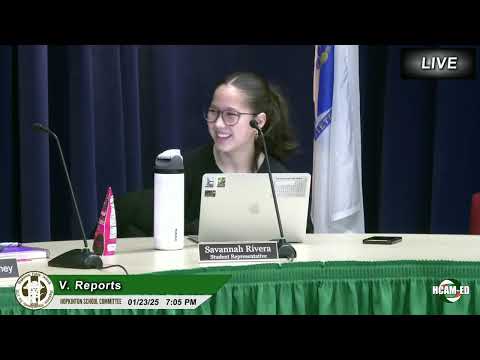
Student council representative Savannah reported student activities, including student-council collaboration across schools, midterm study support and upcoming student government day on April 4. The committee and staff discussed how district systems support students who are on the margin academically or medically and how teams deploy progress monitoring and interventions.
Committee members asked about the length of Start placements; Dr. Kavanaugh said durations vary by individual need — from about a month to as long as a school year.
The district indicated a researcher will present findings on pathways after graduation at the Feb. 13 meeting; staff reiterated that the district will continue to use data from assessments and classroom performance to guide individualized supports.