Get Full Government Meeting Transcripts, Videos, & Alerts Forever!
Get email alerts on the Moratoriums Zoning topic
No spam. Unsubscribe anytime.
Plan Commission backs four 24‑month moratoriums on farm solar, utility batteries, data centers and carbon capture; public raises permitting and water concerns
Summary
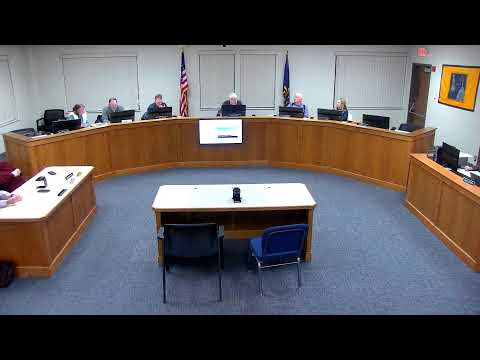
Marshall County’s Plan Commission voted Jan. 23 to recommend county commissioners adopt four separate 24‑month moratoriums on farm‑scale solar, utility‑scale battery storage, data centers and carbon‑capture projects while officials draft new zoning and land‑use rules.
The Marshall County Plan Commission on Jan. 23 voted to recommend that the Marshall County Board of Commissioners adopt four separate 24‑month moratoriums while the county reviews and drafts new zoning and land‑use rules for farm‑scale solar energy systems, utility‑scale battery energy storage systems, data centers and carbon‑capture projects.
Planning staff, supported by the Technical Review Committee (TRC), presented each moratorium proposal as a temporary halt on new permits and land‑use applications “for a period of 24 months from the passage of this proposal” to give county officials time to determine “the most appropriate building, zoning, and land use regulations” for each technology. Lydia, representing the planning department, said the TRC recommended approval of the proposed moratoria so staff and committees can review ordinance language and potential regulatory details.
County attorney Derek Jones told the commission the plan commission’s role is to review the proposals and make a recommendation to the county commissioners. “Your job is to basically give a recommendation,” Jones said, adding the board of county commissioners has the ultimate authority to approve, amend or reject the moratoriums.
The four moratorium proposals were considered and voted on separately by the commission but share common features: each would bar acceptance of new building permits, improvement location permits, special exceptions, variances and rezoning applications specifically addressing the identified technology for 24 months while staff drafts regulations.
Key clarifications and discussion - Small home battery systems: Commissioners and staff repeatedly sought to clarify scope. Planning staff said the proposed draft for battery systems would introduce a definition for “utility‑scale battery energy storage systems” and thus likely apply to larger installations; staff and commissioners stated the intent was not to prevent small residential batteries paired with home solar systems. Derek Jones said the language refers to a utility‑scale definition and that, without reviewing the statute referenced, he could not read the statute to the commission that night.
- Data centers and farm solar: The staff report included parenthetical text referring to data centers in the context of farm‑scale solar operations; a public commenter asked whether the moratorium would cover all data centers or only those tied to solar. Lydia and county staff said the primary proposal from the commissioners is a moratorium on data centers and that staff would clarify specific scope as ordinances are drafted.
Public comment and concerns Residents raised permitting transparency and environmental concerns. Vera Tetzloff, a resident with property near State Road 8, said of test solar installations she had seen: “I will not live here if it goes through,” and asked staff to research whether county permits had been issued for a multi‑year test site nearby.
Gail Lewellen of Culver asked for clarity on whether the data‑center moratorium would be limited to solar‑related facilities or be broader; she said the parenthetical language in the staff slides “was a little concerning” and requested that any moratorium be clear and comprehensive.
Tim Starr said data centers typically are tied to green‑energy requirements and asserted that government regulations often require on‑site or nearby renewable generation, which is why some data centers and farm solar projects can be connected.
Casey Neidlinger urged the commission to consider groundwater and aquifer impacts from large facilities, saying, “I just wanted to…plant a seed in the plan commission’s minds about paying attention to what that’s going to do to our aquifer going forward.”
Paul Levitt told the commission that state legislation (House Bill 1628) had been introduced and could preempt local moratoria; he urged local officials to contact state representatives because the bill could “make everything you’re doing tonight irrelevant.”
Votes and formal actions The commission voted to recommend approval of each moratorium to the county commissioners. Roll‑call responses recorded in the meeting for the moratoria votes showed unanimous “Yes” responses among members present during each roll call. The recorded roll‑call responses (as spoken during the meeting) for the individual moratorium items were entered into the record as follows: - Farm‑scale solar moratorium (25 PC‑02): “Mister Krophais: Yes; Mister Mullen: Yes; Miss Johnson: Yes; Mister Cox: Yes; Miss Mraz: Yes; Mister Nunemaker: Yes.” Tally: 6 yes; outcome: favorable recommendation to commissioners. - Utility‑scale battery storage moratorium (25 PC‑03): Roll call recorded similar unanimous yes responses; Tally: 6 yes; outcome: favorable recommendation to commissioners. - Data‑center moratorium (25 PC‑04): Roll call recorded unanimous yes responses; Tally: 6 yes; outcome: favorable recommendation to commissioners. - Carbon capture moratorium (25 PC‑05): Roll call recorded unanimous yes responses; Tally: 6 yes; outcome: favorable recommendation to commissioners.
Next steps Each item will be forwarded to the Marshall County Board of Commissioners, which has the final authority to adopt, amend or reject the proposed moratoria. County staff and commissioner representatives told the commission that if the commissioners adopt a moratorium, the planning commission and appointed committees will use the pause to draft detailed ordinance language addressing permitted uses, definitions, environmental safeguards, waste management, decommissioning and other technical and permitting requirements.
Commissioners and staff also noted the moratoria can be lifted earlier if the county completes ordinance updates before the 24‑month period ends, and that state legislation (HB 1628) raised by a public commenter could change the county’s authority depending on how it moves through the legislature.