Get Full Government Meeting Transcripts, Videos, & Alerts Forever!
Get email alerts on the Strategic Planning topic
No spam. Unsubscribe anytime.
Parma City Schools outlines midyear strategic-plan actions across six focus areas
Summary
Parma City Schools trustees heard a midyear update on a community-driven strategic plan that set 21 objectives across six focus areas and identified 16 near-term actions, including steps on financial transparency, communications, student supports, facilities, transportation and special education.
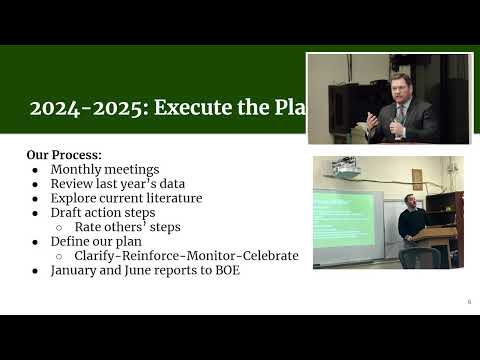
Parma City Schools officials and community volunteers presented a midyear report on the district’s multi-year strategic plan at the Jan. 29 board meeting, outlining immediate implementation steps for 16 of 21 objectives and monitoring plans for the rest of the school year.
The update centered on three district goals identified last year — increasing student achievement, practicing fiscal responsibility and improving transparency — and described work across six focus areas formed from community input gathered in 2023–24. Board members and committee volunteers said the update represents a shift from planning to execution, with regular reporting scheduled through June.
District representatives noted tangible progress: presenters said the district’s performance index has risen 13.6 points since 2021 and that community engagement produced 807 survey responses used to shape the plan. The committee structure produced 21 objectives; presenters reported that 16 are being addressed now while five remain future considerations.
Financial transparency: Michael Jugler, a community volunteer on the financial-transparency committee, said the group prioritized making financial statements easier to find and understand. He told the board that "the financial statements were kind of buried on the site," and the administration responded by moving those documents to a more prominent position on the district website within weeks. The committee proposed dashboards, charts, an online question link and targeted outreach (email blasts and senior-center distribution) to raise awareness.
Communications: Rachel Irvin, principal at Normandy, said the communications committee will focus weekly messaging on three topics tied to the district goals: academic achievement, fiscal responsibility and student safety and well-being. The committee plans regular infographics for social media and principal newsletters, town-hall attendance, analytics-based monitoring and distribution of a six-page quality profile mailed to about 55,000 households and businesses to reach residents without social media.
Student supports and equity: Amanda Rasta summarized student-success work focused on mental-health resources and supports for English learners. Proposed actions include a central resource webpage for families and staff, a student ambassador/buddy program to assist new and English-learner students, and a district cultural fair planned for April to highlight student diversity. The committee emphasized auditing community resources, ensuring links remain current, and quarterly staff check-ins with counselors and liaisons.
Facilities and safety: Volunteers Robert Verbassen and Caitlin Brand described a recommended comprehensive facility assessment to generate a prioritized 1– to 5‑year capital plan. The group flagged restroom renovations and perimeter lighting among near-term priorities and recommended professional assessments to produce an annual prioritized list. Brand emphasized the need to communicate project timelines to stakeholders and to coordinate work around school schedules.
Transportation: Assistant Principal Kevin Gack said the transportation committee’s central objective is recruiting, incentivizing and supporting bus drivers to maintain a safe and reliable system. Ideas include spring job fairs, sign-on and attendance incentives, nonmonetary benefits or community discounts for drivers, improved on-route camera access for quicker incident review, and a family-facing bus app to improve route and scheduling communication.
Special education: Tammy Sebastian, a parent and community volunteer, said the special-education committee will develop exit surveys for families and students, produce an inclusive-event planning checklist, clarify district contact points on the website, and expand professional development (including behavior and augmentative/alternative communication topics). The committee asked for quarterly review of results and use of QR-code exit surveys at events to collect immediate feedback.
Alternative funding and partnerships: The alternative-funding group recommended creating a public inventory of grants and gifts the district already receives, a Google form to capture new funding leads from community members and staff, and a sponsorship/advertising package for local business partnerships and athletic facilities. The committee suggested stronger ties to higher‑education partners (Tri-C, Baldwin Wallace, Cleveland State, University of Akron were named) and regular reporting on grants applied for and awards received.
Monitoring and next steps: Presenters described monitoring measures including quarterly reviews, participation metrics, analytics on communications, and baseline/after surveys. Board members were told the district will return with implementation reports in June and that committees will continue meeting and refining action steps.
The presentations combined community volunteers and district staff; presenters repeatedly emphasized transparency and monitoring as central to converting the plan from paper to practice. No formal board action was required for the strategic-plan update itself; it was presented for information and future reporting.