Get Full Government Meeting Transcripts, Videos, & Alerts Forever!
Get email alerts on the Zoning Apz2 topic
No spam. Unsubscribe anytime.
St. Mary's County holds public hearing on proposed ban on new homes in APZ 2 near Pax River
Summary
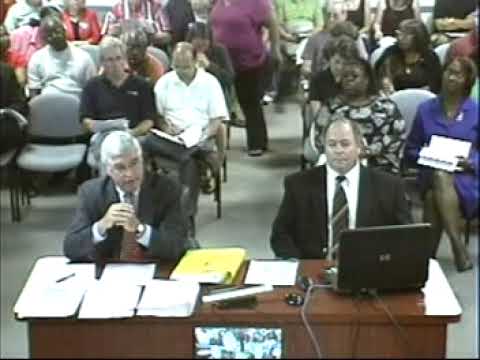
St. Mary's County Board of County Commissioners on Aug. 22, 2007 held a public hearing on a proposed zoning text amendment to prohibit new residential development inside the APZ 2 accident potential zone around Naval Air Station Patuxent River.
St. Mary's County Board of County Commissioners on Aug. 22, 2007 held a public hearing on a proposed text amendment to the county zoning ordinance that would prohibit new residential development in the Air Installations Compatible Use Zone’s Accident Potential Zone 2 (APZ 2) around Naval Air Station Patuxent River.
The amendment, presented by Dennis Canavan, director of the county Department of Land Use and Growth Management, is intended to prevent unplanned future residential development within roughly 1,100 acres mapped as APZ 2. Canavan told the board that existing residences would be allowed to remain and that vacant recorded lots and subdivisions with plans submitted before April 10, 2007 would be grandfathered and could proceed under specified conditions.
Canavan said the amendment implements recommendations from the county’s 2007 encroachment study and is designed to protect the long-term operations of the Navy installation while not rendering existing homes nonconforming. “Anyone that has a residence in this ACUS, APZ 2 zone would be allowed to continue it,” Canavan said. He identified about 762 properties in the overlay and said notices were mailed to roughly 633 property owners; 14 notices were returned as undeliverable. The staff presentation noted three parcels that staff considered most affected (tax map 51 parcels 331, 265 and 319), described options to transfer density from APZ 2 acreage to areas outside the overlay at a rate of two dwelling units per acre, and summarized proposed footnote language that would bar residences in APZ 2 after the amendment’s effective date except as allowed by grandfathering clauses and other provisions.
The planning commission had recommended approval of the draft amendment; staff said its further review produced minor wording changes and the additional grandfather language for pending subdivisions. Canavan also entered into the record the county zoning ordinance (chapter 43), the encroachment study committee report (Feb. 2007), planning commission resolution 07-11, a March/April 2007 letter from Capt. Ives at the Navy air station, a letter from the Chamber of Commerce dated Aug. 17, 2007, and a letter from Chris Longmore (dated April 25, 2007) raising concerns.
Public commenters split over the proposal. Alan Hewitt, a licensed realtor and member of the legislative affairs committee of the Southern Maryland Association of Realtors, said SMAR opposed the amendment as drafted and urged the county to complete or wait for a joint land use study with the Navy before adopting a county-wide prohibition. “To date, there’s been no joint land use study by the Navy and the county to gather the data on the current pattern and the intensity of residential and other development within the APZ 2 zone,” Hewitt said, arguing for more study, use of noise-contour thresholds in the ordinance, and options such as density transfers to mitigate impacts on property owners.
Developers and their representatives urged grandfathering for long‑in‑process projects. Jerry Nuckelby, owner of Nuckelby Surveying Inc., represented two affected projects — Essex Woods (a multi‑phase subdivision with a portion inside APZ 2) and Forest Park (a two‑lot re‑subdivision) — and asked the board to allow subdivisions submitted before April 10, 2007 to proceed. “If this project is not grandfathered, my clients will have wasted $500,000 in surveying and engineering fees in over 4 years of time,” Nuckelby said, noting phases close to receiving final approvals and substantial prior investment by local developers.
Some residents supported protection of the base and the amendment’s goals; others raised practical concerns. John Norris, a resident who addressed the board, said the amendment was important to protect the county’s economic engine and quality of life but questioned references to “new noise data” and urged clarity on what studies the county and Navy were relying on. Deborah Sesna, a resident of Essex South, said the amendment could increase renovation costs for homeowners because additions or rebuilt homes might have to meet higher noise‑attenuation standards; she also asked how limiting development in APZ 2 would affect school capacity and where new residents would live as jobs come to the county.
Canavan and staff answered technical questions from commissioners about acreage, subdivision status and how the proposed grandfathering would work. He said most of the 1,100 acres are outside the naval base footprint, that some APZ 2 acreage is on base, and that noise‑attenuation requirements (figure 43.2.a) would apply to new construction or additions that raise interior noise above thresholds cited in the ordinance. He also said the Navy had been contacted and that Capt. Ives had communicated support for addressing land‑use encroachment; Canavan said the county expected to revisit APZ boundaries after any new noise data and associated public hearings.
The board left the record for the hearing open for 10 days for written comments to the Board of County Commissioners, P.O. Box 653, Leonardtown, Maryland 20650. No final vote on the text amendment was taken at the hearing; the board will consider the amendment at a later meeting after the public comment period and any additional staff review.
Votes at the hearing: no formal vote was recorded on the APZ 2 text amendment at this meeting; the public comment record was left open for 10 days for written submissions.