Get Full Government Meeting Transcripts, Videos, & Alerts Forever!
Get email alerts on the Conditional Use Wetlands topic
No spam. Unsubscribe anytime.
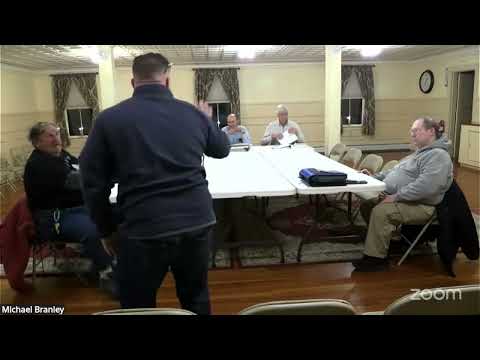
Planning board begins drafting conditional-use approach for wetlands, to be added to ordinance at next town meeting
Summary
The West Swanzey Planning Board discussed drafting conditional use permits and wetlands buffer language for the zoning ordinance, deciding any change would require an ordinance amendment and cannot take effect until it is placed on a future town warrant.
The West Swanzey Planning Board opened a substantive discussion about adding conditional use permits (CUPs) and wetlands-buffer language to the town zoning ordinance. Members agreed any conditional-use framework would require an ordinance amendment and therefore could not be enacted before the next town meeting.
Board members and staff said CUPs and special exceptions perform similar functions but are administered differently; the board discussed whether the planning board or the zoning board (or the conservation commission) should administer the review. Members noted that, under current procedures, the planning board generally reviews applications and that the conservation commission’s comments carry substantial weight in the town’s review process. Several participants said conservation commission review should occur before planning-board action and that, historically, the planning board has often delayed items until conservation had the opportunity to comment.
Staff and volunteers reported preliminary research (cited as an “Innovative Land Use Handbook” draft wetlands ordinance) that provides model language for buffers and conditional-use criteria; one board member said the handbook includes suggested draft ordinance language the town could adapt. The board discussed practical elements of implementation, including whether conditions should be recorded with site plans or on property deeds, how long conditional approvals remain valid (noting parallels with variances and site-plan registrations), and whether a CUP process should initially be limited to wetlands impacts before expanding to other uses such as cluster developments or innovative land-use techniques.
Members emphasized the need to draft explicit criteria if the town adopts CUPs, and suggested using a use-table to tie specific uses to either special exception or conditional-use review. The board discussed integrating driveway, road, and infrastructure approvals into any new framework because crossings and driveways commonly interact with wetlands. Members agreed to continue research and to consult other towns and planners, and staff said they will circulate materials and updated drafts to the planning board and conservation commission for review. Because ordinance language must be adopted by voters, board members said their work will proceed over multiple meetings and that any product would go on a future warrant as a zoning amendment.
No formal vote or ordinance language was adopted at this meeting; the discussion produced staff direction to continue drafting criteria and to coordinate review with the conservation commission and town counsel.