Get Full Government Meeting Transcripts, Videos, & Alerts Forever!
Get email alerts on the Taxation topic
No spam. Unsubscribe anytime.
Charter review panel debates income-tax allocation language, leaves Chapter 11 unchanged for now
Summary
Committee members discussed wording in Chapter 11 about the city's authority to levy taxes, excises and fees and debated whether the charter should specify allocations for any future income tax; no charter change was adopted.
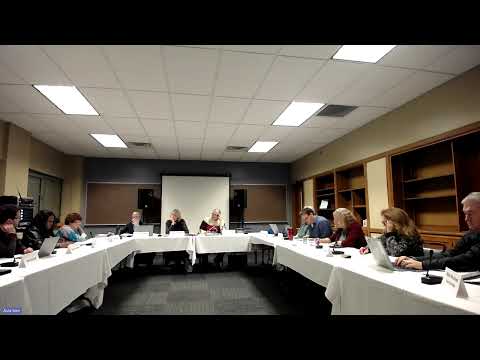
Members of the East Lansing Charter Review Committee discussed proposed wording changes to Chapter 11 (general taxation) on Jan. 23, focusing on whether the charter should list fees and other non-tax revenue and whether future changes to income-tax allocation belong in the charter or should be placed before voters at the time of a proposed tax.
Committee member discussion centered on language that currently allows the city to "assess, levy and collect taxes, rents, fees and charges" (as described in the committee packet) and whether the charter should explicitly include "fees" alongside taxes. City Assessor Dave Lee, who attended the meeting, told the committee, "I'm Dave Lee. I'm the city assessor," and said much of the assessor's work is governed by state law and the packet contains suggested minor wording adjustments.
County Commissioner Mark Graber, identified by committee members as a statewide expert on public-records law, and committee members questioned whether adding or changing allocation language now could constrain future council action or would instead require separate voter approval when a tax question is on a ballot. Committee members described a finance-department proposal that would create a mechanism to alter allocations if certain revenue thresholds were met in the future; examples cited included percentages directed to pension, fire and infrastructure.
Several members said the 60/20/20 allocation language inserted previously into the charter was deliberately put before voters so allocations could not be changed later by council resolution. One committee member summarized the prevailing view: any change to how an existing or future income tax is allocated should be presented to electors at the time the tax question is placed before voters, rather than locked into the charter now.
After discussion, the committee left the Chapter 11 wording largely as drafted and deferred any substantive charter change on tax allocation to a later date or to the ballot process when and if a tax question is before voters.
Ending: The committee kept Chapter 11 on the agenda as old business for the next meeting to allow further review, including a planned finance-department presentation at the February meeting about income-tax administration and allocations.