Get Full Government Meeting Transcripts, Videos, & Alerts Forever!
Get email alerts on the Public Health Substance Use topic
No spam. Unsubscribe anytime.
Montgomery County Council approves $1.67 million appropriation for youth vaping and substance-use programs
Summary
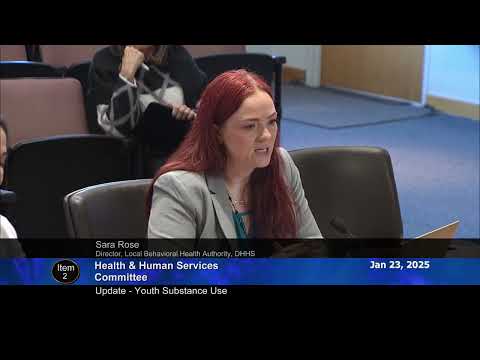
On Jan. 23 the Montgomery County Council unanimously approved Special Appropriation 2530, allocating $1,672,848 from the JUUL/Altria settlement to youth vaping prevention, outreach and treatment programs and to a competitive community awards process targeting high-impact ZIP codes.
Montgomery County Council approved a special appropriation of $1,672,848 on Jan. 23 to fund youth vaping and nicotine-addiction response programs using proceeds from the JUUL and Altria settlement.
The dollars — part of settlement receipts the county expects to total roughly $4.15 million when all payments arrive — will support a set of county-run and community programs aimed at prevention, outreach and treatment for youth, with an emphasis on Black and Latino youth in identified high-impact ZIP codes including Aspen Hill, Wheaton and parts of Silver Spring.
Why it matters: County public health officials told the council that while drug-induced deaths in Montgomery County fell in 2024, youth overdose counts remain a priority for prevention and services. “We had 83 fatal overdoses in calendar year 24. 48 included fentanyl,” Montgomery County Health Officer Dr. Keesha Davis said during the presentation. "We saw 40% decrease in fatal overdoses and a 52% decrease in fentanyl." Officials said youth-specific fatality counts are suppressed in public datasets when under 11 and that nonfatal emergency responses offer a clearer signal of youth substance involvement.
What the appropriation will fund: The approved package includes direct awards already identified and a competitive community grants process: - $250,000 proposed for RecMode (youth mentorship and fitness-based positive youth development programming). - $100,000 proposed for Street Outreach Network (gang-prevention outreach linking at-risk youth to mental-health and substance-use services, with a focus on the Enclave and broader East County areas). - Up to $1,300,000 earmarked for Jewel/Altria Community Awards to be distributed to up to three organizations; applicants will be required to demonstrate collaborative approaches, experience serving Black and Latino/Hispanic youth, and plans for family/caregiver education and prevention work in high-impact areas.
Officials provided implementation details and recent performance data for existing county-contracted programs. County staff and partner agencies reported: - A residential withdrawal-management program for adolescents opened Aug. 31, 2024; 26 youth admitted to date, 15 from Montgomery County, with a reported 77% completion rate and an average stay of about 14 days. The program had been male-only but will accept all referrals beginning Jan. 27. - The Journeys intensive outpatient program (Rockville) served 177 youth in the previous fiscal year and 64 in the first quarter of FY25. - Suburban Hospital Addiction Treatment Center reported 30 youth served last year and seven in Q1 of FY25. - Shepherd Prep’s adolescent clubhouse served 56 youth last year and 31 so far this year. - An emergency prevention-and-intervention contract (begun Feb. 14 of last year) reported outreach to about 1,100 youth and adults, with 40 youth receiving intensive case management, 34 referred to substance-use-disorder treatment and 14 referred to mental-health providers. - Child and Adolescent Assessment Services clinicians screened about 227 youth in the first two quarters of FY25.
County staff emphasized prevention and upstream work, including expansion of the evidence-based life-skills curriculum in middle schools, the Be The 1 Youth Ambassador program (53 ambassadors representing 13 schools), and peer recovery supports deployed in emergency departments. The county described an overdose prevention structure that includes the Overdose Prevention Team (formerly the Opioid Intervention Team), an Alcohol and Other Drug Addiction Advisory Council, and an Overdose Fatality Review Team, all intended to align prevention, treatment and review activities.
Concerns and oversight: Council members asked about sustainability, data and geographic targeting. Members noted the settlement dollars are one-time funds and questioned how programs funded now will be sustained later. County staff said the competitive awards process and initial targeted investments are intended to identify promising practices to guide future spending and to build capacity among smaller community providers. Staff also said outcome and tracking requirements will be part of future awards, and that Grants Management will help structure review and scoring panels that include DHHS staff and community reviewers.
Officials described data limits: youth overdose fatalities were a small, suppressed count (under 11) in recent years, but nonfatal ER visits and EMS Narcan administration rose in prior years and declined in 2024. EMS and county staff reported that refusals of transport after Narcan administration have increased (from about 1% in 2019 to as much as 10% more recently), complicating linkage to treatment.
Action and next steps: The council approved the appropriation unanimously. County staff said notices of funding opportunity for community awards could be issued within weeks after council approval, with disbursement timeline estimates of 8 to 16 weeks depending on awardee responsiveness and administrative workload; the county indicated some programs could have activity in place before summer. Staff noted $3.1 million of the settlement has been received to date and additional Jewel payments remain pending to reach the expected total.
The council’s vote was final action on Special Appropriation 2530; councilmembers asked staff to return with implementation details and the planned scoring and oversight structure for the community awards.