Get Full Government Meeting Transcripts, Videos, & Alerts Forever!
Get email alerts on the Child Welfare Reform topic
No spam. Unsubscribe anytime.
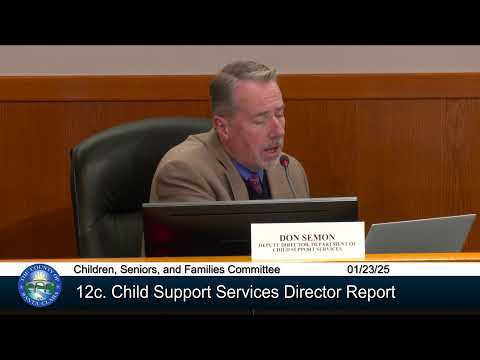
County agencies describe new DFCS legal‑consultation protocol and corrective action plan tied to a five‑year system improvement plan
Summary
Department of Family and Children Services officials and county counsel briefed the committee on roll‑out of a legal consultation policy, staff training and the county's corrective action plan and system improvement plan (SIP). DFCS reported increased tracking of safety plans, training rollouts, listening sessions and a plan to embed corrective‑
County child‑welfare leaders told the committee they are implementing a legal consultation policy and a corrective action plan (CAP) tied to a five‑year system improvement plan (SIP) after state review and on‑site findings.
Wendy Kinnear Rauch, acting director, Department of Family and Children's Services (DFCS), Sarah Duffy (Social Services Agency deputy director) and program leads described a package of operational changes designed to increase safety planning, improve supervisory review and build a continuous quality improvement (CQI) system. DFCS said it rolled out legal consultation trainings for social workers, supervisors and managers and that roughly 69% of staff had attended an initial set of sessions; make‑up sessions and academy integration were planned to ensure full coverage.
Corrective action and safety tracking: DFCS said it is actively tracking children requiring safety plans and reported a December point‑in‑time review in which 100% of children requiring a safety plan had one uploaded to the statewide case management system. The department described phased follow‑up that includes supervisory and manager reviews and random audits of safety‑plan quality.
System improvement plan and AB 636 context: Program manager Navin Sanghwan explained the SIP process under California's Child Welfare System Improvement and Accountability Act (AB 636) and the state's county self‑assessment/CFSR framework. The county said SIP goals focus on preventing recurrence of maltreatment, strengthening CQI infrastructure and supporting workforce development through coaching, training and policy clarification; strategies include more consistent use of structured decision‑making tools, improved parent engagement (including fathers), and better linkages to mental‑health and substance‑use services.
Public comment and concerns: Members of the public used the meeting's public‑comment slots to urge screenings and additional responses to allegations; one commenter (Ben Zee) repeatedly asked the county to provide screenings for his children. Committee members did not make operational decisions during public comment but pressed DFCS on timelines for training completion and guidance for staff who had not yet completed training.
Committee actions and oversight: The committee voted to receive the presentation. Supervisors requested monthly CAP updates to CSFC going forward and asked staff to return to report on the SIP approval timeline and the crosswalk between board referrals and CAP/SIP activities.
Why it matters: DFCS leaders said the effort is intended to close compliance gaps flagged by the state and to create real‑time monitoring and CQI practices so safety plans are complete, timely and effective. Supervisors repeatedly pressed for clarity on training completion, targeted coaching for units with lower confidence using structured decision tools, and improved stakeholder engagement in CQI.