Get Full Government Meeting Transcripts, Videos, & Alerts Forever!
Get email alerts on the Agriculture Property Tax topic
No spam. Unsubscribe anytime.
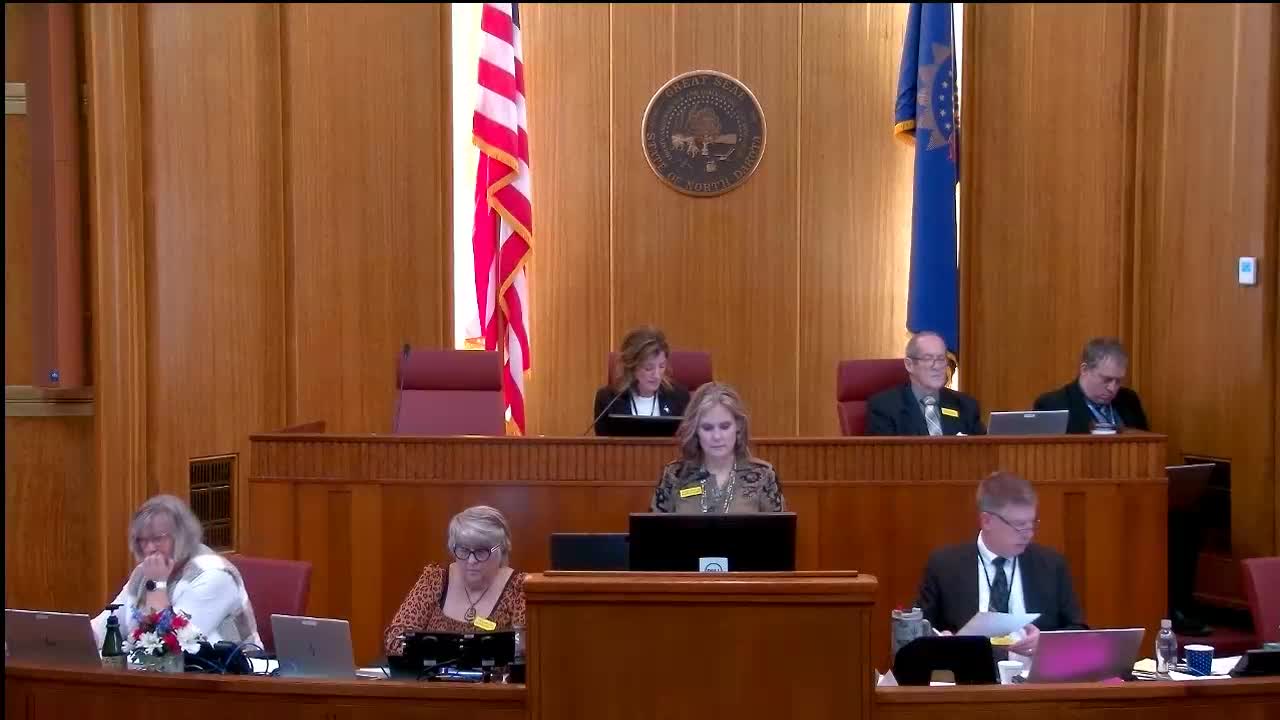
Senate clarifies agricultural property definition in property-tax code after lengthy debate
Summary
Senate Bill 20-39, clarifying what structures qualify as agricultural property for tax assessment, passed 33-14 following extended floor debate; sponsors said the bill removes long-standing ambiguities that led to inconsistent assessments.
The North Dakota Senate voted 33 to 14 to approve Senate Bill 20-39, which clarifies the statutory definition of agricultural property for property-tax assessment purposes.
Senate Bill 20-39 amends subsection 1 of section 57-2-1 of the North Dakota Century Code to specify that structures used to store agricultural commodities without adding value are agricultural property for tax classification. Sponsors and the interim agriculture committee said the change is intended to eliminate inconsistent assessments across counties and municipalities.
Senator Weber, sponsor of the bill, said assessors had in recent years classified some storage structures as commercial property while others continued to treat comparable structures as agricultural. Weber argued the bill provides consistent guidance: "We should not be using inconsistent assessment methods to help enhance property tax revenues," he said, adding that agriculture is a major state industry.
Opponents raised concerns about unintended consequences and urged local remedies. Senator Rummel, a no vote, argued that local appeal channels and the courts had not been exhausted and that the bill lacked precise definitions needed for uniform application. "Those closest to a problem are positioned to make the best decision," Rummel said.
Senator Myrtle, speaking in favor, said the interim committee had taken extensive testimony and that the legislature should clarify the law rather than leave ambiguity for courts and taxpayers to resolve. "We are the lawmakers that are bound to serve our constituents to make laws, lack ambiguity, and to clearly delineate what raising of crops mean," Myrtle said.
Senators asked procedural and policy questions on the floor, including whether the exemption depends on ownership, whether machinery storage would qualify, and whether there exists an inventory of affected buildings; sponsors said no statewide inventory was available and that local review would continue to play a role in specific cases.
After debate, the secretary recorded a final tally of 33 ayes and 14 nays; the bill passed.
Floor debate focused on balancing consistent statewide guidance for assessors with local control and on how to define "raising crops" and "first endpoint user" in practice. No implementing regulations or a statewide inventory of affected buildings were provided during the floor discussion.