Get Full Government Meeting Transcripts, Videos, & Alerts Forever!
Get email alerts on the Building Code Sprinklers topic
No spam. Unsubscribe anytime.
St. Mary's County hearing on 2009 Maryland building standards focuses debate on sprinklers for single‑family homes
Summary
A public hearing on proposed adoption of the Maryland Building Performance Standards — which would incorporate the 2009 International Building Code, International Residential Code and International Energy Conservation Code — centered on a new IRC provision that would require automatic fire sprinklers in new one‑ and two‑family dwellings.
A public hearing on proposed adoption of the Maryland Building Performance Standards — which would incorporate the 2009 International Building Code (IBC), the 2009 International Residential Code (IRC) and the 2009 International Energy Conservation Code (IECC) into St. Mary's County's code — centered on a new IRC provision that would require automatic fire sprinklers in new one‑ and two‑family dwellings.
Adam Knight, deputy code official for St. Mary's County, opened the staff presentation, saying the hearing covers the county's adoption of the state standards and that “the most significant change with the IRC is the addition of fire sprinklers in all new 1 and 2 family dwellings.” He noted that townhomes and multi‑family buildings already are required by state law to be fully sprinklered and described proposed local amendment language preserving the county's existing plumbing and fuel‑gas references.
Why it matters: The change would extend a new national model provision for residential sprinklers to the county, affecting builders, homeowners and emergency responders. Supporters say sprinklers cut deaths and property loss and protect volunteer firefighters; opponents and some builders cautioned about costs, contractor availability in the county and technical readiness for out‑lot (private well) systems.
Fire service and state officials strongly backed the sprinkler provision. Keith Fairfax, a member of the Bay District Volunteer Fire Department, urged adoption of section R313 of the IRC and proposed delaying the effective date from Jan. 1, 2011, to Jan. 1, 2012, to allow local implementation work. Andy Schneider, representing the Maryland State Fire Marshal's Office on behalf of State Fire Marshal William Barner, cited a 15‑year study from Prince George's County that found no fire deaths in homes protected by sprinklers during the study period and said sprinkler systems are feasible and often cost about $1 per square foot. Joe Gould, chief of the Bay District Volunteer Fire Department, and other volunteer chiefs described demonstrations and local experience in which sprinklers contained fires before they spread.
Supporters from community organizations also spoke. Don Parsons, executive director of Patuxent Habitat for Humanity, said his organization's board will install sprinklers in the homes it builds and described that as a protection for homeowners and first responders.
Builders and some longtime local inspectors urged caution. Charles Bryson, a former St. Mary's County building inspector, said he supports life‑saving measures but recommended additional testing and readiness, especially for sprinkler systems that must operate from private wells; he called for further study before making the requirement universal. A local builder, Donald Nutt, said his recent private‑well installation cost $2.50 per square foot (about $8,500), and that finding qualified contractors in St. Mary's County had been difficult.
Technical points raised during testimony included: storage‑tank and pump options for well‑served homes (examples mentioned included a simple 300‑gallon tank and transfer pump, upgraded well pumps, or combination systems); the use of CPVC (plastic) pipe in wet systems protected by drywall; and emerging technologies such as high‑pressure micro‑mist systems under test at the University of Maryland. Staff confirmed training and outreach plans, including energy‑code seminars with the Maryland Codes Administration and Maryland Energy Administration.
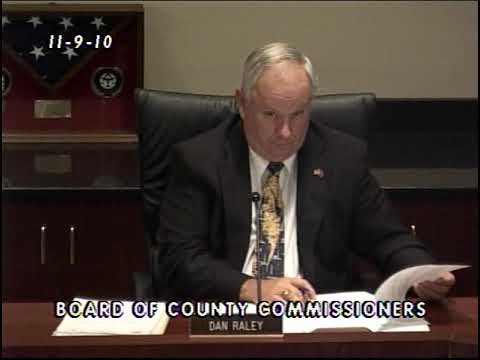
Process, notice and next steps: Several speakers and commissioners said the public notice did not make the sprinkler component clear. Commissioner Dan Railey (moderating) acknowledged the notice advertised adoption of the Maryland Building Performance Standards broadly and that the sprinkler change was a small component of that larger adoption, while others said the sprinkler detail should have been highlighted. The board kept the public record open for at least 10 days for additional written comments and noted the matter could be taken up again at the board's next scheduled meeting or by the incoming board members.
No final vote was taken at the hearing; the transcript records only the presentation and public comments. Staff recommended adoption of the 2009 codes with continuation of existing local amendments and a correction to retain IRC section 2904 (which addresses fire sprinkler and water‑distribution design details) in the county's ordinance language.
Ending: The hearing closed with the record left open for written comments to the Board of County Commissioners (PO Box 653, Leonardtown MD 20650 or bocc@stmaryscounty.com) for at least 10 days; the board said newly elected commissioners who had attended would receive the video and materials if the matter remains pending when the new board takes office.