Get Full Government Meeting Transcripts, Videos, & Alerts Forever!
Get email alerts on the Opioid Abatement Grant topic
No spam. Unsubscribe anytime.
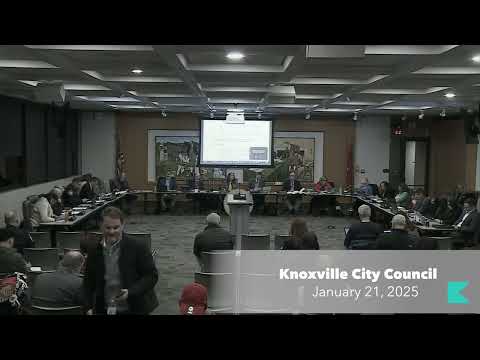
Council postpones vote on $1.75 million opioid‑abatement grant proposal after community questions
Summary
Council postponed for two weeks a resolution to apply for up to $1.75 million from the Tennessee Opioid Abatement Council after residents and advocacy groups raised questions about scope, oversight and whether funds would expand KPD’s co‑response program.
Knoxville City Council on Tuesday postponed consideration for two weeks of a resolution that would authorize the mayor to apply for and accept a grant award of up to $1,750,000 with no required local match from the Tennessee Opioid Abatement Council. Councilmembers said they wanted more clarity about the grant’s intended uses.
Speakers from Knoxville Heart and other community organizations urged council to reject or delay the application, saying the agenda packet lacked detail about how funds would be spent and expressing concern that awarding the grant could preempt work by the recently formed alternative‑response task force. Elizabeth Rowland, a Fountain City resident speaking for Knoxville Heart, said the packet provided “almost nothing” about what the $1.75 million would fund beyond a single drug diversion advocate position and that staff follow‑up indicated additional uses not stated in the packet.
During public comments Rowland and others said they were told via email from Chief Noel that the grant proposal would include hiring three master‑level clinicians through Helen Ross McNabb Center for three additional co‑response teams (one with supervisory responsibility), purchase of three vehicles for the co‑response teams, and related training, travel and office expenses. Rowland said the packet did not detail those elements and asked whether the clinicians in the grant would duplicate hires described in a separate agenda item for co‑response expansion (11h).
Councilmember Singh asked Chief Noel to describe the grant proposal. Noel said the application would request funding to hire three master‑level clinicians for 2026–2028, fund a drug‑diversion advocate who would work with the co‑response teams to do follow‑ups, buy three vehicles and cover travel, training and office supplies. Noel said the city would need to apply now because the grant competition was open and awards would be made for funding that would take effect in 2026.
Councilmember Parker moved to postpone the item for two weeks to allow for additional details and coordination with the alternative‑response task force; the motion carried and the item was postponed.
The resolution in the agenda packet described the Tennessee Opioid Abatement Council as requesting proposals to implement opioid‑abatement strategies and named KPD efforts in the application materials; the routing form in the packet listed the grant life as January 2026 through December 2028. Opponents argued the proposal, as presented, lacked sufficient specificity about program design, oversight and whether funds would reinforce a criminal‑justice approach rather than a public‑health approach to substance use disorders.