Get Full Government Meeting Transcripts, Videos, & Alerts Forever!
Get email alerts on the Mental Health Crisis Response topic
No spam. Unsubscribe anytime.
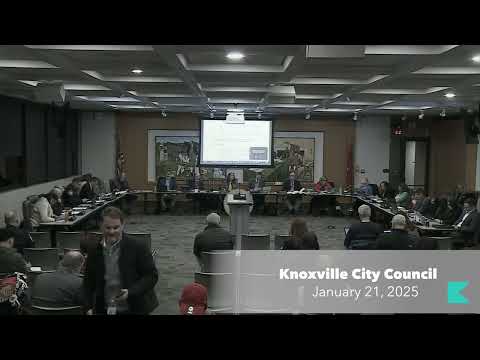
City Council approves expanded co‑response contract with Helen Ross McNabb after heated debate
Summary
Knoxville City Council on Tuesday approved a contract authorizing the mayor to execute an agreement with Helen Ross McNabb Center Inc. to continue and expand the Knoxville co‑response team program in an amount not to exceed $820,000 per year; the measure passed 8–1.
Knoxville City Council on Tuesday approved a contract authorizing the mayor to execute an agreement with Helen Ross McNabb Center Inc. to continue and expand the Knoxville co‑response team program in an amount not to exceed $820,000 per year; the measure passed 8–1.
The vote came after more than two hours of public testimony and council debate in which supporters described reductions in arrests and emergency department use, while critics said the city lacked adequate public reporting and that expansion could preempt the alternative‑response task force’s work.
Supporters, including Webster Bailey, executive director of the Metro Drug Coalition, and Carrie Fair, a licensed clinical social worker, described the co‑response teams — paired KPD officers and behavioral health clinicians — as effective at keeping people out of jail and connecting them to services. Bailey told the council the teams had answered “over 4,000 calls” since inception and that “97% of the cases individuals were assessed and triaged on the spot.”
Opponents questioned the timing, the contract’s cost and the data provided to council. Elizabeth Rowland of Knoxville Heart urged the council to pause expansion so the Knox County/Knoxville alternative response task force could finish a business and strategic plan. Rowland said the new contract’s price tag — more than double the earlier $380,000 contract cited in public remarks — lacked sufficient explanation in the agenda packet and asked for more transparent, written reporting.
Councilmember Parker and others said staffing challenges and a nationwide shortage of behavioral health clinicians explained part of the increase; Helen Ross McNabb representatives said the higher figure reflected increased base pay, additional supervisory time and a plan to staff six clinicians so four co‑response teams can be deployed across shifts. Leanne Heumann Hilliard of Helen Ross McNabb said the organization had increased base pay in October to stabilize staffing and that clinicians performed approximately 1,500 follow‑ups in the prior year.
Several council members asked that the co‑response program share regular, written operational reports and call‑level data with the alternative‑response task force and council. Deputy Chief Brace and McNabb staff said task force members will receive co‑response data and that the task force, facilitated by United Way, had met for the first time earlier in January and expects to finalize recommendations in the coming months.
Councilmember Parker said she supported the program but wanted more public reporting and clearer contract language; Councilmember McKenzie asked for quarterly written reports. Councilmember Fugate and others said the city needed both a functioning co‑response program now and a fast‑moving task force to design longer‑term alternative response options.
The contract language in the agenda packet states that Helen Ross McNabb shall provide “no fewer than six behavioral health clinicians such that four CRTs may be deployed,” language that drew scrutiny from council members who asked staff to clarify how many teams and clinicians would be staffed and when. The council approved the contract 8–1; one member voted no.
The council also heard testimony from community groups and providers about gaps in other community services and about payment and contracting issues affecting grassroots groups that work on violence prevention and recovery. Several speakers asked the city to ensure community partners receive timely payments.
The council asked staff to provide more detailed, written reports on co‑response call volumes, dispositions and staffing, and to share that data with the alternative‑response task force.